
How Can Furniture Manufacturers Cut Rework Rates With Reliable PUR Profile Wrapping Adhesive?
For furniture manufacturers, rework is rarely caused by one obvious production mistake. A profile may leave the wrapping machine looking perfect, only to show edge lifting, bubbling, delamination, or film separation after several hours—or even after shipment to the customer.
This is why adhesive selection deserves more attention than simply comparing price per kilogram.
For manufacturers processing PVC decorative film, wood veneer, decorative paper, WPC profiles, MDF profiles, or aluminum furniture components, a stable PUR Profile Wrapping Adhesive can significantly improve bonding reliability and reduce the risk of repeated production.
The real procurement question is therefore not:
“Which wrapping adhesive has the lowest price?”
It is:
“Which adhesive can provide stable bonding throughout production, storage, transportation, and the customer's actual service environment?”
For furniture factories looking to reduce rework, the answer depends on adhesive chemistry, application conditions, substrate compatibility, machine parameters, and supplier support.
1. The User Problem: Why Does Profile Wrapping Rework Happen?
Profile wrapping looks straightforward: apply adhesive, wrap the decorative material around the profile, press it into position, and allow the bond to develop.
In actual production, however, several variables interact.
A furniture factory may experience:
Film lifting at profile corners
Open edges after wrapping
Bubbling beneath decorative film
Local delamination
Weak bonding on curved sections
Adhesive stringing during high-speed production
Poor adhesion after temperature changes
Bond failure under high humidity
Visible glue lines
Inconsistent bonding between production batches
Increased cleaning frequency of the wrapping machine
Customer complaints after installation
These problems can create a much larger cost than the adhesive itself.
The Hidden Cost of Rework
A simple way to evaluate adhesive-related production losses is:
Rework Cost = Defective Quantity × (Material Cost + Labor Cost + Machine Time + Inspection Cost + Scrap Cost)
For export-oriented furniture manufacturers, the total cost can be even higher:
Total Failure Cost = Rework Cost + Logistics + After-Sales Handling + Customer Compensation + Reputation Risk
This explains why a slightly cheaper adhesive may become significantly more expensive if it produces unstable bonding.
Example: How Small Defect Rates Become Large Costs
Suppose a furniture factory processes 2,000 wrapped profiles per day.
If the adhesive-related defect rate is 4%:
2,000 × 4% = 80 defective profiles/day
If process optimization and a more suitable adhesive system reduce the defect rate to 1.5%:
2,000 × 1.5% = 30 defective profiles/day
That means approximately 50 fewer defective profiles per day.
Over 25 production days, the difference could reach:
50 × 25 = 1,250 profiles
This is an illustrative production calculation rather than a guaranteed result. Actual improvement depends on the substrate, decorative material, machine settings, operator practices, adhesive formulation, and curing conditions.
The key point is simple: small improvements in bonding stability can have a measurable impact on manufacturing economics.
2. Product Selection: Why Consider PUR Profile Wrapping Adhesive?
Traditional EVA hot-melt adhesives remain widely used in woodworking and furniture production because they are relatively simple to process and can provide fast initial bonding.
However, furniture profiles are increasingly being exposed to more demanding conditions.
Modern products may need to withstand:
Large temperature fluctuations
High humidity
Kitchen and bathroom environments
Frequent cleaning
Long-distance transportation
Seasonal climate changes
High-end decorative requirements
Long service life expectations
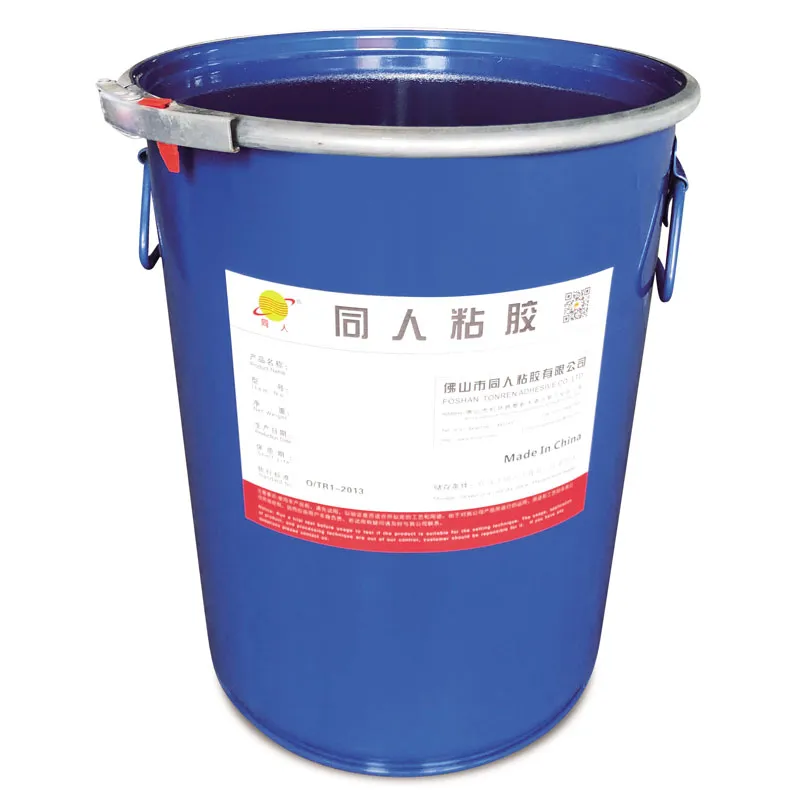
This is where PUR Profile Wrapping Adhesive becomes an important option.
How PUR Adhesive Works
PUR hot-melt adhesive is applied in a molten state and initially bonds through physical cooling.
After application, the adhesive can continue reacting with moisture in the environment and form a crosslinked polyurethane structure.
This curing mechanism can provide stronger long-term bonding performance than a purely thermoplastic adhesive system.
In practical furniture manufacturing, this can translate into improved resistance to:
Heat
Moisture
Aging
Solvents
Temperature fluctuation
Long-term mechanical stress
However, PUR is not automatically the best solution for every wrapping application.
The correct choice still depends on:
Substrate + decorative material + machine + application temperature + coating amount + production speed + curing environment
That combination should be evaluated before purchasing in bulk.
3. Technical Parameters: What Should Buyers Check Before Purchasing?
A professional procurement team should avoid choosing profile wrapping adhesive based solely on price or a general product description.
The technical data should match the actual production process.
3.1 Application Temperature
The application temperature affects:
Adhesive viscosity
Wetting
Coating uniformity
Open time
Machine stability
Adhesive consumption
Bonding performance
If the temperature is too low, the adhesive may not spread properly.
If it is too high, unnecessary thermal stress, adhesive degradation, or excessive open-time changes may occur depending on the formulation.
Therefore, buyers should request the supplier's recommended processing range rather than assuming that all PUR adhesives can run under the same conditions.
3.2 Open Time
Open time determines how long the adhesive remains sufficiently workable after application.
This is particularly important for profile wrapping because machine speed and profile geometry vary significantly.
A suitable PUR adhesive for profile wrapping should provide an open-time window compatible with the factory's:
Wrapping speed
Profile length
Profile geometry
Film type
Pressing method
Production layout
A mismatch can create incomplete wetting, poor positioning, or unstable bonding.
3.3 Viscosity
Viscosity directly affects adhesive delivery and coating behavior.
The buyer should evaluate viscosity together with:
Application temperature
Roller or nozzle system
Pump configuration
Machine speed
Required coating weight
A viscosity value that looks attractive on a TDS may not necessarily be suitable for a specific wrapping machine.
The correct question is:
Can the adhesive maintain stable coating performance on our existing equipment?
3.4 Application Amount
Too little adhesive can lead to:
Weak bonding
Local delamination
Edge lifting
Incomplete substrate wetting
Too much adhesive can result in:
Higher material consumption
Longer curing requirements
Glue squeeze-out
Contamination
Higher cleaning frequency
Potential appearance problems
The optimum coating amount must therefore be determined according to the substrate, film, surface condition, machine speed, and adhesive formulation.
3.5 Heat and Moisture Resistance
For furniture profiles used in kitchens, bathrooms, commercial interiors, and other demanding environments, resistance to heat and moisture is particularly important.
Buyers should ask suppliers for supporting test information related to:
High-temperature exposure
Humidity exposure
Water resistance
Aging
Adhesion retention
Substrate-specific bonding
Do not rely on a generic statement such as “high temperature resistant.”
A professional procurement process should ask:
At what temperature, for how long, under which test conditions, and on which substrate?
This makes supplier comparisons much more meaningful.
3.6 Decorative Material Compatibility
A high-quality wrapping adhesive still needs to match the decorative material.
Common combinations include:
| Profile / Substrate | Decorative Material | Key Procurement Concern |
|---|---|---|
| MDF profiles | PVC decorative film | Wetting and long-term adhesion |
| Wood profiles | Wood veneer | Adhesion and appearance |
| WPC profiles | PVC film | Surface compatibility and moisture resistance |
| Composite profiles | Decorative paper | Coating uniformity |
| Aluminum profiles | Decorative film | Difficult-surface adhesion |
| Furniture molding | PVC / veneer | Corner and edge bonding |
Before placing a large order, manufacturers should conduct actual production trials using the same substrate and decorative film used in mass production.
4. Application Scenarios: Where Can PUR Profile Wrapping Adhesive Reduce Risk?
4.1 PVC Decorative Film Wrapping
PVC film is widely used for furniture profiles because it offers a broad range of colors, textures, and wood-grain effects.
The challenge is maintaining stable adhesion along:
Flat surfaces
Convex sections
Concave sections
Sharp corners
Small-radius curves
Profile ends
A properly selected PUR Profile Wrapping Adhesive can help create a more durable bond and reduce the risk of later film separation.
4.2 WPC Furniture and Decorative Profiles
WPC profiles can have different surface characteristics from conventional MDF or solid wood.
For WPC profile wrapping, procurement teams should pay particular attention to:
Surface energy
Profile composition
Surface treatment
Decorative film compatibility
Moisture exposure
Processing temperature
Testing the complete combination is more reliable than evaluating the adhesive independently.
4.3 Wood Veneer Profile Wrapping
Wood veneer is more sensitive to appearance-related defects.
An adhesive system must provide sufficient bonding while helping manufacturers maintain a clean finished surface.
Important evaluation points include:
Veneer moisture content
Adhesive penetration
Glue-line appearance
Pressing conditions
Profile geometry
Long-term dimensional changes
For premium furniture, reducing visible bonding defects can be just as important as reducing structural failures.
4.4 High-End Cabinet and Furniture Components
Cabinet frames, decorative moldings, door components, skirting profiles, and other wrapped components often have strict appearance requirements.
For these products, a procurement team should evaluate the adhesive based on the entire production cycle:
Application → Wrapping → Initial Bond → Curing → Machining → Packaging → Transportation → Installation → Service
A product that performs well immediately after wrapping but fails during transportation or installation is not a successful adhesive solution.
5. Procurement Decision: How Should Furniture Manufacturers Compare Suppliers?
When sourcing PUR wrapping adhesive, buyers should evaluate more than the quotation.
A practical supplier evaluation can include seven areas.
1. Bonding Performance
Request technical data and actual application recommendations for your substrates.
2. Batch Consistency
Ask how the supplier controls raw materials, production parameters, packaging, and batch-to-batch consistency.
3. Technical Documentation
A professional supplier should be able to provide relevant documentation such as:
TDS
SDS
Product specifications
Application recommendations
Storage instructions
Applicable compliance documentation
Test reports when available
4. Machine Compatibility
The adhesive should be evaluated on the buyer's actual wrapping equipment whenever possible.
5. Production Capacity
A supplier may provide an excellent sample but fail to maintain stable bulk supply.
Therefore, procurement should evaluate:
Monthly production capability
Lead time
Packaging capacity
Raw material supply
Bulk-order stability
6. Technical Support
Adhesive problems are often process problems.
A supplier capable of analyzing:
substrate → film → adhesive → temperature → coating → machine speed → pressing → curing
can usually provide more useful support than a supplier that only sells adhesive by the kilogram.
7. Total Cost of Ownership
The real comparison should be:
Adhesive Price + Consumption + Defect Rate + Rework + Downtime + Cleaning + After-Sales Risk
not simply:
Price/kg
This is one of the most important procurement principles when comparing PUR and conventional hot-melt adhesive systems.
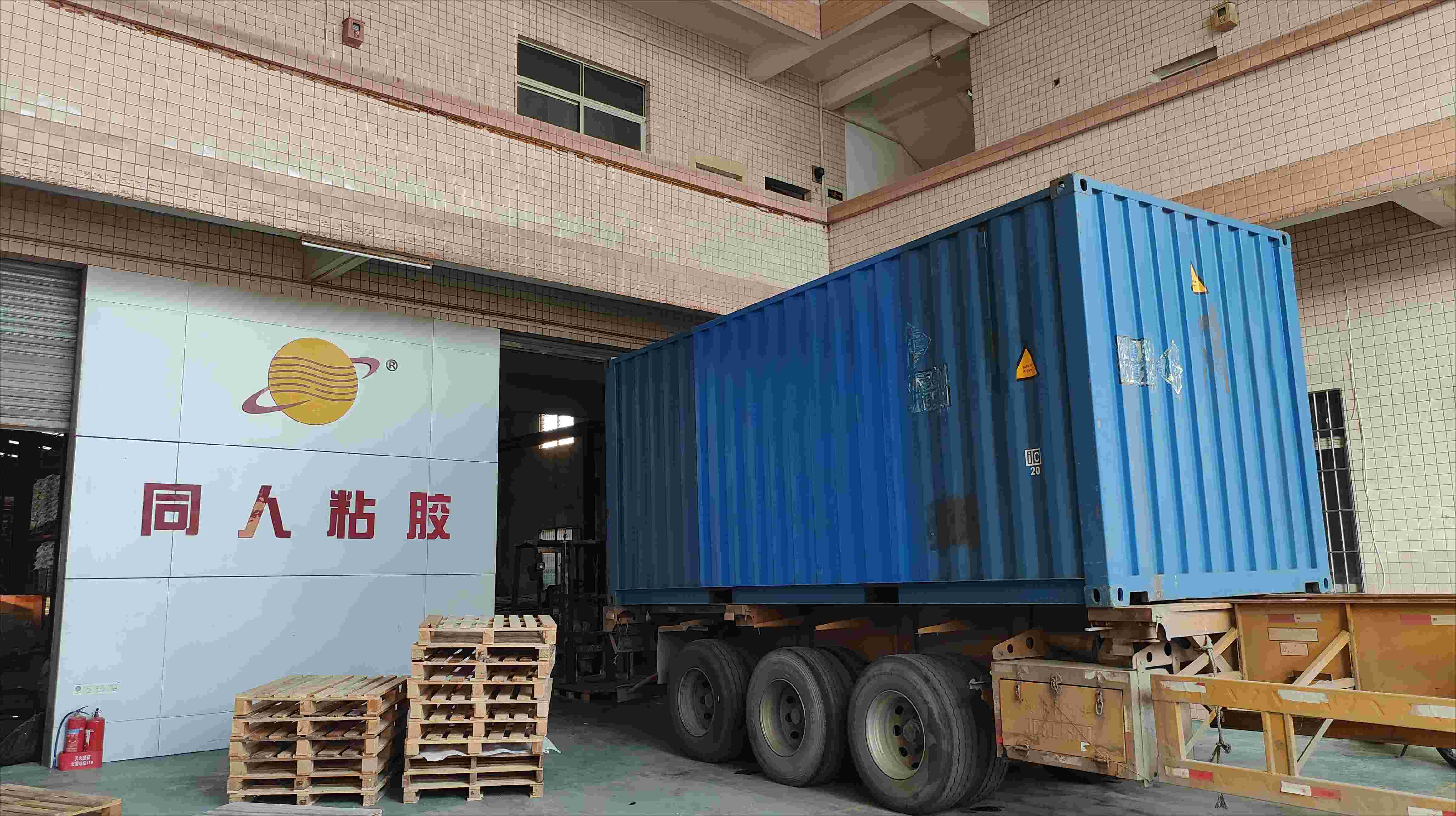
6. Factory Solution: How Can Foshan Tonren Adhesive Co., Ltd Support Furniture Manufacturers?
For furniture manufacturers that need more than a standard adhesive specification, supplier experience becomes an important purchasing factor.
Foshan Tonren Adhesive Co., Ltd has more than 26 years of experience in adhesive R&D, manufacturing, and market service.
Since 1999, the company has developed functional adhesive solutions for woodworking and other industrial applications.
Its product portfolio covers multiple adhesive categories, including:
Edge Banding Adhesive
Wrap Glue
Lamination Glue
3D Lamination Glue
Solid Wood Glue
PUR Adhesive
Other functional adhesive solutions
The company obtained ISO9001 quality system certification in 2010, providing an established quality-management foundation for production and supply.
For furniture manufacturers, the value of a factory supplier is not only the adhesive itself.
It is the ability to connect the adhesive formulation with the production process.
From Adhesive Selection to Production Optimization
A practical technical assessment can follow this sequence:
Step 1 — Identify the Substrate
MDF, WPC, wood, composite material, aluminum, or another profile substrate.
Step 2 — Identify the Decorative Material
PVC film, wood veneer, decorative paper, or another surface material.
Step 3 — Review the Wrapping Equipment
Check the adhesive application system, heating system, roller/nozzle configuration, machine speed, and cleaning procedure.
Step 4 — Establish Application Conditions
Evaluate:
Application temperature
Adhesive viscosity
Coating amount
Open time
Wrapping pressure
Production speed
Step 5 — Conduct a Production Trial
Instead of testing only a small flat panel, use the actual furniture profile geometry whenever possible.
Step 6 — Evaluate After Curing
Check the finished profile after sufficient curing rather than judging the adhesive immediately after wrapping.
Step 7 — Simulate Real Service Conditions
Depending on the application, evaluate heat, humidity, water exposure, aging, and transportation conditions.
This approach allows the manufacturer and adhesive supplier to identify the actual source of failure instead of simply changing glue.
7. What Evidence Should Buyers Request From a PUR Adhesive Supplier?
Before approving a new supplier, procurement teams can prepare a simple evidence checklist.
| Evidence | Why It Matters |
|---|---|
| TDS | Confirms technical specifications |
| SDS | Supports safe handling and compliance review |
| Sample batch | Enables production testing |
| Application recommendation | Helps establish machine parameters |
| Test data | Provides evidence for performance claims |
| Batch information | Improves traceability |
| Quality certificates | Supports supplier qualification |
| Factory information | Helps assess manufacturing capability |
| Packaging details | Reduces storage and transportation risks |
| Technical support | Helps solve process-related problems |
The stronger the evidence package, the lower the risk of making a purchasing decision based purely on marketing claims.
8. The Practical Route to Lower Rework Rates
Furniture manufacturers should not expect adhesive alone to eliminate every wrapping defect.
A more realistic quality-control model is:
Suitable Adhesive + Correct Application Parameters + Stable Equipment + Controlled Substrates + Proper Curing = Lower Bonding Risk
This is especially important for PUR adhesive because moisture-curing behavior means storage, handling, application, and curing conditions can influence final performance.
In other words, buying a high-performance adhesive is only the first step.
The factory must also establish a repeatable process.
9. Why Factory-Level Adhesive Support Matters
A furniture manufacturer may have the same adhesive product but completely different production results from another factory.
Why?
Because the production conditions are different.
For example:
One factory may use PVC film.
Another uses wood veneer.
One runs at a moderate production speed.
Another operates a high-speed wrapping line.
One has stable workshop humidity.
Another operates in a humid coastal environment.
One uses MDF.
Another uses WPC or aluminum profiles.
Therefore, the best PUR Profile Wrapping Adhesive is not necessarily the product with the highest specification on paper.
It is the product that matches the factory's actual process.
This is also why working directly with a professional adhesive manufacturer can be more efficient than purchasing an anonymous generic product through multiple intermediaries.
10. Procurement Checklist: 10 Questions to Ask Before Ordering PUR Wrapping Adhesive
Before approving a supplier, furniture manufacturers can ask:
Is the adhesive specifically suitable for profile wrapping?
What substrates have been tested?
Which PVC films, veneers, or decorative materials are compatible?
What is the recommended application temperature?
What is the recommended coating amount?
What viscosity range is suitable for our equipment?
What is the expected open-time window?
What heat and moisture resistance data are available?
Can the supplier provide TDS, SDS, and relevant test documentation?
Can the supplier provide technical support during production trials?
These questions help procurement teams move from “buying glue” to “buying a controlled bonding solution.”
11. FAQ About PUR Profile Wrapping Adhesive
Is PUR Profile Wrapping Adhesive better than EVA for furniture profile wrapping?
Not necessarily for every application. EVA can be suitable for many conventional wrapping processes, while PUR is often considered when higher long-term resistance to heat, moisture, aging, and demanding service conditions is required. The correct choice depends on the complete application.
Can PUR adhesive prevent profile wrapping delamination?
A properly selected and correctly applied PUR adhesive can reduce the risk of adhesive-related delamination. However, delamination can also result from poor substrate preparation, incorrect coating amount, unsuitable application temperature, insufficient curing, or equipment problems.
Is PUR adhesive suitable for PVC decorative film?
PUR adhesives can be formulated for decorative profile wrapping applications involving PVC film. Compatibility should still be confirmed through actual production trials because PVC formulations, surface treatments, and profile substrates can vary.
Can PUR adhesive be used on WPC profiles?
It can be considered for WPC profile wrapping, but the specific WPC formulation and surface condition should be tested before mass production.
How can furniture factories reduce adhesive-related rework?
Start by identifying the failure mode. Check the substrate, decorative material, adhesive, application temperature, coating amount, machine speed, pressing conditions, and curing environment. Changing the adhesive without identifying the process problem may not solve the root cause.
What documents should I request from a PUR adhesive manufacturer?
At minimum, buyers should consider requesting a TDS and SDS, together with relevant product specifications, application recommendations, test data, and quality/compliance documentation applicable to their market.
12. Conclusion: Choose PUR Adhesive Based on Production Risk, Not Just Price
For furniture manufacturers, reducing rework is fundamentally a production-control problem.
A reliable PUR Profile Wrapping Adhesive can play an important role because it can provide durable bonding performance for demanding profile-wrapping applications.
But the best procurement decision should consider the entire system:
Adhesive Performance + Substrate Compatibility + Machine Conditions + Application Parameters + Curing + Supplier Support
When these factors are evaluated together, manufacturers can make a more informed decision, reduce avoidable bonding failures, and improve production consistency.
With more than two decades of adhesive manufacturing experience, Foshan Tonren Adhesive Co., Ltd can work with furniture manufacturers to evaluate their wrapping requirements and select a suitable functional adhesive solution.
If your factory is currently facing edge lifting, bubbling, delamination, unstable bonding, excessive adhesive consumption, or high profile-wrapping rework, the next step is not simply to change suppliers.
Start by reviewing your complete bonding process and discuss the application with an experienced adhesive manufacturer.
Contact Foshan Tonren Adhesive Co., Ltd for PUR profile wrapping adhesive samples, technical recommendations, and application-specific procurement support.