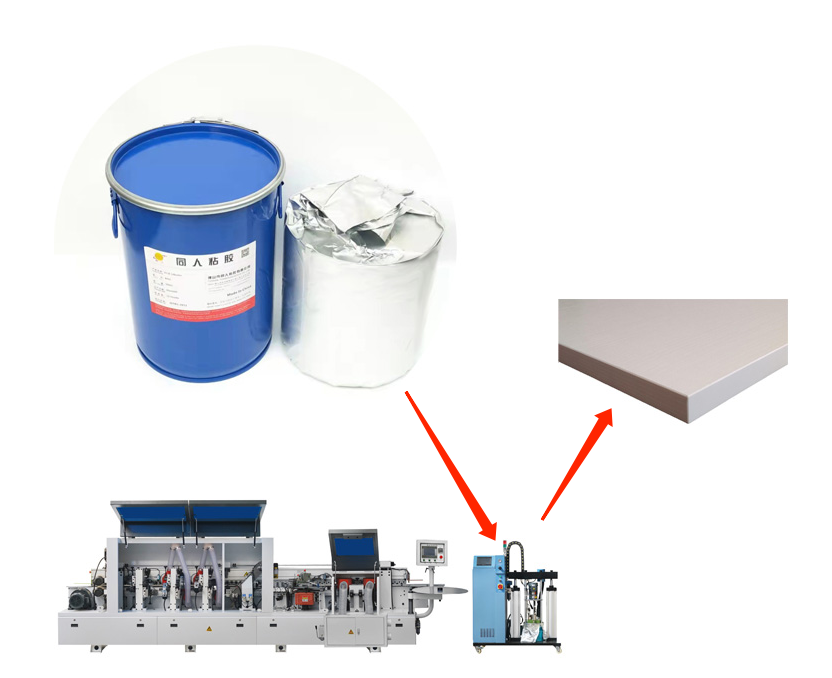
How PUR Edge Banding Glue Solves Edge Banding Pain Points & Upgrades Home Quality
In the custom home industry, edge banding is a key factor in determining the appearance and durability of products. However, pain points such as high temperature glue opening, low temperature false sticking, obvious glue lines, and high costs have been troubling many production enterprises. Foshan Tongren Adhesive has over 26 years of experience in the research, development, production, and sales of various types of adhesives. TONGREN Adhesive, a PUR edge banding adhesive, has become the preferred partner for home furnishing enterprises to improve quality and efficiency with its strong ability to solve the top ten edge banding problems in a targeted manner!
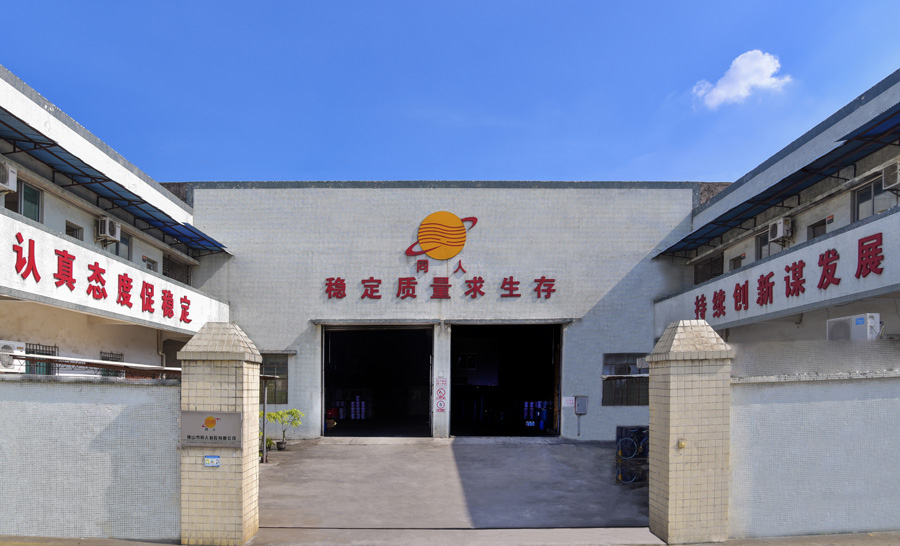
Core values strike at the top ten pain points of the industry, defining a new standard for edge banding
In customized home production, small problems in the edge sealing process often lead to big troubles. The doujin PUR edge banding adhesive brought by Jiaowang Material provides precise solutions to the TONREN pain points in the industry:
Choose TONGREN PUR edge banding adhesive to avoid the following ten pain points in edge banding
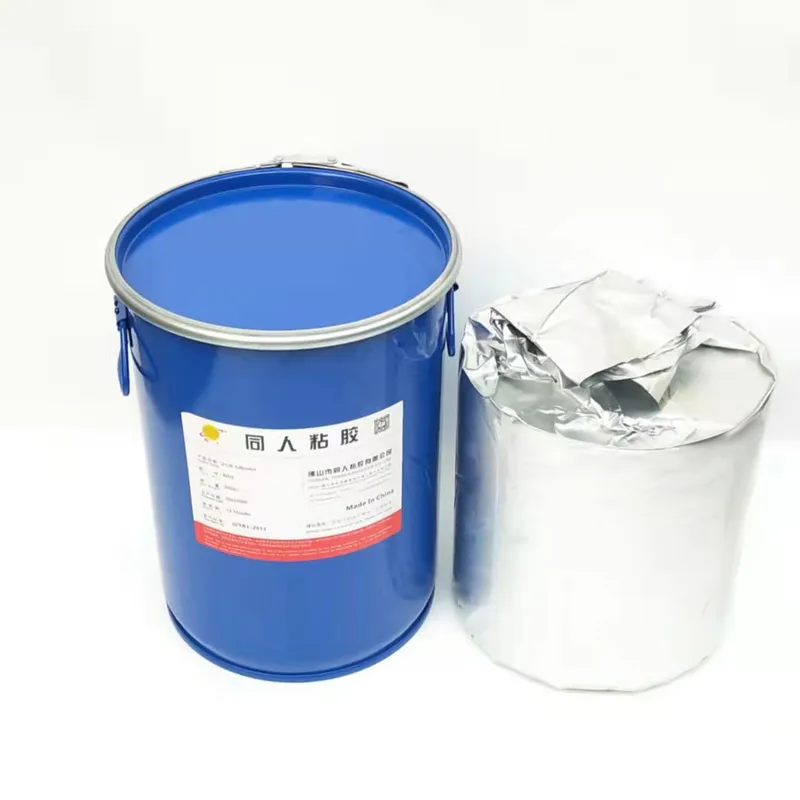
Pain Point 1:
Insufficient initial tack of PUR edge banding adhesive in high-temperature seasons, especially prone to end debonding when edge banding narrow or short edges.
This is because PUR adhesive is a moisture-curing reactive adhesive. In high-temperature environments, the reaction and curing time of PUR adhesive becomes longer. After applying the adhesive and passing through the pressure rollers, the adhesive has not yet formed initial tack, which easily pushes the edge banding open during trimming.
Therefore, we need to choose a PUR edge banding adhesive that can cure quickly and form certain initial tack even in high-temperature climates.
Pain Point 2:
Poor adhesion or false bonding of PUR edge banding adhesive in low-temperature and low-humidity environments.
This is because PUR adhesive is a moisture-curing reactive adhesive, which is sensitive to environmental humidity and temperature. In low-temperature and low-humidity environments, some PUR adhesives enter an inactive, non-reactive state.
This requires us to select a PUR edge banding adhesive that can react and bond quickly even in low-temperature environments.
Pain Point 3:
Stringing during glue application on the glue roller, leading to board contamination and sticking after edge banding.
Causes related to the adhesive: excessive cohesive force of the PUR adhesive used, excessively long open time, and residual viscosity/wettability of the overflowed adhesive after edge banding.
We need to choose a PUR edge banding adhesive with moderate cohesive force and fast curing.
Pain Point 4:
Uneven glue lines (thick in some areas, thin in others) and pinholes after edge banding.
Main causes related to the adhesive: poor fluidity, excessively high viscosity, or poor aging resistance of the adhesive, resulting in uneven glue application.
We need to select a PUR edge banding adhesive with good fluidity and smooth glue application.
Pain Point 5:
Obvious glue lines after edge banding, acceptable pull strength right off the machine but no significant increase or even decrease the next day, and even debonding after furniture installation due to environmental impact.
This means you have definitely bought counterfeit PUR, non-pure PUR, or even barreled EVA adhesive. Pure PUR is a reactive adhesive whose bonding strength increases over time until the reaction is fully completed in 3-7 days. After full reaction, it can withstand high temperatures up to 140-150°C, has excellent water resistance, irreversible bonding, and achieves high bonding strength with a small amount of adhesive (thin glue lines).
This highlights the importance of choosing a genuine pure PUR adhesive.
Pain Point 6:
Visible glue lines after edge banding, especially whitish and thick glue lines on dark-colored boards.
Causes related to the adhesive: excessive filler in PUR adhesive, whitish color, excessively high viscosity, and poor thermal stability, fluidity, wettability, and permeability.
We need to choose a PUR edge banding adhesive with less filler, moderate viscosity, good thermal stability, and excellent permeability.
Pain Point 7:
Aging and unusable adhesive on the glue roller after less than 1 hour (even around 30 minutes) of idling.
Causes: poor thermal stability, fast aging, excessively short open time, and poor wettability of the PUR adhesive.
We need to select a PUR edge banding adhesive that can remain usable on the glue roller for more than 1 hour during idling.
Pain Point 8:
Frequent clogging of glue tubes.
Causes related to the adhesive: PUR is a reactive adhesive that reacts when exposed to temperature and humidity (air). Over-reaction leads to adhesive aging, and aged adhesive cannot be remelted and loses fluidity, causing glue tube clogging.
We need to choose a PUR edge banding adhesive with good thermal stability, slow viscosity change, and high heat resistance.
Pain Point 9:
Low yield, leading to high actual usage cost.
Generally, the glue application amount for particleboard is 150g/㎡, and for high-density substrates such as plywood and ecological board, it is 120g/㎡. The average glue application amount in actual application should not be less than 130g/㎡. A 20kg barrel of adhesive edge banding 7000-9000m is normal; if the yield is below 6500m even after reducing the glue application amount for 20mm boards, it is abnormal.
Causes: excessive filler in the adhesive, poor fluidity, excessively high viscosity, or fast aging of the adhesive.
Therefore, we need to reselect a PUR edge banding adhesive with high yield.
Pain Point 10:
Excessively high price of PUR adhesive, leading to high usage cost.
Some brands have inflated prices and overly long sales channels.
We need to choose a PUR edge banding adhesive sold directly from the factory with high cost-performance ratio.