
How to Choose High-Temperature Resistant Hot Melt Adhesives for Construction Decoration Material Processing?
Picture a sleek, modern building facade in Dubai, its composite panels baking under a relentless sun. Imagine the interior of a high-end kitchen, where oven-adjacent cabinets face waves of dry heat. Visualize an airport terminal, where massive decorative wall systems must withstand decades of temperature swings from HVAC systems. In these scenarios, a failure isn't just a cosmetic flaw; it's a structural compromise, a costly repair, and a reputational disaster. At the heart of these potential failures—or their lasting success—lies a critical, often underestimated component: the adhesive. For engineers, architects, and procurement specialists, the million-dollar question is: How to choose high-temperature resistant hot melt adhesives for construction decoration material processing? The answer is a blend of material science, rigorous testing, and proven field performance—a discipline mastered over 26 years by Foshan Tonren Adhesive Co., Ltd.
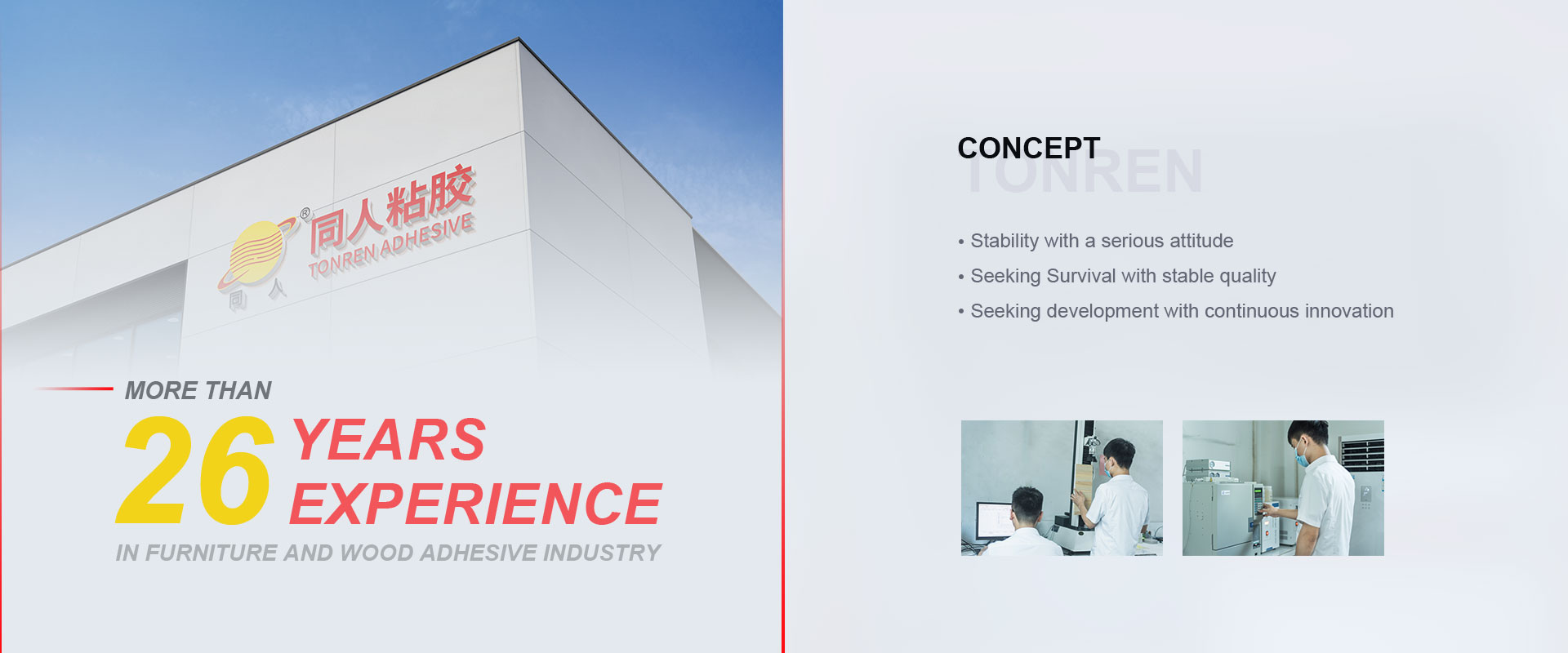
Since its founding in 1999, Tonren has navigated the evolution of construction from mere assembly to high-performance engineering. The company’s journey, underscored by its ISO 9001 certification, mirrors the industry's own rising standards. Today, a construction decoration adhesive is not just a sticky substance; it is a engineered polymer system tasked with maintaining integrity where other materials falter. Tonren’s expertise lies in formulating hot melt adhesive solutions that do not merely survive but thrive under thermal duress, ensuring that the beauty of modern architecture is never skin-deep.
The Heat is On: Understanding the Thermal Adhesive Challenge
Construction decoration materials face a uniquely harsh set of conditions that ordinary adhesives cannot endure:
Solar Loading: Dark-colored exterior cladding, composite aluminum panels, and sun-facing decorative elements can easily reach surface temperatures exceeding 80°C (176°F), with peak temperatures soaring much higher in certain climates and seasons.
Thermal Cycling: Daily and seasonal temperature fluctuations cause materials to expand and contract at different rates. An adhesive must have enough elasticity (a high modulus) to absorb this movement without cracking, yet enough cohesive strength to hold the bond line firm. This cyclic stress is a primary cause of adhesive fatigue.
Process Heat: During manufacturing and installation, materials may be subjected to heat from laminating presses, vacuum forming machines, or on-site welding nearby. The adhesive must withstand this processing heat without softening or degrading.
Operational Heat: Interior applications near HVAC vents, lighting fixtures, kitchen appliances, or industrial equipment create localized high-temperature environments that can weaken standard bonds over time, leading to sagging panels or delamination.
Choosing incorrectly means risking the gradual, silent failure of the bond—a phenomenon where the adhesive layer softens, creeps under sustained load, and ultimately lets go. This is why selecting a truly high-temperature-resistant hot melt adhesive is a non-negotiable first step in responsible specification.
The Tonren Formula: Engineering Stability into Every Pellet
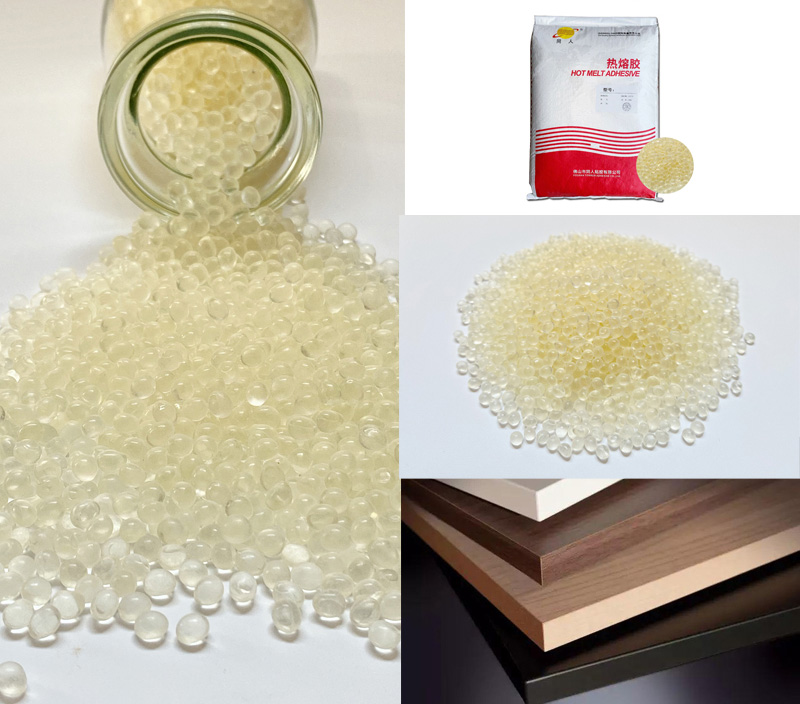
Tonren’s approach to conquering heat is methodical and rooted in advanced polymer chemistry. Their thermal stability hot melt adhesive products are built on a foundation of precision and proven performance.
1. The Core Chemistry: Beyond Basic EVA
While many standard hot melts use Ethylene-Vinyl Acetate (EVA) as a base, Tonren’s high-temperature formulations often utilize more sophisticated polymer backbones:
Polyolefins (PO) and Polyamide (PA): These polymers inherently offer higher heat resistance, better chemical stability, and superior aging properties compared to standard EVA. They form a tougher, more resilient bond line that resists softening.
Reactive Hot Melt Adhesives (PUR): For the most extreme applications, Tonren offers reactive polyurethane hot melts. These adhesives cure by reacting with ambient moisture, forming a cross-linked polymer network that is incredibly resistant to heat, solvents, and plasticizer migration—common killers of adhesive bonds in PVC-rich environments.
2. The Proof is in the Testing: Data-Driven Confidence
Tonren doesn't just claim thermal stability; they validate it through internationally recognized, brutal testing protocols. This data is the cornerstone of a reliable specification.
ISO 18423 - Heat Stability Test: This test measures the adhesive's resistance to thermal degradation over time at elevated temperatures. Tonren’s premium grades demonstrate exceptional stability, with viscosity change rates of ≤10% over 72 hours at high service temperatures. This means the adhesive's application properties and bond strength remain consistent, batch after batch, even in hot holding tanks.
ISO 188 - Accelerated Aging (Heat Aging) Test: This subjects the cured adhesive to prolonged, elevated heat to simulate years of service life in a condensed timeframe. Adhesives that pass retain a high percentage of their original tensile strength and elasticity, proving they won't become brittle and crack over time.
Wide Service Temperature Range: A key metric is the useful operating window. Tonren’s specialized products are engineered to maintain performance across a staggering -40°C to 160°C range. This ensures the bond remains flexible in a freezing winter and steadfast in a scorching summer, handling thermal cycling with ease.
3. Multisubstrate Mastery: Bonding the Building Blocks of Modern Design
Construction is a symphony of different materials. A superior adhesive must be a versatile performer.
Wood & Engineered Wood: Provides strong, deep penetration bonds for MDF, particleboard, and solid wood used in decorative wall panels and architectural millwork.
PVC & Composite Decorative Films: A critical application. Tonren’s adhesives are formulated to resist plasticizer migration from flexible PVC, a common cause of bond failure. This makes them an ideal partner for vacuum forming adhesive processes where films are molded over 3D substrates.
Metals (Aluminum, Steel): Formulated with tackifiers and polymers that provide excellent adhesion to metal surfaces, crucial for bonding decorative metal veneers or inserts.
Plastics & Composites: Ensures reliable bonds to a variety of engineering plastics and fiber-reinforced composites used in modern facade systems.
Industry Analysis: Key Parameters for High-Temp Adhesive Selection
| Performance Dimension | Critical Parameter | Standard Industrial Grade | Tonren High-Temp Performance Grade | Why It Matters in Construction |
| Heat Resistance | Softening Point (Ring & Ball) | 70°C - 90°C | 100°C - 130°C+ | Determines the temperature at which the adhesive begins to lose structural integrity. Prevents sagging in sun-exposed applications. |
| Thermal Stability | Viscosity Change @ Temp (ISO 18423) | Can exceed 50% change in 24h | ≤10% change over 72 hours | Ensures consistent pumpability and application performance in heated hoses and tanks, critical for automated production lines. |
| Service Temperature Range | Useful Operating Window | -20°C to 80°C | -40°C to 160°C | Guarantees bond performance through extreme climatic cycles, from arctic cold to desert heat, and during fire-rated assembly tests. |
| Long-Term Durability | Tensile Strength Retention after Heat Aging (ISO 188) | May drop below 50% after testing | Retains >80% of original strength | Predicts the adhesive's lifespan. High retention means the bond will last decades without degrading under constant thermal stress. |
| Substrate Versatility | Peel Strength on Various Materials | Good on porous materials (wood, MDF) | Excellent on non-porous (PVC, Metal, Plastics) | Modern construction uses diverse material combinations. The adhesive must bridge them all effectively. |
| Process Compatibility | Open Time / Set Speed | Varies widely; may not be optimized for heavy materials | Engineered for specific processes like vacuum forming or heavy panel lamination | For vacuum forming adhesive applications, sufficient open time is needed for film draping; for panel lamination, a fast set speed boosts throughput. |
| Safety & Compliance | VOC Content, Certifications | May have higher VOC levels | Low-VOC formulations; Compliant with key international building material standards | Essential for indoor air quality (e.g., LEED projects) and for meeting regulatory hurdles in global markets. |
From Factory to Facade: Application-Specific Solutions
Tonren’s technology translates into reliable performance across key construction decoration processes:
Decorative Panel Lamination: Bonding high-pressure laminates (HPL), vinyl films, wood veneers, or thin metal sheets to plywood, MDF, or cement board cores for interior wall cladding, cubicle partitions, and furniture. The high-temperature-resistant hot melt adhesive ensures these panels won't delaminate when installed near heat sources or in sun-drenched atriums.
Vacuum Forming of 3D Components: This process involves softening a decorative PVC decorative film with heat and using a vacuum to pull it over a contoured substrate (like a door profile or decorative trim). The vacuum forming adhesive used must have a precise melt viscosity and a long enough open time to allow the film to conform perfectly, yet ultimately provide a heat-resistant bond that locks the film permanently in place, even on exterior elements.
Edge Banding and Sealing: The finishing touch that protects and beautifies. A specialized edge banding glue from Tonren’s high-performance range seals the edges of laminated panels against moisture ingress and provides impact resistance. Its thermal stability ensures the edge band won't peel off in high-heat environments like commercial kitchens or laundry rooms.
Composite Assembly: Bonding together different material layers to create a composite insulation or decorative panel system for facades. The adhesive acts as a critical component of the building envelope, requiring long-term durability against weathering and thermal stress.
The Cost of Getting It Wrong vs. The Value of Getting It Right
Consider a project where a standard adhesive was used to laminate stone veneer to aluminum composite panels for a southern-facing wall. Within two years, the thermal cycling and solar heat cause the adhesive to creep. Panels begin to bulge, creating a safety hazard and necessitating a full-scale, costly replacement of the facade system—a project far more expensive than the original installation.
Contrast this with a manufacturer of high-end, heat-resistant kitchen cabinets who partners with Tonren. By using a specified thermal stability hot melt adhesive for laminating and edge banding, they can confidently warranty their products for use next to ovens and dishwashers. This performance becomes a key differentiator, allowing them to command premium prices, reduce warranty claims, and build a reputation for unshakeable quality. The adhesive, though a small part of the bill of materials, becomes a giant factor in risk mitigation and brand equity.
Frequently Asked Questions (FAQ)
Q1: What is the most important number to look for when evaluating heat resistance?
A: While the softening point is a starting point, the most telling data comes from long-term heat aging tests (like ISO 188) and heat stability tests (ISO 18423). A high softening point is good, but if the adhesive becomes brittle after prolonged heat exposure, it will fail. Look for data on tensile strength retention after aging and minimal viscosity change under heat.
Q2: Can a single high-temperature hot melt adhesive work for both interior and exterior construction applications?
A: Often, yes. Tonren’s top-tier high-temperature-resistant hot melt adhesive products are designed for the most demanding conditions. If an adhesive is formulated to withstand direct sunlight, UV exposure, and wide thermal cycling for exterior use, it will inherently excel in challenging interior environments. However, for pure interior applications with lower thermal demands, a slightly different formulation may be more cost-optimized. Consulting with a technical specialist is key.
Q3: How does thermal expansion of substrates affect adhesive choice?
A: Profoundly. Different materials (e.g., aluminum vs. MDF) expand and contract at different rates. The adhesive layer must act as a flexible, forgiving intermediary. This requires an adhesive with a good balance of strength and elasticity (often measured by its modulus). Tonren’s formulations are engineered to have a modulus that accommodates the differential movement of common construction material pairings.
Q4: We use automated dispensing equipment. Will a high-temp adhesive cause clogging or maintenance issues?
A: On the contrary, a thermal stability hot melt adhesive with excellent resistance to thermal degradation (per ISO 18423) is better for automated equipment. It maintains a consistent viscosity in heated hoses and applicators, reducing charring, carbon build-up, and downtime for maintenance. Its stability ensures process consistency.
Q5: Are these high-performance adhesives compatible with green building standards?
A: Increasingly, yes. Tonren develops low-VOC, formaldehyde-free formulations that contribute to better indoor air quality, supporting certifications like LEED and BREEAM. The durability of the bond also supports sustainability by extending the lifespan of the finished product, reducing waste.
Q6: Is your vacuum forming adhesive suitable for both PVC and other decorative films?
A: Absolutely. While a primary use is for flexible PVC films, Tonren’s vacuum forming adhesive range is tested and proven on a variety of decorative laminates, including PP, PET, and some fabric-backed materials. The key is matching the adhesive's open time, tack, and final bond strength to the specific film's thickness, stretchability, and heat sensitivity.
A Call to Action for Specifiers and Builders
Do not let your next project be compromised by an unseen weakness. In the complex, demanding world of modern construction decoration, the adhesive specification is a critical line of defense against failure. It is an area where cost-cutting is a false economy and where technical expertise pays lifelong dividends.
Foshan Tonren Adhesive Co., Ltd. invites you to move beyond guesswork and generic solutions. Leverage our 26 years of focused innovation to de-risk your projects and elevate your product quality.
Begin a technical dialogue today. Contact our engineering team with your specific challenge: the materials you are bonding, the environmental conditions they will face, and the manufacturing process you employ. Request test data against ISO 18423 and ISO 188. Put samples of our high-temperature-resistant hot melt adhesive through your own rigorous trials. Discover how a partnership with Tonren provides not just a product, but the confidence that comes from proven, data-backed performance. Let us help you build structures that are as durable as they are beautiful.
Conclusion: The Foundation of Lasting Beauty
The question of how to choose high-temperature resistant hot melt adhesives for construction decoration material processing ultimately leads to a philosophy of proactive, science-based specification. It is a process that prioritizes long-term performance data over short-term cost, and that recognizes the adhesive as a permanent, load-bearing component of the assembly.
Tonren’s legacy, built on the pillars of ISO 9001 quality and relentless R&D, provides a roadmap for this selection process. By offering adhesives that conquer thermal stress—from the vacuum forming adhesive that perfects a 3D contour to the edge banding glue that seals it for life—they empower the industry to push the boundaries of design without fear of failure. In the end, the right construction decoration adhesive does more than stick two things together; it fuses them into a single, resilient entity capable of standing the test of time and temperature. It is, quite simply, the glue that holds the future of building together.