
Poor High-Temperature Edge-Banding Performance? Why Keep Using Ordinary Glue?
A Practical Guide to Choosing High-Temperature Edge Banding Adhesive for Furniture Manufacturing
A furniture edge can look perfect when it leaves the production line—and still become a problem later.
After transportation, warehouse storage, exposure to sunlight, or installation in a warm kitchen, the edge may begin to lift. PVC or ABS tape can gradually separate from the board, the glue line becomes visible, and what started as a small bonding issue eventually turns into rework, customer complaints, or an after-sales claim.
For furniture manufacturers, the question is therefore not simply:
“How much does the adhesive cost per kilogram?”
A more useful question is:
“Can the adhesive maintain reliable bonding when the finished furniture experiences high temperatures and repeated temperature fluctuations?”
This is where high-temperature edge-banding performance becomes important.
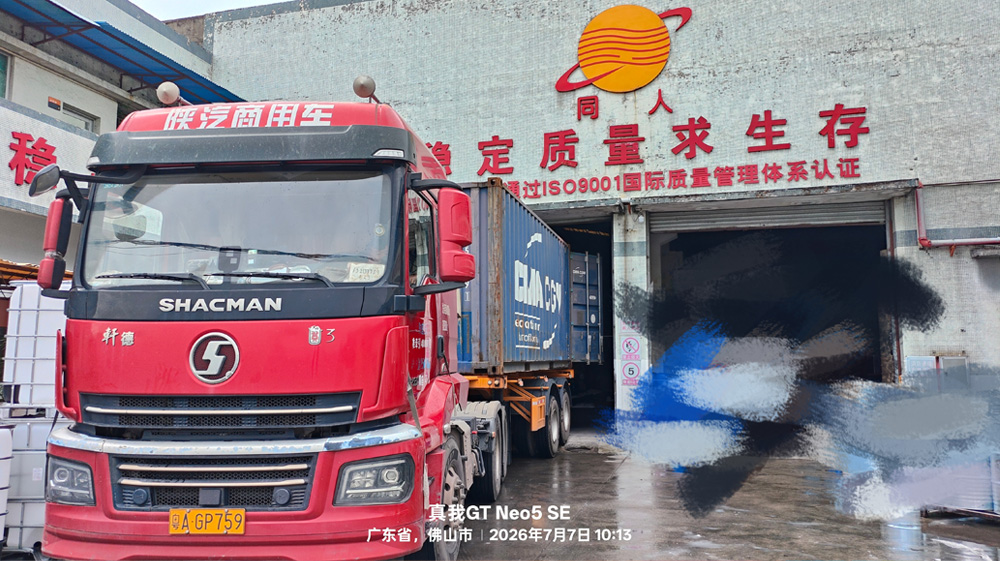
With more than 26 years of experience in adhesive R&D, manufacturing, and international sales, Foshan Tonren Adhesive Co., Ltd develops functional adhesive solutions for furniture, woodworking, decorative panels, and other industrial applications.
For manufacturers dealing with heat-related edge lifting, selecting a higher-performance edge-banding adhesive can be a practical way to improve product reliability and reduce hidden production costs.
1. Product Definition: What Is High-Temperature Edge Banding Adhesive?
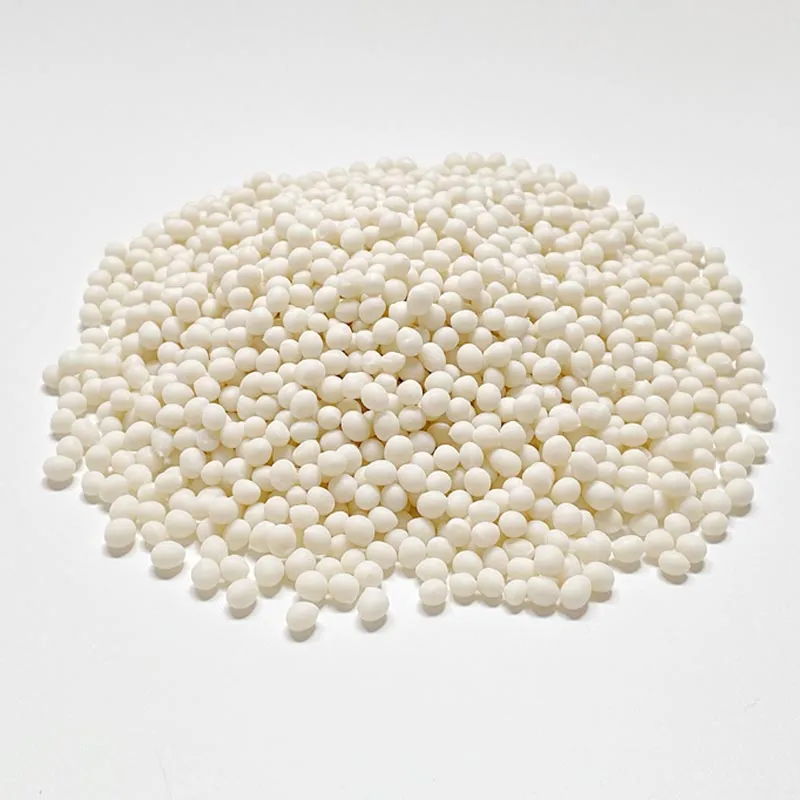
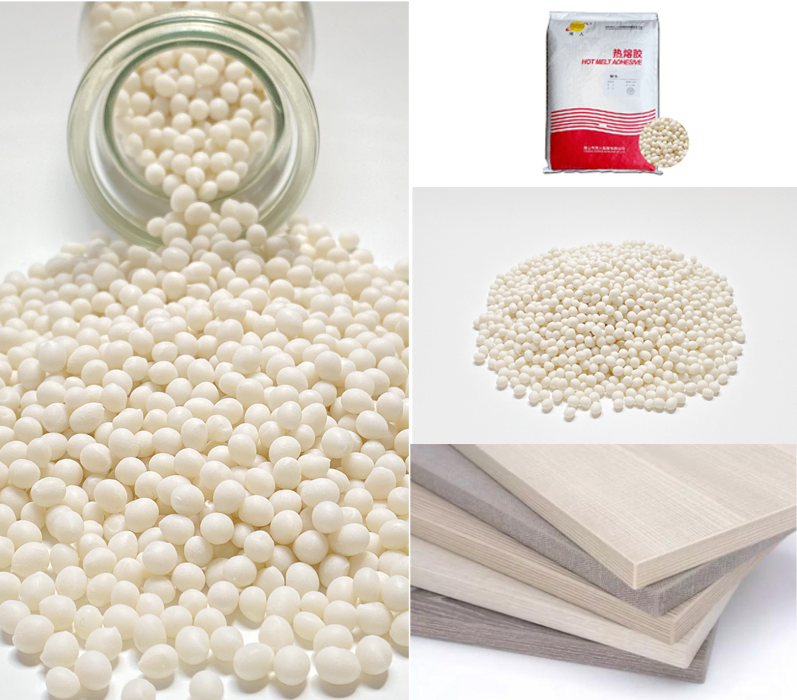
High-temperature edge banding adhesive is an adhesive formulation designed to maintain sufficient bonding integrity when furniture edges are exposed to elevated temperatures or repeated thermal changes.
It is commonly used to bond:
PVC edge banding
ABS edge banding
PP edge banding
Veneer
Melamine edge materials
onto:
MDF
Particleboard
Plywood
Wood-based composite panels
The adhesive must perform several jobs simultaneously.
It needs to:
Wet the bonding surfaces effectively.
Build sufficient initial adhesion.
Develop strong final bonding.
Resist softening under elevated temperatures.
Accommodate movement between different materials.
Maintain bonding stability during long-term use.
This is why choosing an edge-banding adhesive solely according to price can be misleading.
A cheaper adhesive that requires more consumption or causes more defects may ultimately cost more than a higher-performance solution.
2. Why Does Ordinary Glue Struggle at High Temperatures?
The problem is often related to the physical behavior of the adhesive layer.
When temperature increases, many thermoplastic hot-melt adhesives gradually soften. If the adhesive layer loses too much cohesive strength, the edge band can begin to move or peel away from the substrate.
The situation becomes more complicated because the edge band and board may have different coefficients of thermal expansion.
Imagine a simple structure:
PVC Edge Band → Adhesive Layer → MDF Panel
When temperature rises, these materials do not necessarily expand at exactly the same rate.
The adhesive layer must absorb part of this movement while maintaining sufficient bonding strength.
If it cannot, the result may include:
Edge lifting
Glue-line opening
Corner separation
Film peeling
Local delamination
The problem may become even more obvious after repeated heating and cooling.
3. Where Does High-Temperature Edge Bonding Matter Most?
3.1 Kitchen Cabinets
Kitchen furniture is one of the clearest examples.
Cabinet edges may be exposed to:
Steam
Hot air
Cooking heat
Cleaning agents
Repeated temperature changes
A cabinet edge that performs well at room temperature may not necessarily maintain the same bonding stability close to ovens, cooktops, or other heat sources.
For kitchen furniture manufacturers, high-temperature adhesive performance should therefore be part of the material selection process.
3.2 Bathroom Cabinets
Bathrooms combine another two challenging factors:
Heat + humidity.
A weak bonding interface can allow moisture to penetrate the edge. If the adhesive is also sensitive to heat, the combination can accelerate edge failure.
A suitable adhesive solution should therefore be evaluated for both thermal and moisture resistance.
3.3 Hotel and Commercial Furniture
Commercial furniture often experiences higher usage intensity than residential furniture.
Cabinet doors, drawers, desks, and storage units may be:
Opened frequently
Cleaned repeatedly
Transported between locations
Exposed to air-conditioning cycles
For large hotel or commercial projects, preventing adhesive-related defects is especially important because replacement after installation can be considerably more expensive than preventing the defect during production.
3.4 Export Furniture
Export furniture can encounter significant environmental changes during its journey.
A product may move from:
Factory → Warehouse → Container → Port → Destination Warehouse → Customer
Each stage can involve different temperature and humidity conditions.
For manufacturers serving international markets, adhesive selection should therefore consider the expected service environment rather than only the factory floor.
4. Technical Parameters: What Should Buyers Actually Compare?
A professional adhesive evaluation should go beyond the words “high temperature.”
The following parameters deserve attention.
| Parameter | Why It Matters | Suggested Evaluation |
|---|---|---|
| Heat resistance | Indicates bonding stability at elevated temperature | Defined temperature exposure test |
| Softening behavior | Shows how adhesive responds to heat | Softening/thermal analysis |
| Initial adhesion | Important immediately after edge application | Peel or bonding test |
| Final bonding strength | Indicates long-term performance | Standardized strength test |
| Cold resistance | Important for transportation and cold storage | Low-temperature conditioning |
| Flexibility | Helps accommodate material movement | Thermal cycling test |
| Viscosity | Affects application consistency | Test at specified temperature |
| Open time | Must match machine speed | Production-line trial |
| Wetting | Determines contact with substrate | Visual/strength assessment |
| Material compatibility | Prevents substrate-specific failures | Actual material testing |
Important Note
There is no single “best” adhesive parameter for every furniture factory.
The optimum formulation depends on:
Edge material
Panel substrate
Edge thickness
Machine type
Production speed
Application temperature
Glue application amount
Expected service temperature
That is why an experienced adhesive manufacturer should evaluate the complete bonding system.
5. High-Temperature Adhesive vs Ordinary Adhesive
The difference becomes easier to understand when viewed from a production perspective.
| Production Requirement | Ordinary Glue | High-Performance Solution |
|---|---|---|
| Normal indoor furniture | May be sufficient | Suitable |
| High-temperature application | Requires verification | Better suited |
| Temperature cycling | Higher risk of performance loss | Better resistance potential |
| Kitchen furniture | Application dependent | Recommended for demanding areas |
| Export furniture | Requires climate assessment | More suitable for demanding environments |
| Long-term durability | Formulation dependent | Designed for higher performance |
| Premium furniture | May have limitations | Better choice for demanding projects |
The objective is not to eliminate conventional hot-melt adhesives.
EVA and other traditional hot-melt systems remain useful for many furniture applications.
The important point is to match adhesive performance with the actual product requirement.
6. PUR Technology: Why Is It Often Considered for Demanding Applications?
For high-end furniture, many manufacturers evaluate PUR hot-melt technology because it combines hot-melt processing with reactive curing.
During application, the adhesive is processed as a hot melt.
After application, the polyurethane system reacts with moisture and develops a cross-linked structure.
This can provide advantages such as:
High bonding strength
Better moisture resistance
Improved heat resistance
Better aging performance
Stronger long-term bonding
For furniture manufacturers dealing with temperature fluctuations, PUR can therefore be an attractive alternative to conventional adhesive systems.
However, PUR requires appropriate equipment, moisture control, operating procedures, and cleaning practices.
It should not be selected simply because it is marketed as a “premium glue.”
7. Data Support: How Can a Factory Measure the Real Difference?
The most convincing adhesive evaluation is not a marketing claim.
It is a controlled production test.
Suppose a furniture factory processes 10,000 meters of edge banding per day.
If the adhesive-related defect rate is:
2.0%, potentially affected production = 200 meters/day
1.0%, potentially affected production = 100 meters/day
0.5%, potentially affected production = 50 meters/day
Reducing the defect rate from 2.0% to 0.5% would represent:
10,000 × (2.0% − 0.5%) = 150 meters/day
of potentially avoided defective edge production.
The actual financial result depends on the factory's material cost, labor cost, panel value, and rework process, but the calculation demonstrates why adhesive performance should be evaluated using production data.
Recommended Factory KPI
Manufacturers can monitor:
| KPI | Formula |
|---|---|
| Adhesive consumption | kg ÷ total edge meters |
| Edge defect rate | Defective meters ÷ inspected meters × 100% |
| Rework rate | Reworked panels ÷ total panels × 100% |
| Adhesive-related downtime | Minutes spent correcting glue problems |
| Customer complaint rate | Adhesive-related claims ÷ total shipments |
| Total adhesive cost | Adhesive + rework + waste + downtime |
This approach turns adhesive purchasing from a simple price comparison into a total-cost-of-ownership analysis.
8. Application Process: How to Improve High-Temperature Edge Bonding?
Even the best adhesive can fail if production conditions are poorly controlled.
Step 1: Check the Substrate
Make sure the MDF, particleboard, or plywood surface is:
Clean
Dry
Free from excessive dust
Properly machined
Step 2: Confirm Edge Material Compatibility
Different edge materials have different surface properties.
Always verify compatibility between:
Substrate + edge band + adhesive
before mass production.
Step 3: Set the Correct Application Temperature
The operating temperature should follow the adhesive manufacturer's technical specification.
Avoid the assumption that “higher temperature means stronger bonding.”
Excessive temperature can negatively affect adhesive stability and increase energy consumption.
Step 4: Control Application Amount
Too little adhesive may result in incomplete bonding.
Too much adhesive may cause:
Excessive consumption
Longer cooling
Poor appearance
Increased cleaning requirements
The target is uniform and sufficient adhesive coverage.
Step 5: Optimize Pressure and Speed
The edge band needs adequate contact pressure while the adhesive is still capable of creating a reliable bond.
Machine speed, pressure, temperature, and adhesive properties should therefore be considered as one system.
9. Procurement Questions: Should You Continue Using Ordinary Glue?
Q1. Is ordinary EVA hot-melt adhesive always unsuitable for high temperatures?
No.
EVA remains a widely used and cost-effective solution for many standard furniture applications. The key question is whether its verified performance matches the customer's actual service requirements.
Q2. When should I consider a higher-performance adhesive?
Consider upgrading when you encounter:
Repeated edge lifting
Heat-related peeling
Export climate requirements
Premium furniture projects
High after-sales costs
Difficult-to-bond materials
Q3. Does high-temperature adhesive always cost more?
The purchase price may be higher depending on formulation, but the more relevant figure is total bonding cost.
If a higher-performance adhesive reduces defects, rework, downtime, and claims, the overall production economics may be more favorable.
Q4. Can Tonren recommend an adhesive for my machine?
Yes. A meaningful recommendation requires production information such as:
Edgebander model
Edge material
Panel material
Machine speed
Application temperature
Current adhesive
Existing failure problem
Actual sample testing is recommended before full-scale adoption.
10. Why Choose Foshan Tonren Adhesive Co., Ltd?
Foshan Tonren Adhesive Co., Ltd has more than 26 years of experience in adhesive research, development, manufacturing, and international market service.
Our product portfolio covers multiple furniture and woodworking applications, including:
Edge banding adhesive
PUR adhesive
Lamination adhesive
3D lamination adhesive
Profile wrapping adhesive
Solid wood adhesive
Functional industrial adhesives
In 2010, Foshan Tonren Adhesive Co., Ltd obtained ISO9001 quality system certification.
For Tonren, adhesive development is not simply about producing a material.
It is about understanding how that material behaves inside a real production environment.
That means considering:
Adhesive formulation → substrate → edge material → machine → process → environment → finished product
This application-oriented approach allows Tonren to work with furniture manufacturers on practical bonding challenges rather than offering a one-size-fits-all recommendation.
11. Conversion Path: From Edge Failure to a Verified Adhesive Solution
If your factory is experiencing poor high-temperature edge-banding performance, the next step should not be to simply purchase a more expensive adhesive.
Follow a controlled evaluation process.
Step 1 — Describe the Problem
Tell the supplier:
Where does the edge lift?
At what temperature?
How long after production?
Which edge material?
Which board material?
Step 2 — Submit Production Parameters
Provide:
Machine model
Production speed
Application temperature
Glue consumption
Current adhesive type
Step 3 — Conduct Sample Testing
Test the recommended adhesive with your actual materials.
Step 4 — Run a Production Trial
Measure:
Bonding quality
Edge appearance
Glue consumption
Production stability
Cleaning frequency
Step 5 — Compare Total Cost
Do not compare only the adhesive price.
Compare:
Cost per meter + defect rate + rework + downtime + after-sales risk.
This is the more meaningful purchasing decision.
12. FAQ: High-Temperature Edge Banding Adhesive
What is high-temperature edge-banding adhesive?
It is an adhesive formulated to maintain bonding performance under elevated temperatures and thermal fluctuations. The exact temperature range depends on the specific formulation and should be verified through technical data and application testing.
Why does my edge lift only after heating?
Possible causes include adhesive softening, thermal expansion differences, insufficient bonding strength, incorrect processing temperature, inadequate pressure, or poor material compatibility.
Is PUR better than EVA for high-temperature furniture?
PUR can provide advantages in demanding applications, particularly where long-term heat, moisture, and aging resistance are important. However, EVA can remain the appropriate choice for many standard applications.
How can I reduce edge-lifting complaints?
Control the complete process rather than changing adhesive alone. Evaluate adhesive selection, material compatibility, temperature, application amount, machine pressure, feed speed, and post-production conditioning.
Can Tonren provide samples for testing?
For a suitable product recommendation, customers should provide their substrate, edge material, equipment, production conditions, and current bonding issue. Sample evaluation can then be arranged according to the actual application requirements.
13. Turn High-Temperature Bonding Problems into a Production Advantage
A furniture edge may occupy only a few millimeters of the finished product, but it can have a disproportionate effect on perceived quality.
When an edge lifts, customers do not see “a small adhesive problem.”
They see a poorly finished cabinet.
That is why high-temperature bonding performance deserves more attention in furniture manufacturing—especially for kitchen cabinets, commercial furniture, premium customized furniture, and export products.
Instead of continuing to use an ordinary adhesive simply because it has always been used, manufacturers should ask a more important question:
Does the adhesive still meet the performance requirements of today's furniture products?
With more than 26 years of functional adhesive experience, Foshan Tonren Adhesive Co., Ltd provides professional solutions for manufacturers seeking stronger and more stable edge bonding.
If you are experiencing heat-related edge lifting, send Tonren your substrate, edge material, machine model, production speed, and current adhesive specifications. Our team can use these details to help identify a more suitable bonding solution.
Conclusion
High-temperature edge failure is rarely just an adhesive purchasing issue. It is a combination of material selection, formulation, machine settings, application conditions, and the final service environment.
For standard applications, ordinary hot-melt adhesive may still be perfectly adequate.
For demanding furniture exposed to heat and temperature fluctuation, however, a high-performance edge-banding adhesive can provide a more reliable path toward lower defect rates, better product durability, and fewer after-sales problems.
With its long-term experience in functional adhesive development and manufacturing, Foshan Tonren Adhesive Co., Ltd continues to help furniture manufacturers move from “glue that works” toward bonding solutions engineered for real production conditions.