2026-04-15 10:42
In profile wrapping applications, the adhesive you choose defines not only bonding strength, but also durability, processing efficiency, and long-term product performance. As furniture and interior components move toward higher standards, manufacturers are increasingly evaluating whether traditional water-based systems are still sufficient—or if reactive PUR technologies offer a better path forward.
With over 26 years of experience in adhesive R&D, production, and global supply, Tongren has worked closely with manufacturers to optimize bonding solutions across a wide range of wrapping applications. The comparison between Water Based Profile Wrapping Adhesive and PUR Hotmelt Profile Wrapping Adhesive is no longer theoretical—it is a practical decision affecting production outcomes every day.

Water Based Profile Wrapping Adhesive relies on water evaporation to achieve bonding. It is widely used due to its environmental friendliness and relatively simple processing conditions.
Advantages:
Low odor and safer handling
Cost-effective for standard applications
Suitable for temperature-sensitive materials
Limitations:
Slower curing time
Lower heat and moisture resistance
Potential instability in humid environments
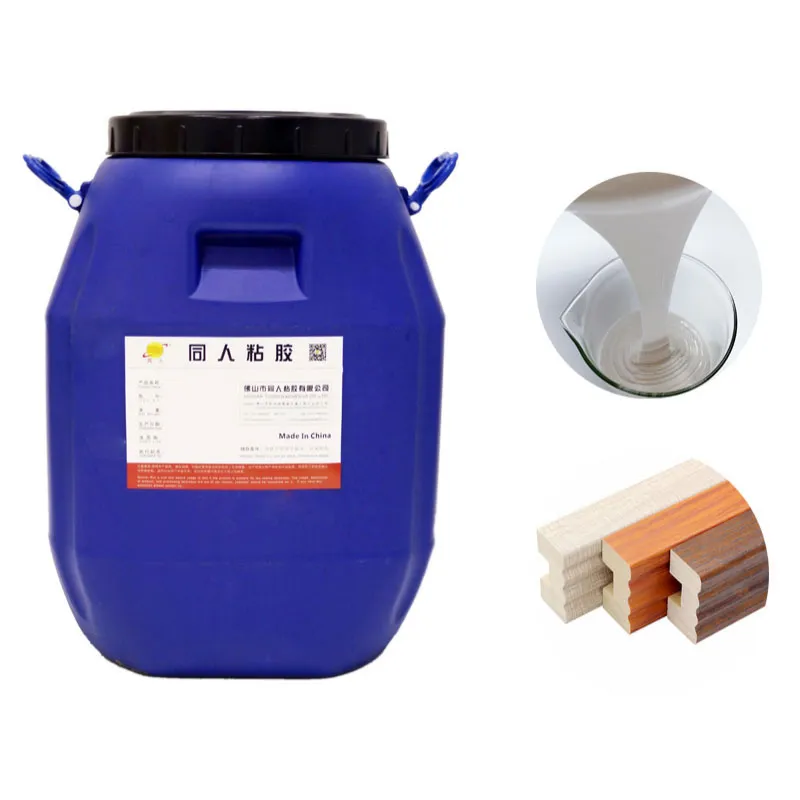
PUR Hotmelt Adhesive combines thermoplastic processing with chemical cross-linking. After application, it reacts with ambient moisture to form a durable, thermoset bond.
Advantages:
Superior bonding strength
Excellent resistance to heat, moisture, and chemicals
Long-term durability and aging resistance
Challenges:
Requires controlled storage and handling
Higher initial material cost
For demanding applications, PUR Hotmelt Profile Wrapping Adhesive is increasingly considered the premium solution.
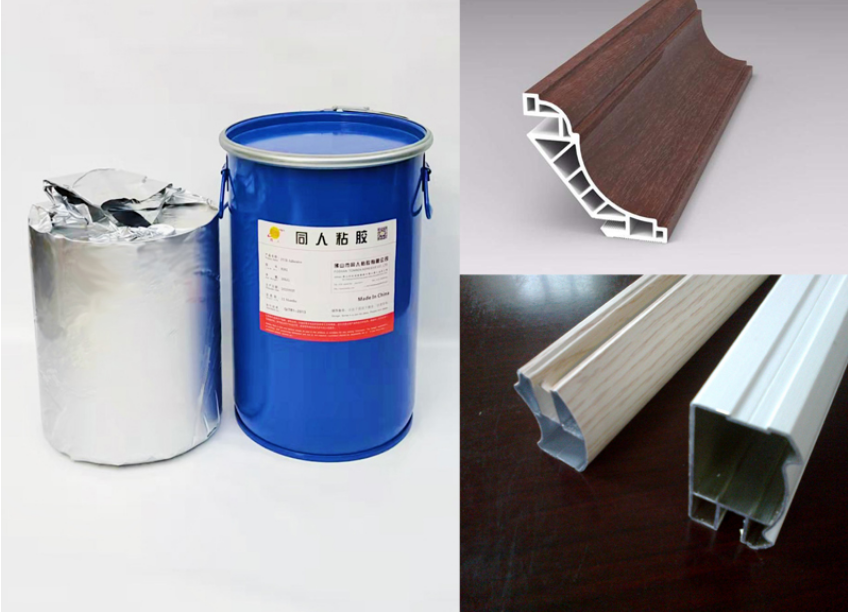
| Performance Indicator | Water Based Profile Wrapping Adhesive | PUR Hotmelt Profile Wrapping Adhesive |
|---|---|---|
| Bonding Strength | Moderate | High |
| Heat Resistance | Low–Medium | Excellent |
| Moisture Resistance | Moderate | Excellent |
| Curing Speed | Slower | Fast |
| Aging Resistance | Medium | Long-term stable |
| Environmental Impact | Low VOC | Low emission (after curing) |
This comparison highlights the growing shift toward PUR Hotmelt Adhesive in high-performance manufacturing environments.
Water Based Profile Wrapping Adhesive remains a practical choice for:
Standard indoor furniture
Low-cost production environments
Applications with minimal exposure to heat or moisture
Its simplicity and lower cost make it suitable for less demanding use cases.
For manufacturers aiming at durability and premium quality, PUR Hotmelt Profile Wrapping Adhesive offers clear advantages.
It is particularly effective in:
High-gloss or decorative surfaces
Profiles exposed to humidity or temperature variation
Export-grade products requiring long-term reliability
Compared with traditional Hotmelt Profile Wrapping Adhesive, PUR systems provide a stronger and more stable bond over time.
Tongren has spent more than two decades refining adhesive formulations to meet real production challenges. Our Profile Wrapping Adhesive solutions are engineered to balance performance, efficiency, and reliability.
Our PUR Hotmelt Adhesive products are designed to:
Prevent edge cracking and delamination
Withstand high temperatures and humidity
Resist mold and water damage
Maintain bonding integrity over extended periods
These advantages make them a preferred choice for manufacturers seeking long-term performance rather than short-term savings.
Q1: Is water-based adhesive still relevant today?
Yes, especially for cost-sensitive and low-demand applications.
Q2: Why is PUR Hotmelt Adhesive more durable?
Because it forms a cross-linked structure after curing, making it resistant to heat and moisture.
Q3: Does PUR require special equipment?
Yes, proper systems ensure optimal performance and safe handling.
Q4: Which adhesive is better for export furniture?
PUR Hotmelt Profile Wrapping Adhesive is generally preferred due to its stability in varying climates.
Q5: Can Tongren customize adhesive solutions?
Yes, formulations can be tailored based on specific production requirements.
If your production is evolving toward higher quality and global standards, it is time to reconsider your adhesive strategy. Upgrading from traditional Water Based Profile Wrapping Adhesive to advanced PUR Hotmelt Profile Wrapping Adhesive can significantly improve product durability and customer satisfaction.
Choosing between Water Based Profile Wrapping Adhesive and PUR Hotmelt Adhesive ultimately depends on your production goals. While water-based systems remain practical for basic applications, PUR technologies are setting new benchmarks in strength, durability, and reliability.
In an industry where quality defines competitiveness, the right adhesive is more than a material—it is a strategic advantage.
With over 26 years of experience, Tongren continues to deliver adhesive solutions that help manufacturers stay ahead in an increasingly demanding global market.