
What Kind of White Edge Banding Glue Works For High‑Volume Cabinet Manufacturing?
Meta Title: What White Edge Banding Glue Suits Mass Cabinet Production?
1. User Problem: Why Is White Edge Banding Glue So Important for Mass Cabinet Production?
For a furniture factory producing hundreds or thousands of cabinet panels every day, edge banding is more than a finishing step. It directly affects production speed, product appearance, bonding quality, and the amount of rework required before shipment.
White cabinets make the process even more demanding.
On white MDF panels, white kitchen cabinets, wardrobes, and light-colored furniture, a visible glue line can quickly become a quality issue. Uneven adhesive application, excessive glue, poor initial bonding, or inconsistent machine conditions may result in noticeable edges, adhesive squeeze-out, or local edge lifting.
When these problems occur repeatedly across a large production batch, the consequences extend beyond appearance:
More time spent cleaning adhesive residue.
Additional inspection and edge trimming.
Increased scrap and rework costs.
Production interruptions caused by unstable bonding.
Inconsistent finished quality between batches.
The challenge is therefore not simply to find white adhesive. It is to choose a White Edge Banding Glue that matches the factory's machine configuration, edge-band material, production speed, and appearance requirements.
For high-volume cabinet manufacturing, three purchasing priorities should guide the decision:
Production stability: The adhesive should melt and apply consistently under validated machine conditions.
Appearance consistency: It should support a thin, uniform glue line with controlled squeeze-out.
Reliable bonding: The edge band must remain securely attached during subsequent processing and handling.
A suitable adhesive can help improve these outcomes, but the final result also depends on equipment maintenance, material compatibility, and process control.
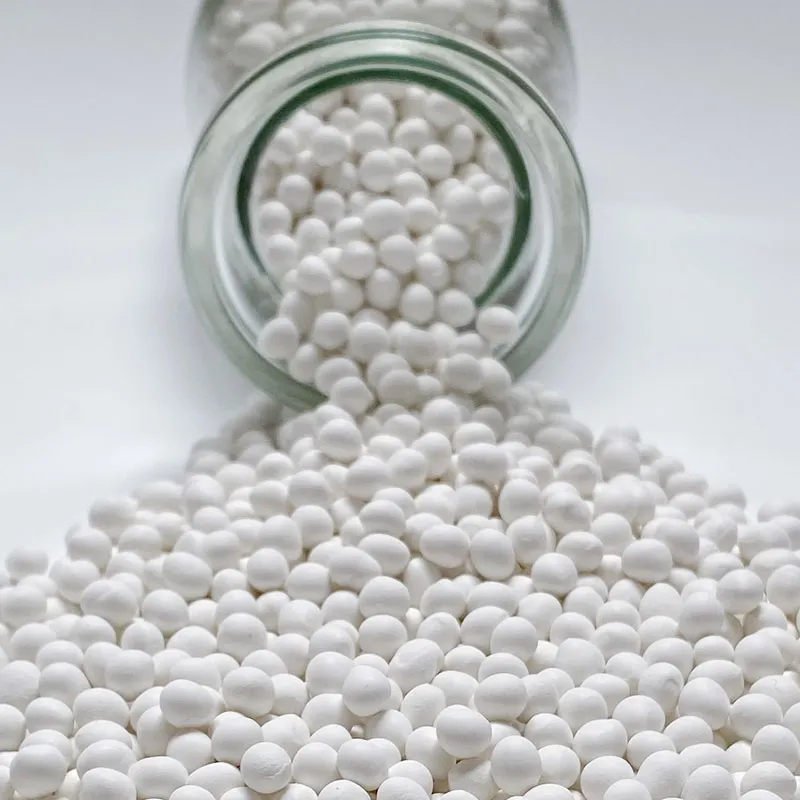
2. Product Selection: Which White Edge Banding Glue Is Suitable for High-Volume Production?
Not every white hot-melt adhesive is designed for the same operating conditions. Buyers should compare adhesive grades according to machine type, melting behavior, initial bonding performance, and required glue-line appearance.
2.1 White EVA Edge Banding Glue for Automatic Production
EVA hot-melt adhesive is a practical option for many conventional furniture edge-banding applications. It is applied in a molten state and develops a bond as it cools.
For manufacturers using automatic straight-line edge-banding machines, the adhesive needs to provide a suitable balance of melting speed, viscosity, initial bonding, and coating performance.
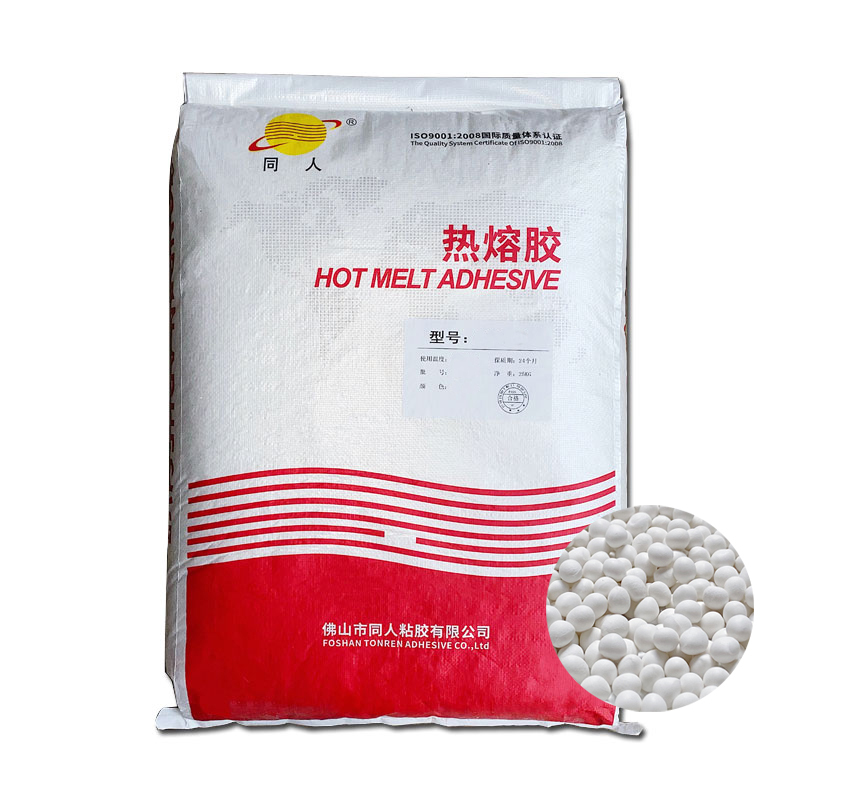
Foshan Tonren Adhesive Co., Ltd offers two grades under its White Color Edge Banding Glue range: 788HB and 789. Both are EVA-based hot-melt adhesives intended for white and light-colored panels. The manufacturer highlights thin glue lines and bonding performance among the product features.
2.2 Tonren 788HB vs. 789: How Should Buyers Choose?
The two grades have different stated characteristics, so the best option depends on the actual production requirement.
| Selection Factor | Tonren 788HB | Tonren 789 |
|---|---|---|
| Basic ingredient | EVA | EVA |
| Published viscosity | 70,000 ± 5,000 mPa·s at 200°C | 60,000 ± 5,000 mPa·s at 200°C |
| Recommended operating temperature | 180–210°C | 180–210°C |
| Main stated characteristics | Lower coating amount, very thin glue line, improved bonding strength | Fast melting, very thin glue line, high initial peeling strength |
| Published application positioning | Various thick and thin edge bands | Fully automatic straight-line edge-banding machines |
These specifications are published by Tonren and should be confirmed against the latest technical data sheet before purchasing. Actual performance will depend on the machine, substrate, edge-band material, and processing conditions.
When should you consider 788HB?
Consider 788HB when controlling adhesive consumption and achieving a thin glue line are important production objectives, provided the grade performs well in your machine trial.
When should you consider 789?
Consider 789 when fast melting and high initial peeling strength are priorities, particularly for automatic straight-line edge-banding production.
Neither grade should be selected solely from its product description. A controlled trial is the most reliable way to determine which adhesive suits your production line.
3. Technical Parameters: What Should You Check Before Ordering White Edge Banding Glue?
In high-volume manufacturing, an adhesive specification must translate into stable production performance. Four technical factors deserve particular attention.
3.1 Viscosity and Application Consistency
Viscosity affects how molten adhesive flows and transfers during application.
If the adhesive is not compatible with the machine's operating conditions, the factory may experience uneven coating, excessive application, poor wetting, or inconsistent glue-line appearance.
When comparing suppliers, check:
Viscosity and the temperature at which it is measured.
Recommended operating temperature.
Compatibility with the glue roller or application system.
Required coating amount for the intended materials.
Melting behavior under the planned production cycle.
Do not compare viscosity figures without confirming that the measurement temperatures and test methods are comparable.
3.2 Operating Temperature
Tonren lists a recommended operating temperature of 180–210°C for both 788HB and 789.
This is a starting range, not an instruction to operate at the highest possible temperature.
The appropriate setting should be established through machine trials, taking into account the adhesive's technical data, equipment design, production speed, and material combination.
The production team should monitor temperature stability rather than relying only on the machine's displayed setting. Differences between the displayed temperature and actual adhesive conditions can affect melting and application behavior.
3.3 Initial Bonding Strength
High-volume production places practical demands on initial bonding performance. After the edge band is applied, panels may move through trimming, scraping, polishing, inspection, or stacking operations.
If the bond is not sufficiently developed for the next processing step, edge movement or lifting may lead to rework.
However, initial bonding strength is not the same as final bond strength. Buyers should evaluate the edge immediately after processing and again after the appropriate conditioning period.
For automatic production, this assessment should be conducted at the intended line speed rather than only under slow laboratory conditions.
3.4 Glue-Line Thickness and Adhesive Consumption
A thin glue line can improve the appearance of white furniture, but reducing adhesive consumption too aggressively may compromise bonding.
The goal is not to use the smallest possible quantity of glue. It is to identify the lowest validated coating level that still delivers reliable bonding and the required finished appearance.
During a production trial, record:
Adhesive consumption per panel or per unit length.
Glue-line appearance.
Adhesive squeeze-out.
Edge-band alignment.
Initial and conditioned bonding results.
Rework rate under defined inspection criteria.
These measurements help procurement teams compare suppliers using production evidence rather than price alone.
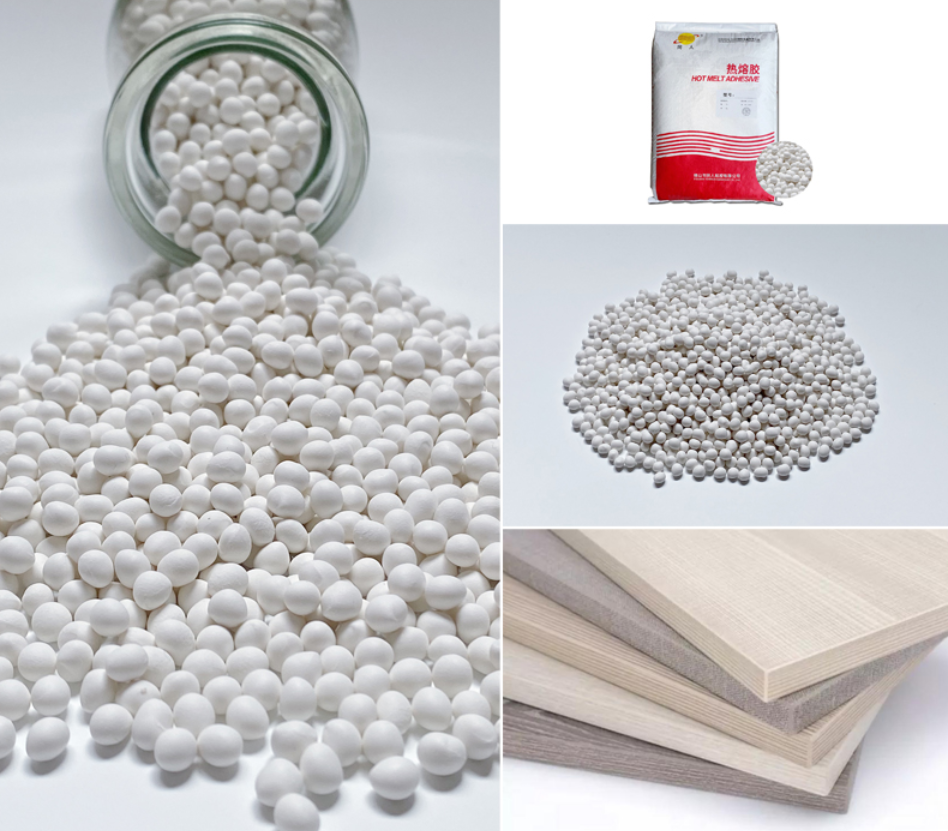
4. Application Scenarios: Where Can White Edge Banding Glue Support High-Volume Manufacturing?
White Kitchen Cabinets
Kitchen cabinets often combine large white surfaces with frequent edge inspection under strong lighting. Adhesive color, glue-line thickness, and consistent trimming are therefore important.
The selected adhesive should be tested with the factory's actual panel and edge-band materials, including the intended production speed.
Wardrobes and Bedroom Furniture
Wardrobes, bedside cabinets, drawer units, and storage systems often use white or light-colored boards across many product sizes.
A consistent adhesive process helps manufacturers maintain a similar edge appearance across repeated production batches.
Office Furniture and Commercial Cabinetry
Office desks, filing cabinets, storage units, and commercial furniture may involve large orders with tight delivery schedules.
For these applications, production stability matters alongside appearance. Buyers should evaluate whether the adhesive can maintain acceptable results throughout a representative production run.
High-Gloss White Panels
High-gloss surfaces can make edge defects particularly noticeable. Manufacturers should pay close attention to adhesive squeeze-out, contamination, trimming accuracy, and the uniformity of the finished edge.
A suitable white adhesive can help reduce visual contrast, but it cannot compensate for poor machine adjustment or inaccurate edge trimming.
5. Procurement Decision: How Can Buyers Evaluate White Edge Banding Glue for Bulk Orders?
For large cabinet orders, procurement should consider the total cost of achieving acceptable production quality—not just the quoted price per kilogram.
A useful comparison is:
Total Production Cost = Adhesive Purchase Cost + Consumption + Rework + Scrap + Cleaning + Downtime
This is a purchasing framework rather than a fixed cost formula; each factory should use its own production data to quantify these factors.
A Practical Supplier Evaluation Checklist
| Procurement Check | What to Confirm |
|---|---|
| Product specification | Adhesive grade, composition, viscosity, and operating temperature |
| Material compatibility | Board type, edge-band material, and panel surface |
| Machine compatibility | Application system, machine speed, and operating conditions |
| Appearance | Glue-line thickness, color matching, and squeeze-out |
| Bonding performance | Initial bonding and conditioned bonding results |
| Consumption | Adhesive use under a defined production setup |
| Batch consistency | Performance across multiple samples or production batches |
| Documentation | Current technical data sheet and safety data sheet |
| Technical support | Guidance on grade selection and process troubleshooting |
| Supply arrangements | Packaging, lead time, order quantity, and delivery planning |
Why Is a Production Trial Essential?
A sample test should reproduce the conditions that matter in the buyer's factory.
Use the intended board, edge band, machine, and target production speed. Record the machine settings and apply the same inspection criteria to each supplier's sample.
Where possible, compare candidate adhesives using the same panel batch and machine settings. If settings must change to accommodate a particular adhesive, document those changes so the comparison remains meaningful.
Before placing a bulk order, confirm that the selected grade meets the factory's appearance, bonding, consumption, and production requirements.
6. Factory Solution: How Can Foshan Tonren Adhesive Co., Ltd Support Cabinet Manufacturers?
Choosing an adhesive supplier is not only about purchasing a product. For manufacturers operating continuous production lines, technical information, sample evaluation, and responsive support can also influence the final result.
Foshan Tonren Adhesive Co., Ltd was established in 1999 and specializes in adhesive research, manufacturing, and market service. Its product range covers woodworking and furniture applications, including edge-banding adhesive, profile-wrapping adhesive, lamination adhesive, 3D lamination glue, solid wood glue, and PUR adhesive.
For white cabinet production, Tonren's White Color Edge Banding Glue range includes 788HB and 789, with published technical specifications for viscosity, operating temperature, and application characteristics.
For purchasing teams evaluating these products, a practical supplier-engagement process is:
Share the panel substrate and edge-band material.
Identify the edge-banding machine and target production speed.
Describe the current problem, such as visible glue lines, excessive coating, or edge lifting.
Review the appropriate product specification with the supplier.
Request samples and carry out a controlled production trial.
Confirm the results before approving a bulk order.
This process helps connect adhesive selection with the actual needs of the factory rather than relying on a general product recommendation.
7. Conversion Path: From Sample Testing to Stable Bulk Supply
For procurement managers, production engineers, and furniture factory owners, the objective is to qualify an adhesive that can meet defined production requirements consistently.
A recommended workflow is:
Define Production Requirements
↓
Confirm Board and Edge-Band Materials
↓
Review Technical Specifications
↓
Select a Candidate Grade
↓
Request Samples
↓
Run a Representative Machine Trial
↓
Evaluate Appearance, Bonding, and Consumption
↓
Confirm Supplier and Delivery Requirements
↓
Approve Bulk Purchasing
Before contacting a supplier, prepare the following information:
Board substrate and thickness.
Edge-band material and thickness.
Machine model and application method.
Target production speed.
Current adhesive grade and operating temperature, if applicable.
Main quality concern.
Expected monthly or annual consumption.
Providing these details makes it easier to evaluate the appropriate adhesive grade and plan a meaningful sample test.
Frequently Asked Questions
What kind of white edge banding glue is suitable for mass cabinet production?
The right choice depends on the machine, board, edge-band material, production speed, and required appearance. For conventional automatic edge-banding applications, an appropriately matched white EVA hot-melt adhesive may be suitable. Confirm the choice through a production trial.
What is the difference between Tonren 788HB and 789?
Both are white EVA edge-banding adhesives. Tonren describes 788HB as offering lower coating requirements, a very thin glue line, and improved bonding strength. Grade 789 emphasizes fast melting, a very thin glue line, and high initial peeling strength.
What is the recommended operating temperature for Tonren 788HB and 789?
Tonren publishes a recommended operating range of 180–210°C for both grades. The final setting should be validated against the current technical data sheet and the actual production conditions.
Can white edge banding glue eliminate visible glue lines?
It can help reduce color contrast and support a cleaner edge appearance, but it cannot guarantee an invisible glue line under every condition. Coating amount, machine adjustment, edge-band alignment, material compatibility, and trimming quality also affect the result.
How can a furniture factory reduce adhesive costs during mass production?
Track adhesive consumption, reject rates, rework, cleaning time, and downtime. Compare suppliers using a consistent production trial and calculate the total cost of achieving acceptable quality rather than comparing the price per kilogram alone.
Should buyers request samples before bulk purchasing?
Yes. A sample trial using the actual board, edge band, and production machine is recommended before committing to a large order. Confirm current sample availability and shipping arrangements with the supplier.
Conclusion
For high-volume cabinet manufacturing, the best White Edge Banding Glue is not necessarily the cheapest adhesive or the product with the most impressive description. It is the grade that consistently meets the factory's requirements for bonding, appearance, application, and production efficiency.
Tonren 788HB and 789 offer different stated characteristics for white and light-colored edge-banding applications. The final selection should be based on technical specifications and a controlled trial using the factory's actual materials and machine conditions.
Foshan Tonren Adhesive Co., Ltd supports furniture manufacturers looking for adhesive solutions for their production processes.
If your factory is sourcing white edge banding glue for mass cabinet production, prepare your material specifications, machine details, target speed, and expected order volume before requesting a product recommendation and sample evaluation.