
Why Do White Cabinets Show Ugly Glue Lines? Can White Edge Banding Glue Fix It?
White cabinets look simple.
But from a furniture manufacturer's perspective, white is one of the least forgiving colors for edge banding.
A slight adhesive color difference, excessive glue application, uneven coating, edge-band misalignment, or glue squeeze-out can create a visible line along an otherwise clean cabinet edge.
This raises a practical purchasing question:
Why do white cabinets show ugly glue lines, and can White Edge Banding Glue actually reduce the problem?
The short answer is yes—but changing the adhesive alone is not enough.
For white and light-colored furniture, the adhesive needs to be evaluated together with the edge band, board substrate, coating amount, operating temperature, machine speed, and trimming process.
For manufacturers looking for a cleaner edge appearance without sacrificing bonding reliability, choosing the right White Edge Banding Glue can be an important part of the solution.
1. User Problem: Why Do White Cabinets Show Visible Glue Lines?
A visible glue line does not always mean that the adhesive has poor bonding strength.
In many cases, the adhesive is doing its job mechanically, but the appearance of the adhesive layer becomes too noticeable.
Typical problems include:
White glue lines around cabinet edges
Excessive adhesive squeeze-out
Uneven glue distribution
Glue lines that become more visible after trimming
Color contrast between the panel, edge band and adhesive
Edge lifting caused by insufficient adhesive coverage
Different glue-line appearance from one production batch to another
This is especially obvious on:
White MDF cabinets
White particleboard furniture
High-gloss white panels
Light-gray furniture
Cream-colored cabinets
Minimalist kitchen furniture
Wardrobes and bedroom furniture
Why?
Because a white surface provides very little visual tolerance for defects.
On a dark wood-grain panel, a small amount of adhesive may visually disappear into the pattern.
On a pure-white cabinet, the same adhesive can create a noticeable contrast.
The production chain can therefore look like this:
Wrong Adhesive Color → Excessive Glue Line → Visible Edge → Rework → Higher Production Cost
But there is another important point:
Not every visible glue line is caused by adhesive color.
It may also come from excessive coating, unsuitable viscosity, incorrect temperature, poor wetting, edge-band deformation, machine settings, or inaccurate trimming.
That is why procurement teams should avoid choosing an adhesive simply because the product itself looks white.
2. Product Selection: Can White Edge Banding Glue Make the Glue Line Less Visible?
Yes, when the adhesive is properly matched to the application.
The basic idea is straightforward:
White Panel + White Edge Band + White Edge Banding Glue
creates less visual contrast than using an adhesive with an obviously different color.
However, color matching is only one part of the equation.
For professional furniture production, buyers should evaluate at least four factors:
2.1 Adhesive Color
For white and light-colored furniture, a suitable white adhesive can help reduce the visual contrast between the edge band and adhesive layer.
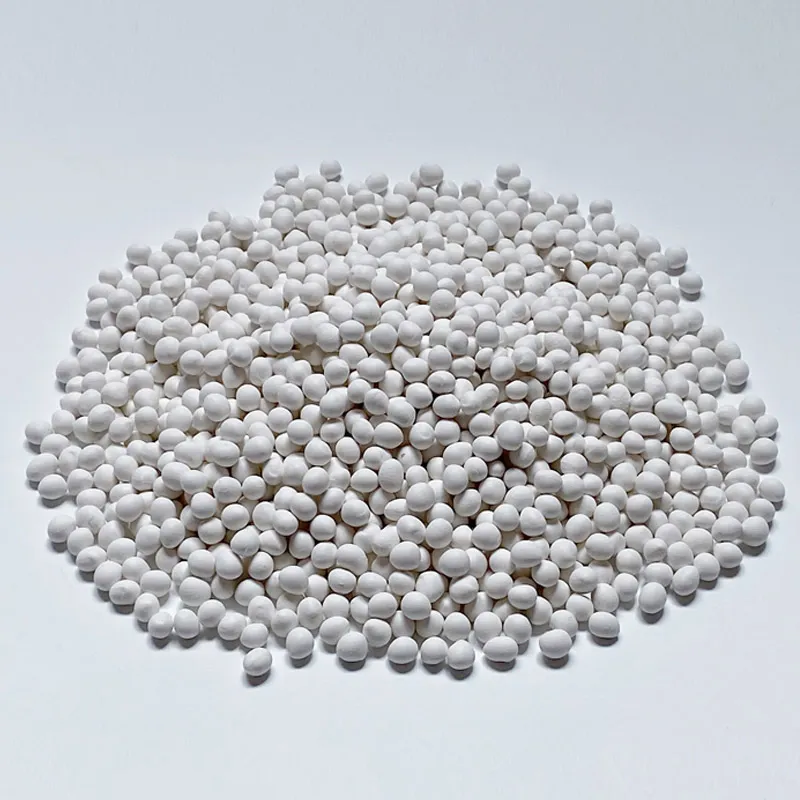
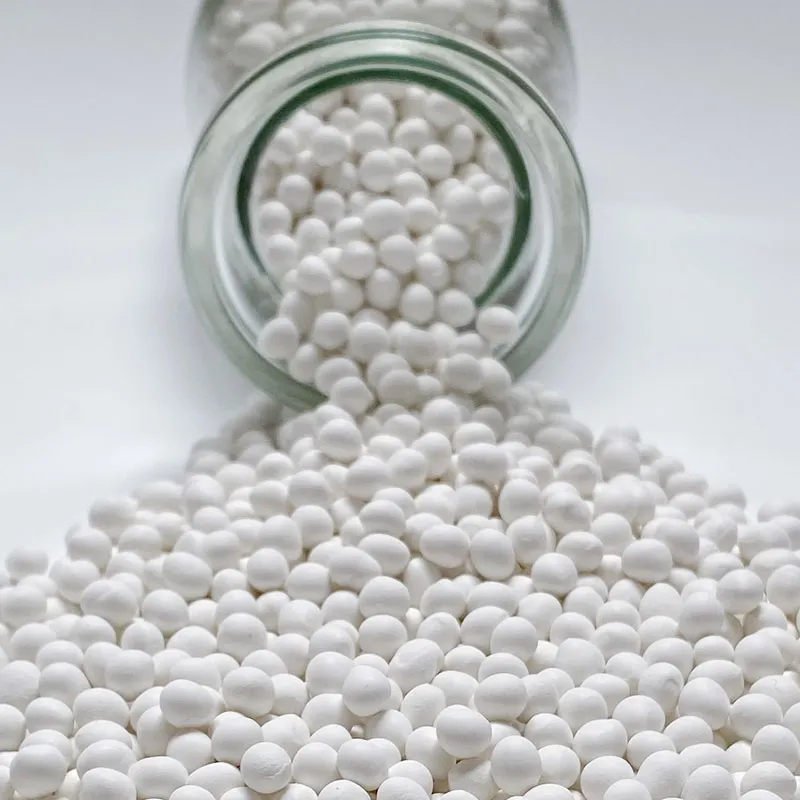
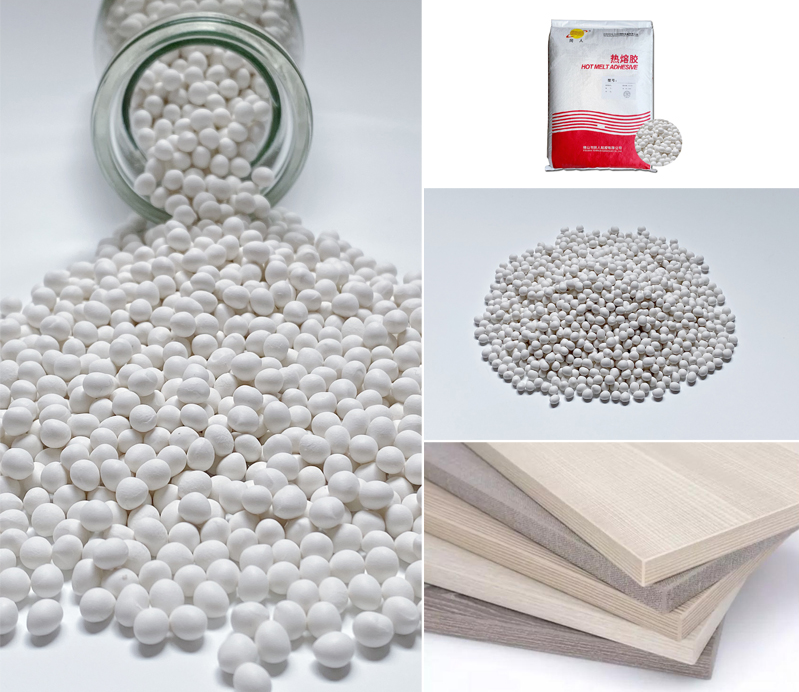
Tonren's White Color Edge Banding Glue is specifically positioned for white panels and light-colored boards. Its product page identifies 788HB and 789 as EVA hot-melt grades for edge-banding applications.
2.2 Glue-Line Thickness
A white adhesive does not automatically mean an invisible glue line.
If too much adhesive is applied, the glue layer itself can become visually obvious.
Therefore:
Better Appearance ≠ More Glue
The target should be:
Adequate Adhesive + Uniform Coating + Good Wetting + Controlled Squeeze-Out
2.3 Initial Bonding Performance
The edge band needs to stay firmly positioned during the production process.
If initial bonding is insufficient, manufacturers may see:
Edge movement
Local lifting
Open joints
Rework after trimming
Inconsistent edge appearance
Tonren's current White Color Edge Banding Glue product information highlights high initial peeling strength for grade 789 and better bonding strength for 788HB.
2.4 Machine Compatibility
Even a technically suitable adhesive can produce poor results if its viscosity and melting behavior do not match the edge-banding machine.
The correct question is therefore not:
“Is this white glue good?”
It is:
“Is this white edge banding adhesive suitable for my board, edge band, machine and production speed?”
That is the question a procurement engineer should ask before placing a bulk order.
3. Technical Parameters: What Should Buyers Check Before Purchasing White Edge Banding Glue?
For white cabinet production, the adhesive specification should be reviewed together with actual machine conditions.
3.1 Adhesive Type
Tonren currently lists two grades under its White Color Edge Banding Glue product:
| Grade | Basic Ingredient | Viscosity | Recommended Operating Temperature | Main Characteristics |
|---|---|---|---|---|
| 788HB | EVA | 70,000 ± 5,000 mPa·s at 200°C | 180–210°C | High-temperature glue, lower coating amount, very thin glue line, better bonding strength |
| 789 | EVA | 60,000 ± 5,000 mPa·s at 200°C | 180–210°C | Fast melting, very thin glue line, high initial peeling strength |
These are the manufacturer's published parameters and should be used as the starting point for machine trials rather than treated as universal settings for every production line.
3.2 Viscosity
Viscosity determines how the molten adhesive behaves during application.
If viscosity is not well matched to the equipment, manufacturers may experience:
Uneven coating
Excessive glue application
Poor wetting
Squeeze-out
Stringing
Inconsistent glue-line appearance
Therefore, viscosity should always be evaluated at the manufacturer's specified test temperature.
Do not compare viscosity numbers from different suppliers without checking:
Temperature + Test Method + Adhesive Grade
3.3 Operating Temperature
Temperature is another critical parameter.
Tonren's current white EVA grades 788HB and 789 recommend an operating range of 180–210°C.
However, the procurement team should not simply set the machine to the highest temperature within the range.
Instead, production trials should determine a stable working point based on:
Machine configuration
Glue pot condition
Roller or nozzle system
Production speed
Edge-band material
Required coating amount
Adhesive residence time
The objective is stable melting and application—not simply higher temperature.
3.4 Coating Amount
This is one of the easiest areas to overlook.
Too much glue can create:
Thick Glue Line → Squeeze-Out → Visible Edge → More Cleaning
Too little glue can create:
Insufficient Wetting → Weak Bonding → Edge Lifting → Rework
For white furniture, coating amount should therefore be optimized rather than maximized.
The ideal production window is the point where the adhesive provides sufficient coverage while keeping the glue line as visually unobtrusive as possible.
3.5 Edge-Band Compatibility
The same adhesive may behave differently with different edge-band materials.
Before approving a supplier, test the actual combination:
Board + Edge Band + White Edge Banding Glue + Machine
For example:
MDF + PVC edge band
Particleboard + PVC edge band
MDF + ABS edge band
Plywood + veneer edge band
High-gloss panel + decorative edge band
A laboratory sample using a different substrate is not a substitute for a production trial.
4. Application Scenarios: Where Does White Edge Banding Glue Matter Most?
White Kitchen Cabinets
Kitchen cabinets are one of the most obvious applications.
Large white surfaces make any inconsistent edge appearance easy to notice.
Manufacturers should therefore evaluate:
Glue-Line Visibility + Edge Adhesion + Surface Cleanliness + Processing Stability
The adhesive also needs to work consistently throughout continuous production.
White Wardrobes and Bedroom Furniture
Wardrobes, bedside cabinets, dressing tables and storage furniture frequently use white or light-colored boards.
For these products, consumers often inspect the edges from relatively close distances.
A technically strong adhesive is not enough if the finished edge looks uneven.
Office Furniture
Office desks, cabinets and partitions often involve large quantities of light-colored panels.
At high production volumes, even a small percentage of visible edge defects can generate considerable rework.
This makes adhesive selection a production-efficiency issue as well as an appearance issue.
High-Gloss White Furniture
High-gloss panels are particularly demanding.
Reflected light can make surface and edge imperfections easier to see.
For these applications, buyers should pay particular attention to:
Glue-line thickness
Adhesive color
Coating uniformity
Edge-band alignment
Trimming quality
Surface contamination
Tonren specifically describes grade 788HB as suitable for lower coating amounts and a very thin glue line.
5. Procurement Decision: How Should You Choose White Edge Banding Glue?
Do not compare suppliers only by:
Price per kilogram
A more useful procurement model is:
Total Adhesive Cost = Purchase Price + Consumption + Rework + Scrap + Cleaning + Downtime + Quality Risk
A cheaper adhesive can become more expensive if it requires excessive application, creates visible glue lines, or causes inconsistent bonding.
Before approving a White Edge Banding Glue supplier, ask these questions.
Buyer Checklist
| Procurement Question | Why It Matters |
|---|---|
| Is the adhesive color suitable for white furniture? | Reduces visual contrast |
| What is the recommended operating temperature? | Prevents unstable processing |
| What is the viscosity at the stated temperature? | Helps match machine conditions |
| How thin can the glue line be under actual conditions? | Important for premium appearance |
| What edge-band materials have been tested? | Confirms material compatibility |
| What substrates have been tested? | Avoids unexpected bonding problems |
| What is the recommended coating amount? | Controls appearance and consumption |
| How strong is the initial bond? | Reduces edge movement and lifting |
| Can the supplier provide TDS/SDS? | Supports technical and supplier qualification |
| Can samples be tested on our machine? | Provides real production evidence |
| Can technical staff help optimize the process? | Reduces trial-and-error during production |
The last two questions are particularly important.
A sample that works in a laboratory does not necessarily perform identically on your production line.
6. White Edge Banding Glue vs. PUR: Do You Always Need PUR?
Not necessarily.
For many conventional furniture edge-banding applications, EVA hot-melt adhesive remains a practical solution because of its established processing method and production efficiency.
PUR edge-banding adhesive is another option when manufacturers have more demanding requirements for long-term bonding performance, moisture resistance, heat resistance or aging resistance.
The important point is:
Do not choose EVA or PUR based only on which technology sounds more advanced.
Instead, evaluate:
Board + Edge Band + Machine + Production Speed + Environment + Performance Requirement + Cost Target
For standard white cabinet production, a properly selected white EVA edge-banding adhesive may be sufficient.
For furniture exposed to more demanding conditions, manufacturers can conduct a comparative EVA/PUR production trial.
This makes the purchasing decision evidence-based rather than marketing-driven.
7. Factory Solution: How Can Foshan Tonren Adhesive Co., Ltd Support White Furniture Production?
For a furniture factory, adhesive selection becomes much easier when the supplier understands the production process behind the adhesive.
Foshan Tonren Adhesive Co., Ltd is an adhesive manufacturer established in 1999, with more than 26 years of experience in adhesive R&D, manufacturing and market service.
Its product portfolio covers multiple woodworking and furniture adhesive applications, including:
Edge Banding Adhesive
Profile Wrapping Adhesive
Lamination Adhesive
3D Lamination Glue
Solid Wood Glue
PUR Adhesive
Other functional adhesive solutions
Tonren's current website also identifies white color edge banding glue as one of its product solutions, with grades 788HB and 789 available for different edge-banding production requirements.
The factory's current product information also highlights technical service, free samples and product adjustment according to customer requirements.
For procurement teams, this means the evaluation can move beyond:
“Which glue is cheapest?”
toward:
“Which adhesive can give us the required appearance and bonding performance under our actual production conditions?”
That is a much more useful purchasing question.
8. How Should a Factory Test White Edge Banding Glue Before Bulk Purchase?
A simple production trial can provide much more useful information than a catalogue.
Step 1: Confirm the Material Combination
Record:
Board type
Board thickness
Edge-band material
Edge-band thickness
Surface finish
Step 2: Record Machine Conditions
Document:
Machine model
Production speed
Adhesive temperature
Glue roller/nozzle condition
Pressure roller setting
Trimming settings
Step 3: Run the Adhesive Trial
Start within the supplier's recommended processing range.
Do not immediately change multiple parameters at the same time.
Step 4: Inspect the Finished Edge
Check:
Glue-line visibility
Edge alignment
Squeeze-out
Surface contamination
Corner bonding
Edge lifting
Overall appearance
Step 5: Conduct a Retention Test
After the initial inspection, evaluate the finished samples after appropriate storage or aging conditions.
The objective is to answer two separate questions:
Does the edge look clean immediately?
and
Does the bond and appearance remain acceptable after aging?
This distinction is particularly important for white furniture.
9. Troubleshooting: If the Glue Line Is Still Visible, What Should You Check?
Changing the adhesive may not solve every glue-line problem.
Use this troubleshooting logic:
| Symptom | Possible Cause | What to Check |
|---|---|---|
| White glue line is too obvious | Excessive coating | Reduce coating within validated bonding range |
| Uneven glue line | Uneven application | Check roller/nozzle and adhesive temperature |
| Glue squeezes onto panel surface | Excessive adhesive or pressure | Check coating and pressure |
| Edge lifts after bonding | Insufficient adhesive or poor wetting | Check coating, temperature and material compatibility |
| Glue line differs between batches | Process or adhesive variation | Check batch consistency and machine conditions |
| Good bonding but poor appearance | Color/coating/trimming issue | Evaluate adhesive color, coating and trimming |
| Edge looks clean initially but changes later | Aging or thermal/environmental effect | Conduct appropriate aging evaluation |
This is why experienced buyers should treat adhesive selection as a process engineering decision, not simply a consumables purchasing decision.
10. FAQ: White Edge Banding Glue for White Cabinets
Why do white cabinets show visible glue lines?
Visible glue lines can result from adhesive color contrast, excessive coating, uneven application, squeeze-out, poor edge-band alignment, unsuitable machine settings or insufficient trimming quality.
Can White Edge Banding Glue completely eliminate glue lines?
Not necessarily.
A properly matched white adhesive can reduce visual contrast and help create a cleaner edge, but glue-line appearance also depends on coating amount, machine conditions, edge-band material and trimming.
Is white EVA edge banding glue suitable for white cabinets?
It can be suitable for many conventional white furniture applications when the adhesive is correctly matched to the board, edge band and edge-banding machine.
What is the operating temperature of Tonren white edge banding glue?
Tonren currently lists 180–210°C as the recommended operating temperature for both 788HB and 789 white EVA edge-banding adhesive grades.
What is the difference between Tonren 788HB and 789?
Both are EVA-based white edge-banding adhesives. 788HB is described with better bonding strength, lower coating amount and a very thin glue line, while 789 emphasizes fast melting, a very thin glue line and high initial peeling strength for automatic straight-line edge banding machines.
Should I buy white edge banding glue based on price per kilogram?
No.
Compare adhesive consumption, processing stability, glue-line appearance, bonding performance, rework and technical support—not only the purchase price.
Can I test the adhesive before placing a bulk order?
Yes. For a production decision, an actual machine trial using your board and edge-band material is strongly recommended. Tonren's product information states that free samples are available.
11. Procurement Path: From Sample to Bulk Order
For furniture manufacturers sourcing White Edge Banding Glue, a practical purchasing workflow is:
Define Appearance Requirement
↓
Confirm Board + Edge Band
↓
Select Adhesive Grade
↓
Review TDS / SDS
↓
Request Sample
↓
Production Machine Trial
↓
Check Glue-Line Appearance
↓
Check Bonding Performance
↓
Evaluate Consumption
↓
Conduct Aging / Environmental Testing When Required
↓
Supplier Qualification
↓
Bulk Purchase
This approach helps prevent a common purchasing mistake:
Choosing an adhesive because it looks suitable on paper, then discovering that it does not behave well on the actual production line.
12. Conclusion: Can White Edge Banding Glue Fix Ugly Glue Lines?
Yes—but the adhesive should be viewed as part of the entire edge-banding system.
For white cabinets and light-colored furniture, the goal is not simply to find the whitest adhesive.
The real objective is:
Suitable Adhesive Color + Thin and Uniform Glue Line + Reliable Initial Bond + Correct Processing Temperature + Controlled Coating + Material Compatibility
When these factors work together, manufacturers have a much better chance of achieving clean and consistent cabinet edges.
For procurement teams, the best starting point is therefore not:
“How much does this white glue cost?”
It is:
“Can this adhesive produce the required appearance and bonding performance on our actual production line?”
Foshan Tonren Adhesive Co., Ltd provides white edge-banding adhesive and other functional adhesive solutions for woodworking and furniture manufacturers.
If your factory is dealing with visible glue lines, excessive adhesive, edge lifting, squeeze-out or inconsistent white cabinet edges, you can start with your actual board, edge-band material and machine conditions and request a sample trial before making a bulk purchasing decision.