
Is PUR Hotmelt Edgebanding Adhesive the Better Option for North America’s Humid & Cold Climate?
North America presents different environmental challenges for furniture manufacturers. Coastal regions may experience high humidity, northern areas can face freezing winter temperatures, and kitchens and bathrooms are regularly exposed to moisture, heat, and temperature fluctuations.
For cabinet manufacturers, furniture factories, and woodworking companies supplying the North American market, these conditions can create a demanding environment for edge bonding.
A furniture panel may look perfectly finished when it leaves the production line, but its edge joints can experience stress during transportation, warehouse storage, installation, and long-term use. In some cases, manufacturers may encounter edge peeling, adhesive softening, moisture-related bonding problems, or delamination.
This raises an important purchasing question:
Is PUR edge banding adhesive for North America a better choice than conventional EVA hot melt adhesive?
The answer depends on the finished furniture's performance requirements, production equipment, and expected service environment. PUR hot melt adhesive can offer significant advantages in moisture resistance, heat resistance, and long-term bonding after curing. However, EVA remains a practical solution for many standard indoor furniture applications.
In this guide, Foshan Tonren Adhesive Co., Ltd. explains how to evaluate PUR and EVA edge banding adhesives for North American furniture production, which technical parameters matter, and how manufacturers can select a suitable adhesive for humid and cold conditions.
1. User Problem: Why Do North American Climate Conditions Challenge Edge Banding Adhesive?
North America does not have one uniform climate. Furniture manufacturers serving coastal cities, northern states, Canadian provinces, and inland regions may face very different environmental conditions.
However, moisture exposure and temperature changes are two important factors to consider when selecting edge banding adhesive.
1.1 Coastal Humidity Can Increase the Risk of Edge Bonding Problems
Furniture installed in coastal regions or humid indoor environments may experience prolonged exposure to moisture.
Common applications include:
Kitchen cabinets near sinks and dishwashers.
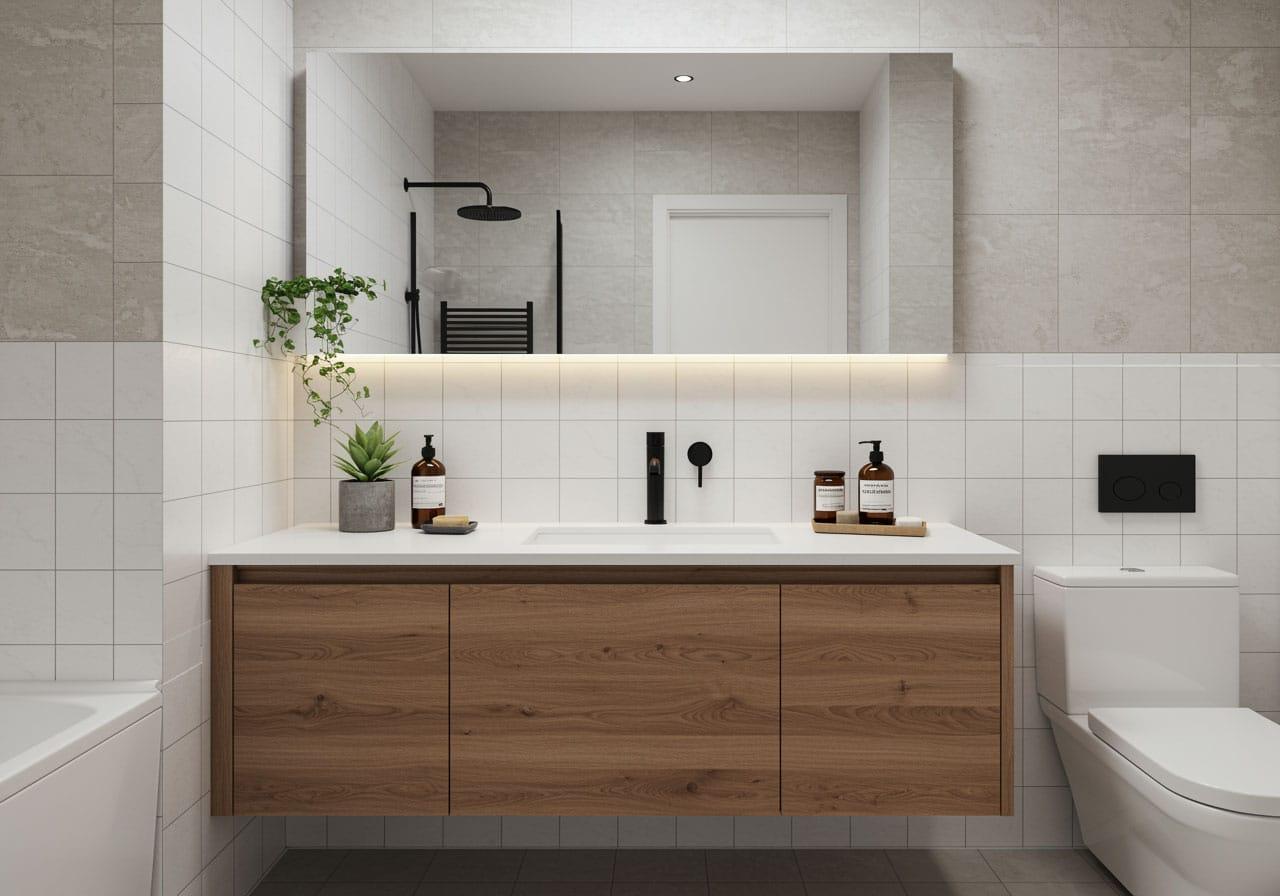
Bathroom vanities and storage cabinets.
Laundry room furniture.
Coastal residential furniture.
Commercial cabinets in humid indoor environments.
When moisture reaches an insufficiently protected panel edge, the substrate may absorb water and undergo dimensional changes. Repeated moisture exposure can also place additional stress on the adhesive interface.
For conventional EVA hot melt adhesive, performance depends on the specific formulation and application conditions. Some EVA grades may be suitable for standard furniture applications, but their thermoplastic bonding mechanism can become a limitation when the finished product requires more demanding moisture and heat resistance.
PUR hot melt adhesive is worth evaluating for these applications because it develops a crosslinked structure after moisture-triggered curing, which can provide improved resistance to moisture and temperature exposure.
It is important to remember that PUR adhesive does not make an entire furniture panel waterproof. Panel material, edge preparation, joint design, and installation quality remain important.
1.2 Cold Winters Can Create Low Temperature Edge Banding Problems
Low temperatures create a different challenge.
Furniture manufacturers supplying northern North America may encounter cold conditions during:
Winter production in poorly conditioned workshops.
Storage in unheated warehouses.
Loading and unloading during cold weather.
Long-distance transportation.
Delivery to buildings before indoor climate control is established.
One common issue is a change in the behavior of the adhesive and bonded materials under temperature variation.
For example, when a panel is transported or stored in a cold environment, its substrate and edge band may become cold. If edge banding is carried out without allowing the materials to reach suitable processing conditions, hot melt adhesive may lose heat too quickly.
This can reduce the effective wetting and bonding window, increasing the risk of incomplete bonding.
This type of low temperature edge banding problem is not necessarily caused by poor adhesive quality. It may result from the combined effects of substrate temperature, adhesive temperature, open time, machine speed, and pressing conditions.
PUR may offer better cold resistance after proper curing, but switching to PUR will not automatically solve a bonding failure caused by cold materials during production.
1.3 Temperature Changes Can Affect Finished Furniture
A furniture product may experience different temperatures during production, transportation, and final use.
For example:
Furniture panels are manufactured in a controlled factory environment.
Finished products are packed and transported during winter.
The shipment passes through different temperature zones.
Products are stored in a warehouse before delivery.
Cabinets are installed in heated indoor environments.
These conditions can create repeated expansion and contraction of different materials.
The adhesive must maintain a reliable bond between the panel and edge band despite these changes.
For manufacturers targeting North America, evaluating the adhesive's heat resistance, cold resistance, moisture resistance, and aging performance is therefore an important part of product qualification.
2. Product Selection: PUR vs EVA Edge Banding Adhesive for North America
PUR and EVA are both widely used hot melt adhesive technologies in furniture manufacturing. However, they differ in their bonding mechanisms and final performance characteristics.
2.1 How Does EVA Edge Banding Adhesive Work?
EVA stands for ethylene-vinyl acetate.
EVA hot melt adhesive is heated until it becomes molten, applied to the panel or edge band, and then solidifies as it cools.
Its main advantages include:
Relatively straightforward processing.
Compatibility with many conventional edge banding machines.
Established use in standard panel furniture production.
Practical cost control.
Different grades for various machine speeds and production requirements.
However, EVA is thermoplastic. Its adhesive layer can soften again when exposed to sufficiently high temperatures.
Its moisture and heat resistance also depend on the specific formulation. For applications involving repeated moisture exposure, elevated temperatures, or demanding long-term durability requirements, buyers should carefully evaluate whether a conventional EVA grade provides sufficient performance.
2.2 How Does PUR Hot Melt Edgebanding Adhesive Work?
PUR stands for reactive polyurethane.
PUR hot melt adhesive is heated and applied in a molten state, similar to conventional hot melt adhesive. After application, it first develops initial bonding through cooling.
It then reacts with moisture and undergoes further chemical curing, forming a crosslinked adhesive structure.
This chemical reaction changes the properties of the adhesive layer.
Compared with many conventional EVA grades, properly formulated and cured PUR edge banding adhesive can provide:
Improved moisture resistance.
Better heat resistance.
Stronger long-term bonding performance.
Improved resistance to cold-temperature exposure.
Better resistance to certain chemicals and solvents.
Reduced tendency for the cured adhesive layer to soften again under heat.
These properties make PUR particularly attractive for furniture applications involving humidity, heat, and demanding service conditions.
However, PUR requires suitable equipment, moisture control, safe handling, and proper curing conditions. Manufacturers must follow the adhesive supplier's processing instructions.
2.3 PUR vs EVA: Which Is Better for North American Furniture?
| Performance factor | EVA Edge Banding Adhesive | PUR Edge Banding Adhesive |
|---|---|---|
| Bonding mechanism | Physical cooling and solidification | Cooling followed by moisture-triggered chemical curing |
| Initial bonding | Grade-dependent | Grade-dependent, often strong |
| Moisture resistance | Formulation-dependent | Generally higher after proper curing |
| Heat resistance | Can soften again at sufficiently high temperatures | Generally higher after proper curing |
| Cold resistance | Depends on formulation and service conditions | Generally better for demanding applications after curing |
| Aging resistance | Formulation-dependent | Generally improved after crosslinking |
| Processing requirements | Conventional hot melt equipment | PUR-compatible equipment and moisture management |
| Cleaning requirements | Depends on the adhesive and equipment | Requires PUR-specific handling and cleaning procedures |
| Material cost | Usually lower | Usually higher |
| Typical application | Standard indoor furniture | More demanding moisture and temperature environments |
The table provides a general technology comparison. Actual performance must be verified using the manufacturer's technical data and application-specific testing.
2.4 When Should North American Furniture Manufacturers Choose PUR?
PUR edge banding adhesive is worth considering when:
Furniture is installed in kitchens and bathrooms.
Products may experience frequent humidity changes.
Finished cabinets require enhanced heat resistance.
Export furniture must withstand demanding transportation and storage conditions.
Long-term bonding durability is a major purchasing requirement.
The factory already operates, or is prepared to invest in, compatible PUR edge banding equipment.
EVA remains suitable for many standard furniture applications where the required bonding performance can be achieved with a properly selected grade.
The objective is not to replace every EVA application with PUR. It is to select the adhesive technology according to the actual service environment and production requirements.
3. Technical Parameters: What Should Buyers Check Before Purchasing PUR Edge Banding Adhesive?
Choosing a suitable PUR edge banding adhesive requires more than checking its advertised moisture resistance.
For North American furniture projects, buyers should evaluate several technical parameters together.
3.1 Viscosity
Viscosity affects how the molten adhesive flows, transfers, and spreads across the bonding surface.
If the viscosity is unsuitable for the machine and application conditions, the adhesive may not form a consistent glue layer.
Buyers should compare:
Viscosity at a specified measurement temperature.
Recommended operating temperature.
Adhesive application method.
Machine type and coating system.
Recommended coating amount.
Viscosity values measured at different temperatures should not be compared directly.
3.2 Recommended Operating Temperature
PUR adhesive must be processed within the manufacturer's recommended temperature range.
For example, Tonren's published PUR edge banding adhesive specifications include:
| Product grade | Basic ingredient | Viscosity | Recommended operating temperature |
|---|---|---|---|
| 8661 | PUR | 80,000 ± 15,000 mPa·s at 130°C | 120–140°C |
| 8666 | PUR | 100,000 ± 15,000 mPa·s at 130°C; 60,000 ± 10,000 mPa·s at 150°C | 120–150°C |
These are product-specific processing parameters, not finished-product service-temperature limits.
The correct operating temperature should be selected according to the adhesive grade, machine configuration, application conditions, and technical instructions.
3.3 Initial Bonding Strength
Initial bonding strength is important because edge-banded panels may enter trimming, scraping, and other finishing operations shortly after adhesive application.
For high-speed furniture production, the adhesive needs to develop sufficient early bonding performance to maintain edge stability during subsequent processing.
Tonren's published product information describes:
8661: Universal PUR type with better initial bonding strength.
8666: Designed for strong initial and final bonding performance, including applications involving thicker edge bands.
These descriptions are starting points for product selection. Actual results depend on the machine, substrate, edge band, and operating conditions.
3.4 Final Bonding Strength After Curing
PUR hot melt adhesive does not reach its full cured performance immediately after application.
After the initial cooling stage, the adhesive undergoes a moisture-triggered chemical reaction.
The curing process depends on factors such as:
Adhesive formulation.
Ambient moisture conditions.
Adhesive layer thickness.
Substrate characteristics.
Temperature and storage conditions.
Time allowed for curing.
Manufacturers should evaluate final bonding performance after the supplier's recommended curing period.
3.5 Moisture Resistance
For kitchen and bathroom furniture, moisture resistance is an important selection criterion.
Buyers should ask suppliers for relevant testing information, such as:
Water exposure conditions.
Humidity conditioning.
Bond retention after exposure.
Edge peeling or delamination evaluation.
Substrate and edge material used during testing.
A product description stating that an adhesive is moisture-resistant is not a substitute for documented test conditions.
3.6 Heat and Cold Resistance
North American furniture may be exposed to different temperature conditions during transportation and use.
Procurement teams should distinguish between:
Processing temperature: The temperature required to melt and apply the adhesive.
Heat resistance: The ability of the bonded joint to maintain performance under elevated service temperatures.
Cold resistance: The ability of the bonded joint to maintain performance under low-temperature exposure.
These are three different technical properties.
For demanding applications, request test reports that identify the test temperature, conditioning period, substrate, edge material, and evaluation method.
4. Application Scenarios: Where Is PUR Edge Banding Adhesive Most Valuable in North America?
The right adhesive selection depends on the furniture's end-use environment.
4.1 Kitchen Cabinets in Humid Coastal Areas
Kitchen cabinets are exposed to steam, cooking heat, cleaning activities, and occasional water contact.
In coastal areas, ambient humidity may create additional challenges during storage and use.
PUR edge banding adhesive may be a suitable option for kitchen cabinet manufacturers seeking improved resistance to moisture and heat after curing.
Important considerations include:
Board material and moisture condition.
PVC or ABS edge compatibility.
Adhesive coating consistency.
Proper pressing conditions.
Curing time before packaging or further processing.
4.2 Bathroom Vanities and Storage Cabinets
Bathroom furniture may experience repeated changes in humidity and temperature.
The edge joints are particularly important because exposed panel edges can become vulnerable if moisture enters the substrate.
For bathroom vanities and storage cabinets, moisture-resistant edgebanding glue can be an important part of the overall furniture protection strategy.
PUR is worth evaluating when the project requires improved edge-bonding durability.
However, the complete cabinet design must also address panel moisture resistance, sealing, hardware, and installation conditions.
4.3 Furniture Exported to Northern United States and Canada
Furniture manufacturers exporting to colder regions should consider both production conditions and the final transportation environment.
Potential risks include:
Cold warehouse storage.
Temperature fluctuations during shipping.
Unheated loading areas.
Delayed installation after delivery.
PUR's cured bonding structure may provide advantages in demanding cold-service applications.
Nevertheless, manufacturers should not confuse cold resistance after curing with low-temperature processing performance.
If the factory is experiencing a low temperature edge banding problem during production, material conditioning, adhesive temperature, and machine settings must also be checked.
4.4 Commercial Furniture and High-Use Cabinets
Commercial kitchens, hospitality furniture, laboratory storage, and other demanding furniture applications may require enhanced bonding durability.
For these projects, the adhesive should be selected based on actual heat, moisture, chemical exposure, and cleaning requirements.
PUR may offer advantages over conventional EVA, but buyers should validate the adhesive against the specific end-use conditions.
5. Procurement Decision: How to Choose the Right Edge Banding Adhesive for North America
Before placing a bulk order, procurement teams should establish clear product requirements.
5.1 Build a North American Climate-Based Selection Checklist
| Project condition | Adhesive selection consideration | Recommended evaluation |
|---|---|---|
| Standard indoor furniture | EVA may be sufficient | Initial and final bonding |
| Humid coastal environment | Consider PUR | Moisture conditioning test |
| Kitchen cabinets | Consider PUR | Heat and moisture resistance |
| Bathroom vanities | Consider PUR | Water exposure and edge stability |
| Cold-region transportation | EVA or PUR depending on requirements | Cold conditioning and temperature cycling |
| High-end customized furniture | Consider PUR when durability requirements justify it | Glue line, bond strength, aging |
| High-volume standard production | EVA or PUR according to machine and cost | Production stability and consumption |
This is a preliminary selection guide. The final choice must be based on the complete product specification and actual test results.
5.2 Confirm PUR Equipment Compatibility
Switching from EVA to PUR is not simply a matter of changing the adhesive inside the machine.
PUR hot melt adhesive is moisture-reactive. Once exposed to moisture, it gradually cures.
For this reason, the production system must be designed or configured to handle PUR correctly.
Buyers should confirm:
Whether the edge banding machine supports PUR adhesive.
Whether the melting and application system is moisture-protected.
Whether the glue tank and rollers are suitable for PUR.
Whether the machine requires special cleaning procedures.
Whether adhesive containers can be kept properly sealed.
Whether operators understand PUR handling and safety requirements.
Incorrect equipment handling can cause premature curing, contamination, or production interruptions.
5.3 Compare Total Cost, Not Just Price per Kilogram
PUR adhesive generally has a higher material cost than conventional EVA.
However, the purchase price is only one part of the total production cost.
A more complete evaluation should include:
Adhesive consumption per panel.
Required equipment investment.
Cleaning and maintenance costs.
Production speed.
Rework and edge peeling rates.
Finished furniture quality.
Expected service requirements.
Customer warranty and after-sales costs.
If a project has demanding moisture and heat resistance requirements, the additional cost of PUR may be justified by its performance benefits.
For standard indoor furniture, a suitable EVA adhesive may remain the more economical choice.
5.4 Conduct Comparative Sample Testing Before Bulk Purchasing
Before switching adhesive technologies, run a controlled comparison using actual production materials.
A practical test plan should include:
Select the actual MDF, particleboard, plywood, or other panel material.
Prepare the PVC, ABS, veneer, or other edge banding material.
Confirm machine compatibility for both adhesive systems.
Follow the recommended application conditions for each adhesive.
Record adhesive temperature, feed speed, coating amount, and pressure.
Evaluate initial bonding and glue line appearance.
Allow PUR to cure according to the supplier's instructions.
Conduct appropriate moisture, heat, and cold conditioning tests.
Compare final bonding performance and production cost.
This method helps determine whether PUR provides a measurable benefit for the intended North American application.
6. Factory Solution: PUR Edge Banding Adhesive from Foshan Tonren Adhesive Co., Ltd.
For furniture manufacturers and adhesive distributors sourcing from China, Foshan Tonren Adhesive Co., Ltd. provides EVA and PUR adhesive solutions for woodworking and panel furniture production.
Established in January 1999, Tonren focuses on adhesive research, development, manufacturing, and sales.
Its main product categories include:
PUR edge banding adhesive.
EVA edge banding adhesive.
Profile wrapping adhesive.
Lamination adhesive.
3D lamination adhesive.
Vacuum membrane press adhesive.
Solid wood adhesive.
Other functional woodworking adhesives.
6.1 Tonren PUR Edge Banding Adhesive: Grades 8661 and 8666
Tonren's PUR edge banding adhesive product range includes two grades with different processing and application characteristics.
8661 PUR Edge Banding Adhesive
Basic ingredient: PUR.
Viscosity: 80,000 ± 15,000 mPa·s at 130°C.
Recommended operating temperature: 120–140°C.
Product positioning: Universal type.
Main characteristic: Better initial bonding strength.
Published application feature: No need to clean the glue roller and glue box overnight under the specified product-use conditions.
8666 PUR Edge Banding Adhesive
Basic ingredient: PUR.
Viscosity: 100,000 ± 15,000 mPa·s at 130°C.
Viscosity: 60,000 ± 10,000 mPa·s at 150°C.
Recommended operating temperature: 120–150°C.
Product positioning: Applications requiring strong initial and final bonding.
Main characteristic: Suitable for thicker edge bands.
The selection between 8661 and 8666 should be based on the machine, edge-band thickness, substrate, production speed, and required bonding performance.
6.2 A Practical Adhesive Selection Approach for North American Buyers
Tonren's PUR edge banding adhesive is designed for furniture manufacturing applications where stronger bonding, moisture resistance, and heat resistance are important considerations.
For buyers supplying humid coastal markets or cold regions in North America, the product selection process should begin with the finished furniture's requirements.
Tonren recommends evaluating:
Whether the application is for kitchen, bathroom, or standard indoor furniture.
Whether the project requires improved moisture resistance.
Whether cold-temperature exposure occurs during transportation or service.
Whether the existing machine is compatible with PUR.
Whether the selected grade matches the edge-band thickness and production speed.
This approach helps buyers avoid choosing an adhesive based only on its product category or advertised performance.
6.3 Why Consider Tonren as an Adhesive Manufacturing Partner?
With more than 27 years of adhesive industry experience, Foshan Tonren Adhesive Co., Ltd. offers a broader portfolio of woodworking adhesive products.
For furniture manufacturers, this means the company can be considered for more than one bonding process.
Its product range covers edge banding, profile wrapping, lamination, and other woodworking applications.
Tonren also provides technical support and sample evaluation to help customers assess product compatibility before bulk purchasing.
For manufacturers targeting North America, the next step is to verify the selected adhesive grade against the specific materials, equipment, and environmental requirements of the project.
7. Conversion Path: Get a PUR Edge Banding Adhesive Solution for Your North American Project
If your furniture factory is experiencing edge peeling, moisture-related delamination, or temperature-related bonding problems, changing adhesive type should begin with a clear technical evaluation.
Foshan Tonren Adhesive Co., Ltd. can help you evaluate suitable PUR or EVA edge banding adhesive options according to your production requirements.
To receive a more relevant product recommendation, prepare the following information:
Your target market: United States, Canada, or another region.
Furniture application: kitchen cabinets, bathroom vanities, wardrobes, or commercial furniture.
Panel material: MDF, particleboard, plywood, or other substrates.
Edge banding material: PVC, ABS, veneer, or other materials.
Edge band thickness.
Edge banding machine model.
Current adhesive type and operating temperature.
Required moisture, heat, and cold resistance.
Estimated monthly or annual purchasing quantity.
Based on this information, the Tonren team can help you evaluate suitable adhesive grades and arrange sample testing.
Contact Foshan Tonren Adhesive Co., Ltd.
Website: https://www.tonren.com/
Product: PUR Edge Banding Glue
Product grades: 8661 / 8666
Request technical information and samples to evaluate whether Tonren PUR edge banding adhesive is suitable for your North American furniture production requirements.
Frequently Asked Questions
1. Is PUR edge banding adhesive better than EVA for North America?
PUR can be a better option for furniture applications requiring enhanced moisture resistance, heat resistance, and long-term bonding performance after curing. EVA remains suitable for many standard indoor furniture applications. The right choice depends on the product's service environment, machine compatibility, and total production cost.
2. Why is PUR edge banding adhesive suitable for humid environments?
PUR hot melt adhesive reacts with moisture after application and develops a crosslinked adhesive structure. After proper curing, this structure generally provides better moisture resistance than conventional EVA hot melt adhesive. However, it does not make the entire furniture panel waterproof.
3. Can PUR edge banding adhesive solve low temperature edge banding problems?
PUR may provide better cold resistance after curing, but it does not automatically solve production problems caused by cold substrates or insufficient adhesive wetting. Manufacturers should also check board temperature, edge-band temperature, adhesive application conditions, machine speed, and pressing pressure.
4. What is the recommended operating temperature of Tonren PUR edge banding adhesive?
Tonren's published specifications list 120–140°C for grade 8661 and 120–150°C for grade 8666. These are recommended processing ranges, not the finished furniture's heat-resistance or cold-resistance limits.
5. Does PUR edge banding adhesive require special equipment?
Yes. PUR requires equipment suitable for moisture-reactive hot melt adhesive. The melting and application system should provide appropriate moisture protection, and operators must follow the manufacturer's handling, storage, and cleaning instructions.
6. Is PUR suitable for kitchen and bathroom cabinets?
PUR is worth considering for kitchen and bathroom furniture because these applications may experience moisture and heat exposure. The complete furniture construction, including panel material, edge preparation, and joint design, must also be suitable for the intended environment.
7. How long does PUR edge banding adhesive take to cure?
Curing time depends on the adhesive formulation, moisture conditions, adhesive layer, substrate, and storage environment. Buyers should follow the specific manufacturer's technical data and allow the recommended curing period before evaluating final bonding performance.
8. What should North American furniture manufacturers ask before purchasing PUR adhesive?
Buyers should request technical data covering viscosity, recommended operating temperature, initial and final bonding strength, moisture resistance, heat and cold resistance, curing conditions, equipment compatibility, packaging, and storage requirements. Application-specific sample testing is strongly recommended.
Conclusion
North America's humid coastal environments and cold winter conditions create different challenges for furniture edge bonding.
For standard indoor furniture, EVA edge banding adhesive may provide an economical and practical solution. However, when kitchen cabinets, bathroom vanities, export furniture, or other demanding applications require improved moisture resistance, heat resistance, and long-term bonding performance, PUR hot melt adhesive is worth serious consideration.
The key is to select an adhesive based on actual environmental requirements rather than assuming one technology is suitable for every project.
With its PUR edge banding adhesive grades 8661 and 8666, together with a broader woodworking adhesive portfolio, Foshan Tonren Adhesive Co., Ltd. provides options for furniture manufacturers evaluating more demanding bonding requirements.
Contact Tonren to discuss your panel materials, edge banding machine, and target North American application before selecting your next edge banding adhesive.