
Suffering Edge Lifting from Temperature Fluctuation? Why Not Try Our Mid-Hig
Foshan Tonren Adhesive Co., Ltd Helps Furniture Manufacturers Build More Stable Edge Bonding Performance
A furniture edge may look like a small detail, but when it starts lifting, the problem becomes impossible to ignore.
A cabinet may leave the factory looking perfect. A few weeks later, however, the customer notices a slightly raised PVC edge. After another period of hot and cold temperature cycles, the opening becomes more obvious. In severe cases, moisture and dust enter the gap, the edge becomes visibly damaged, and an after-sales claim follows.
For furniture manufacturers, this is more than an appearance problem. It can mean rework, wasted panels, additional labor, customer complaints, and unnecessary logistics costs.
One often-overlooked factor is temperature fluctuation.
When furniture moves between different environments—such as a hot production workshop, a cold warehouse, an air-conditioned showroom, or a customer's kitchen—the substrate, edge banding material, and adhesive layer may expand and contract at different rates. If the adhesive does not have sufficient heat resistance, flexibility, and bonding strength, the edge can gradually lose stability.
This is where a properly selected mid-high temperature edge banding glue can make a meaningful difference.
With more than 27 years of experience in adhesive R&D, manufacturing, and international sales, Foshan Tonren Adhesive Co., Ltd develops functional adhesive solutions for furniture and woodworking applications, helping manufacturers address real production problems rather than simply purchasing another container of glue.
1. Product Definition: What Is Mid-High Temperature Edge Banding Glue?
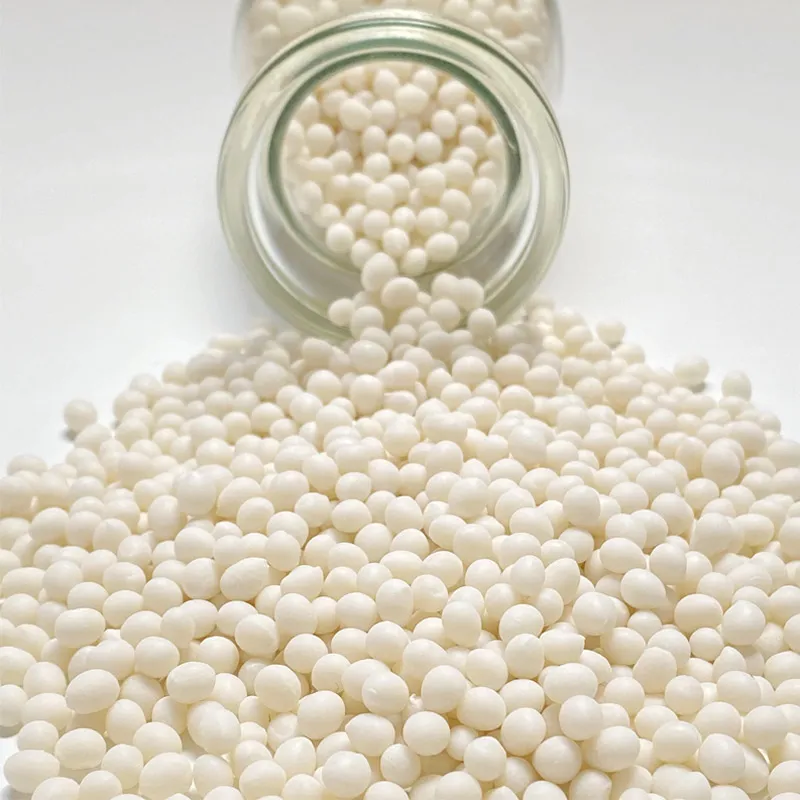
Mid-high temperature edge banding glue is an edge bonding adhesive formulated to maintain reliable bonding performance under relatively demanding thermal conditions.
It is commonly used for bonding edge banding materials such as:
PVC
ABS
PP
Veneer
Melamine edge bands
Other decorative edge materials
to substrates including:
MDF
Particleboard
Plywood
Wood-based panels
The key point is not simply whether an adhesive can withstand a high temperature for a short period.
For furniture production, the more important question is:
Can the adhesive maintain sufficient bonding integrity when the finished product repeatedly experiences temperature changes?
This distinction matters.
A furniture panel may encounter different temperatures during manufacturing, storage, transportation, installation, and daily use. Therefore, adhesive selection should consider the entire service environment rather than a single temperature value.
Foshan Tonren Adhesive Co., Ltd focuses on this practical relationship between adhesive formulation, edge material, substrate, equipment, and production conditions.
2. Why Does Temperature Fluctuation Cause Edge Lifting?
Edge lifting is rarely caused by one factor alone.
In many cases, the problem results from a combination of thermal expansion, insufficient adhesive strength, poor wetting, incorrect application temperature, and unsuitable processing conditions.
2.1 Different Materials Expand at Different Rates
Consider a typical furniture panel:
MDF + adhesive + PVC edge banding
These three layers do not necessarily respond to temperature changes in exactly the same way.
When the temperature rises:
The PVC edge may expand.
The substrate responds differently.
The adhesive layer experiences internal stress.
When the temperature falls, the process reverses.
Repeated expansion and contraction can gradually test the strength of the adhesive interface.
If the adhesive layer is too brittle or lacks sufficient resistance to thermal stress, the edge may begin to separate.
2.2 High Temperature Can Reduce Bonding Stability
Some conventional adhesives perform well under normal indoor conditions but become less stable when exposed to elevated temperatures.
This is particularly important for:
Dark-colored furniture exposed to sunlight
Kitchen cabinets near cooking areas
Furniture transported through hot climates
Products stored in non-air-conditioned warehouses
Export furniture exposed to different climatic zones
The adhesive therefore needs to be selected according to the actual service environment, not simply the factory temperature.
3. Application Scenarios: Where Mid-High Temperature Edge Bonding Matters Most
3.1 Kitchen Cabinets
Kitchen furniture is one of the most demanding applications for edge bonding.
Cabinet edges may experience:
Warm air
Steam
Cleaning chemicals
Repeated temperature changes
Daily mechanical contact
A weak edge can quickly become a visible quality problem.
For kitchen cabinet manufacturers, a suitable mid-high temperature edge banding glue can provide more reliable bonding when production parameters and material compatibility are properly controlled.
3.2 Bathroom Furniture
Bathrooms create another challenging environment because humidity and temperature changes often occur together.
Poor edge bonding can allow moisture to enter the interface.
Once moisture reaches an already weakened bonding area, the edge may lift more quickly.
For bathroom cabinets and moisture-sensitive furniture, adhesive selection should therefore consider both thermal resistance and moisture resistance.
3.3 Hotel and Commercial Furniture
Hotel furniture faces a different challenge: high usage frequency.
Wardrobes, cabinets, desks, and wall panels may be opened, touched, cleaned, transported, and moved repeatedly.
For commercial furniture manufacturers, reducing edge failures is especially important because replacing one defective panel after installation can cost far more than preventing the defect during production.
3.4 Export Furniture
Export furniture may travel through several climate zones.
A product manufactured in one region can be transported to a market with very different:
Ambient temperature
Humidity
Storage conditions
Seasonal temperature variation
This makes thermal stability an important consideration when selecting edge banding glue for export furniture production.
4. Technical Parameters: What Should Buyers Evaluate?
Choosing an adhesive based only on price per kilogram is risky.
For a professional evaluation, buyers should compare several parameters.
| Evaluation Parameter | Why It Matters |
|---|---|
| Softening / thermal behavior | Indicates how the adhesive responds to elevated temperatures |
| Initial bonding strength | Determines whether the edge remains stable immediately after application |
| Final bonding strength | Important for long-term furniture durability |
| Heat resistance | Helps reduce bonding failure under elevated temperatures |
| Cold resistance | Important for cold storage and transportation |
| Flexibility | Helps accommodate thermal movement between materials |
| Wetting ability | Influences contact between adhesive and substrate |
| Open time | Must match machine speed and production process |
| Viscosity | Affects application and glue-line control |
| Application temperature | Must match the equipment and adhesive formulation |
| Material compatibility | Determines performance with PVC, ABS, veneer, etc. |
These parameters should be evaluated together.
For example, an adhesive with excellent heat resistance but poor wetting may still produce unsatisfactory results. Likewise, an adhesive with strong initial tack may not necessarily provide sufficient long-term durability.
5. Production Variables Matter as Much as the Adhesive
A high-performance adhesive cannot compensate for an incorrectly adjusted edgebander.
When troubleshooting edge lifting, manufacturers should check the following:
Adhesive Temperature
The actual adhesive temperature should be controlled according to the supplier's technical recommendation.
Too low may result in:
Poor melting
Inadequate wetting
Weak bonding
Too high may cause:
Excessive thermal degradation
Changes in viscosity
Unnecessary energy consumption
Application Amount
More adhesive does not automatically mean stronger bonding.
An excessive glue layer may create:
Longer cooling time
Higher material consumption
Poor appearance
Unnecessary production cost
The target should be sufficient and uniform adhesive coverage, rather than simply increasing glue consumption.
Panel Surface Preparation
Dust, loose particles, contamination, and excessive moisture can interfere with bonding.
Before blaming the adhesive, manufacturers should verify:
Panel cleanliness
Edge banding surface condition
Adhesive temperature
Machine pressure
Feed speed
Roller pressure
Application amount
A systematic approach is much more effective than changing products randomly.
6. Data Support: How Can Manufacturers Quantify Edge Bonding Performance?
For production managers, “good adhesion” is too subjective.
A better approach is to establish measurable quality indicators.
For example, a furniture factory can monitor:
| Quality Indicator | Recommended Monitoring Method |
|---|---|
| Edge lifting | Visual inspection after conditioning |
| Bonding failure | Record defective panels per production batch |
| Glue consumption | kg of adhesive / 1,000 m of edge |
| Rework | Reworked panels / total panels |
| Production downtime | Minutes spent on adhesive-related adjustments |
| Customer complaints | Adhesive-related claims per shipment |
| Thermal stability | Test after defined temperature exposure |
| Moisture resistance | Test after defined humidity or water exposure |
A Simple Cost Calculation
Suppose a factory processes 10,000 meters of edge banding per day.
If an adhesive-related defect rate is reduced from 2% to 0.8%, the difference is:
10,000 × (2% − 0.8%) = 120 meters/day
That means 120 meters of potential defective edge material are avoided each production day.
The actual financial benefit depends on panel value, labor cost, rework time, and adhesive consumption. But the calculation demonstrates an important principle:
The real cost of adhesive is not simply its purchase price per kilogram.
Manufacturers should evaluate the total cost of bonding, including:
Adhesive + labor + machine downtime + rework + material waste + after-sales cost.
7. Procurement Guide: How to Choose the Right Edge Banding Glue?
Question 1: Do I Really Need Mid-High Temperature Adhesive?
Not every furniture product requires the same adhesive.
If your products are used primarily in stable indoor environments, a conventional solution may be sufficient.
However, mid-high temperature performance becomes more important when products are exposed to:
High ambient temperatures
Direct sunlight
Kitchen heat
Frequent temperature cycles
Long-distance export transportation
Question 2: Should I Choose EVA or PUR?
The answer depends on the application.
EVA Hot Melt
Advantages include:
Mature technology
Easy processing
Broad equipment compatibility
Competitive material cost
PUR
Advantages include:
Stronger long-term bonding
Better moisture resistance
Better heat resistance
Better resistance to aging
Suitable for higher-performance furniture
For demanding furniture applications, PUR can be a particularly attractive option.
The correct choice should ultimately be based on the edge material, substrate, equipment, production speed, and expected service environment.
Question 3: What Information Should I Send to the Adhesive Supplier?
A professional supplier should be able to evaluate your application based on actual production information.
Before requesting a recommendation, prepare:
Substrate type
Edge banding material
Edge thickness
Edgebander model
Production speed
Application temperature
Adhesive consumption
Typical service environment
Existing bonding problem
The more accurate the information, the more useful the adhesive recommendation will be.
8. Why Choose Foshan Tonren Adhesive Co., Ltd?
With more than 27 years of experience, Foshan Tonren Adhesive Co., Ltd has developed extensive expertise in functional adhesive applications.
The company's product portfolio covers multiple woodworking and furniture bonding requirements, including:
Edge banding adhesive
PUR adhesive
Lamination adhesive
Profile wrapping adhesive
Solid wood adhesive
3D lamination adhesive
Other functional adhesive solutions
Tonren's experience is not limited to manufacturing adhesive.
The real value lies in understanding the relationship between:
Adhesive → Material → Machine → Process → Finished Product
This is particularly important for industrial customers who need consistent production rather than simply a low-cost adhesive.
In 2010, Foshan Tonren Adhesive Co., Ltd obtained ISO9001 quality system certification, reinforcing its commitment to standardized quality management and consistent manufacturing.
9. From Edge Lifting Problem to Production Solution
If your factory is experiencing edge lifting after temperature changes, do not immediately increase adhesive consumption.
Start with diagnosis.
Step 1 — Identify the Failure Pattern
Determine whether the problem occurs:
Immediately after production
After 24 hours
After transportation
After exposure to heat
After exposure to humidity
Only on specific materials
Step 2 — Check Production Parameters
Record:
Adhesive temperature
Application amount
Machine speed
Roller pressure
Panel temperature
Step 3 — Evaluate Material Compatibility
Check the combination of:
Substrate + edge band + adhesive
A formulation that works perfectly on one material combination may not provide the same result on another.
Step 4 — Conduct Controlled Testing
Compare samples under defined conditions instead of relying only on visual inspection.
Step 5 — Optimize for Total Cost
After confirming bonding performance, evaluate:
Adhesive consumption
Production speed
Cleaning frequency
Defect rate
Rework cost
This creates a much more reliable purchasing decision.
10. FAQ: Mid-High Temperature Edge Banding Glue
Q1. What causes edge lifting after temperature changes?
Common causes include insufficient adhesive performance, poor surface wetting, incompatible materials, incorrect application temperature, inadequate pressure, and thermal expansion differences between the edge band and substrate.
Q2. Is heat resistance enough to prevent edge lifting?
No. Heat resistance is only one part of the equation. Bonding strength, flexibility, wetting, material compatibility, and processing conditions also affect long-term performance.
Q3. Can this type of adhesive be used for PVC edge banding?
The appropriate formulation can be used for PVC edge bonding, but compatibility should always be confirmed through application testing.
Q4. Is PUR automatically better than EVA?
Not for every application. EVA can be an economical and practical choice for many furniture products. PUR becomes more attractive when higher moisture resistance, heat resistance, and long-term durability are required.
Q5. How can I reduce adhesive-related defects?
Start by controlling the complete process: adhesive selection, temperature, application amount, machine pressure, feed speed, surface preparation, and material compatibility.
11. Talk to Tonren About Your Edge Bonding Challenge
A stable furniture edge starts long before the finished cabinet reaches the customer.
If you are facing:
Edge lifting after heating
Bonding failure during transportation
PVC edge peeling
Weak adhesion in high-temperature environments
Excessive adhesive consumption
Frequent edgebander adjustments
it may be time to reassess your adhesive and production parameters.
Foshan Tonren Adhesive Co., Ltd can work with furniture and woodworking manufacturers to evaluate the application requirements and identify a suitable adhesive solution.
Send us your substrate, edge material, machine model, production speed, and current bonding problem. These details allow a more targeted technical recommendation and sample evaluation.
Conclusion: Stable Edges Begin with the Right Adhesive
Temperature fluctuation is easy to overlook because the furniture may look perfect when it leaves the production line.
The real test begins later.
When furniture moves through warehouses, transportation networks, showrooms, kitchens, hotels, and homes, the adhesive layer must continue to hold the edge securely.
That is why selecting an appropriate mid-high temperature edge banding glue should be treated as a production engineering decision—not simply a material purchasing decision.
With more than 26 years of adhesive expertise, Foshan Tonren Adhesive Co., Ltd continues to develop functional adhesive solutions for furniture and woodworking manufacturers.
For manufacturers looking to improve edge bonding stability, reduce rework, and build furniture that performs reliably beyond the factory floor, Tonren is ready to help turn an edge-bonding problem into a measurable production solution.