
Which Is Better for Your Furniture Production: Tonren’s PUR Edge Banding Glue with 26+ Years of Expertise?
In modern furniture production, the question is no longer whether to optimize performance—but how. As global buyers demand higher durability, cleaner aesthetics, and stronger environmental resistance, manufacturers are re-evaluating one of the most critical yet underestimated materials in their process: the adhesive.
For over 26 years, Foshan Tonren Adhesive Co., Ltd has supported furniture manufacturers with advanced bonding solutions. Founded in 1999 and ISO9001 certified since 2010, Tonren has developed a comprehensive product portfolio including edge banding adhesive, laminating adhesive, 3D laminating adhesive, solid wood adhesive, expanding foam adhesive, hardwood adhesive, whiteboard adhesive, and reactive PUR systems.
When evaluating long-term production strategy, many manufacturers ask: which bonding system truly delivers durability, stability, and global-grade quality? Increasingly, the answer lies in PUR edge banding glue.
Why Adhesive Selection Determines Production Quality
Furniture edges endure constant stress. Panels expand and contract. Kitchens generate steam. Transportation exposes products to vibration and impact. If the bonding line fails, the entire product reputation suffers.
Traditional edge banding glue systems based on thermoplastic chemistry rely on physical cooling and solidification. While this method—commonly seen in hot melt glue applications—offers fast processing speed, it does not provide permanent chemical reinforcement.
PUR glue edge banding technology operates differently. It reacts with ambient moisture after application, creating a cross-linked polymer network that permanently strengthens the bond.
This difference in chemistry directly impacts long-term furniture performance.
Understanding the Technical Difference
Hot melt glue bonds by melting and re-solidifying. Under heat or prolonged humidity, it can soften again. Over time, this re-softening increases the risk of edge separation.
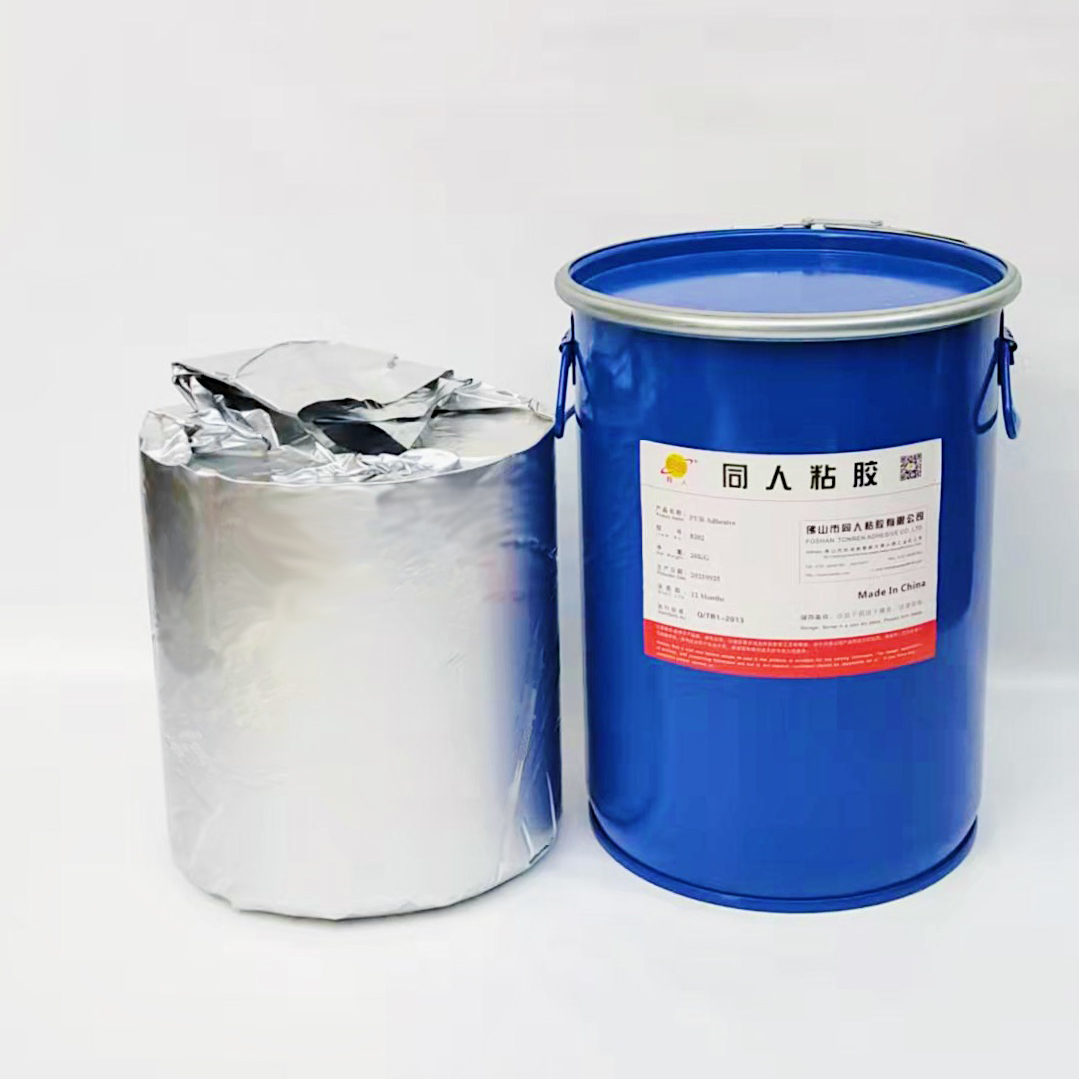
In contrast, PUR edgebander glue undergoes a chemical curing reaction. Once cross-linking is complete, the adhesive transforms into a thermoset structure that cannot re-melt under normal service temperatures.
This chemical transformation is what sets PUR edge banding glue apart from conventional edge banding glue.
Industry Performance Comparison
| Performance Indicator | Traditional hot melt glue | Tonren PUR edge banding glue |
| Bonding Type | Thermoplastic | Reactive polyurethane |
| Heat Resistance | 70–90°C | Up to 150°C |
| Moisture Resistance | Moderate | Excellent |
| Aging Stability | Limited | Long-term durable |
| Glue Line Thickness | Visible | Ultra-thin |
| Structural Reinforcement | Surface-level | Deep penetration |
This comparison demonstrates why manufacturers aiming for export markets increasingly shift toward PUR glue edge banding systems.
1️⃣ Durability Under Extreme Environmental Conditions
Furniture exported to humid regions or high-temperature climates must withstand challenging environments. Traditional hot melt glue may soften in such conditions, reducing bond strength over time.
PUR edge banding glue forms a stable, cross-linked network that resists both heat and moisture. Panels bonded with PUR edgebander glue maintain edge integrity even in kitchens, bathrooms, and commercial interiors exposed to heavy use.
Manufacturers who transition from conventional edge banding glue to reactive systems often report fewer warranty claims and longer service life.
2️⃣ Stronger Mechanical Performance
Furniture panels experience stress from movement, weight load, and handling. Adhesives must accommodate these forces without cracking.
Because PUR glue edge banding combines flexibility with high tensile strength, it distributes stress more evenly across the bonding line. Compared with hot melt glue, the mechanical resilience of PUR edgebander glue significantly reduces edge cracking.
Over extended periods, this structural advantage protects both panel and edging material.
3️⃣ Improved Aesthetic Stability
A thin, seamless glue line enhances product appearance. Thick bonding lines reduce perceived quality, especially on dark or high-gloss finishes.
PUR edge banding glue enables ultra-thin application while maintaining strength. Unlike conventional edge banding glue, it minimizes glue line visibility and discoloration.
For high-end furniture brands, this aesthetic consistency reinforces premium positioning.
4️⃣ Production Efficiency and Process Stability
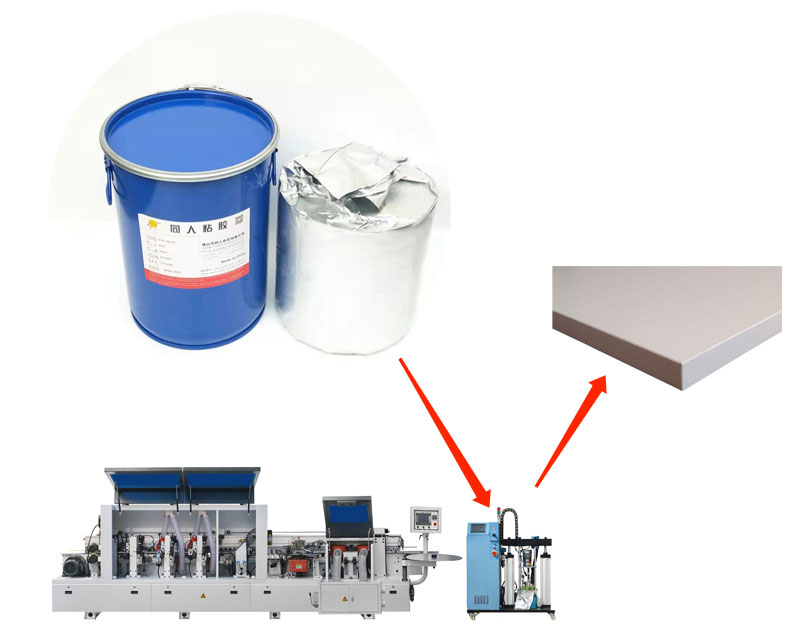
While some manufacturers assume reactive adhesives slow production, modern PUR glue edge banding systems are fully compatible with automated edgebanders.
With controlled open time and optimized viscosity, PUR edgebander glue integrates smoothly into high-speed production lines. Additionally, reduced rework compared to hot melt glue improves overall productivity.
Tonren’s 26+ years of formulation expertise ensure stable performance across different substrates, including MDF, particleboard, hardwood, PVC, and ABS.
Why Tonren’s Experience Matters
Adhesive performance is not determined solely by chemistry but by formulation precision, raw material selection, and quality control.
Tonren’s manufacturing process includes:
Strict viscosity control
Reaction stability monitoring
Batch consistency testing
Climate adaptability evaluation
ISO9001 certification guarantees standardized quality management. This consistency ensures that PUR edge banding glue performs predictably in diverse production environments.
Beyond reactive systems, Tonren continues to supply high-quality hot melt glue solutions, providing manufacturers flexibility according to budget and performance targets.
Frequently Asked Questions (FAQ)
Q1: Is PUR edge banding glue suitable for all furniture types?
Yes. It is especially recommended for kitchen cabinets, bathroom furniture, and export-grade products.
Q2: Does PUR glue edge banding require new equipment?
Most modern edgebanders support PUR edgebander glue with compatible melting units.
Q3: Can traditional edge banding glue still be used?
Yes. For standard indoor applications, hot melt glue remains effective and economical.
Q4: Is the cost difference significant?
Although initial cost may be higher, lifecycle savings from durability and reduced rework often offset the difference.
Q5: Does Tonren provide technical support?
Yes. Tonren offers guidance on application parameters and process optimization.
Strategic Recommendation
If your production targets global markets or premium positioning, evaluating PUR edge banding glue is a strategic investment. Reactive bonding technology ensures longer product lifespan, reduced failure rates, and stronger brand credibility.
Tonren’s extensive experience in both PUR glue edge banding and hot melt glue systems allows manufacturers to choose solutions aligned with their operational needs.
Conclusion
When asking which adhesive is better for your furniture production, the answer depends on performance expectations. Traditional edge banding glue based on thermoplastic hot melt glue offers speed and cost efficiency. However, for durability, moisture resistance, heat stability, and premium aesthetics, PUR edgebander glue provides measurable advantages.
With more than 26 years of adhesive innovation, Foshan Tonren Adhesive Co., Ltd delivers reliable, globally trusted bonding solutions designed to meet modern manufacturing demands.
In competitive furniture production, durability is not accidental—it is engineered through the right chemistry.