
Can Natural Color Edge Banding Glue Effectively Reduce Visible Glue-Line Defects for Multi-Tone Wood-Grain Panels?
A Small Glue Line Can Change the Look of an Entire Furniture Panel
A modern wood-grain panel may look almost perfect from a distance.
The grain is carefully selected. The decorative film has a realistic texture. The edge band matches the surface color. The panel has been machined with precision.
Then the customer looks closely at the edge.
A thin yellowish or whitish glue line appears between the edge band and the panel.
Suddenly, the entire piece looks less refined.
For manufacturers of custom furniture, kitchen cabinets, wardrobes, and decorative panels, this is more than a cosmetic problem. A visible glue line can lead to color-matching complaints, rework, additional inspection, and unnecessary material consumption.
The challenge becomes even more obvious when one production line handles multiple wood-grain colors and textures.
A single adhesive color may look acceptable on one oak finish but become highly visible on walnut, light ash, beige wood grain, or darker decorative surfaces.
This raises an important procurement question:
Can natural color edge banding glue reduce visible glue-line defects on multi-tone wood-grain panels?
The answer can be yes—provided that the adhesive formulation, color characteristics, application process, and edge materials are properly matched.
For furniture manufacturers, the goal should not simply be to find a “clear” adhesive. The real goal is to create a bonding line that visually blends with the finished panel.
This is where natural color edge banding glue becomes an interesting option for high-appearance furniture production.
1. The User Problem: Why Does the Glue Line Become So Noticeable?
Before selecting a new adhesive, manufacturers should understand why the glue line becomes visible in the first place.
Several factors can contribute to the problem.
1.1 Adhesive Color Does Not Match the Decorative Surface
Wood-grain panels are rarely a single uniform color.
A production order may include:
Natural oak
Light walnut
Dark walnut
Ash
Beech
Cherry
Grey wood grain
Beige wood grain
Rustic wood textures
If the adhesive itself has a strong yellow, white, or opaque appearance, it may contrast with the edge band.
The result is a visible bonding line.
This becomes particularly noticeable on light-colored decorative panels.
1.2 Excessive Adhesive Application Makes the Line More Obvious
More adhesive does not automatically mean stronger bonding.
If the application amount is too high, excess adhesive can squeeze toward the visible surface of the edge band.
This may create:
A thicker glue line
Surface contamination
Uneven appearance
Additional trimming or cleaning work
For high-end furniture, adhesive consumption should therefore be optimized rather than simply increased.
1.3 Different Edge Materials Behave Differently
PVC, ABS, PP, veneer, and other edge materials have different surface characteristics.
Their:
Surface energy
Thickness
Flexibility
Thermal expansion
Surface treatment
can all affect the final bonding result.
An adhesive that performs well on one edge material should not automatically be assumed to perform identically on another.
1.4 High-Speed Production Creates Less Room for Process Errors
Modern furniture factories increasingly use automatic edgebanders and high-speed production lines.
As production speed increases, the adhesive must respond consistently to:
Temperature + viscosity + machine speed + pressure + substrate + edge material.
A formulation that performs well under slow manual processing may not provide the same appearance at high production speeds.
This is why adhesive selection should be connected directly to the production process.
2. Product Selection: What Is Natural Color Edge Banding Glue?
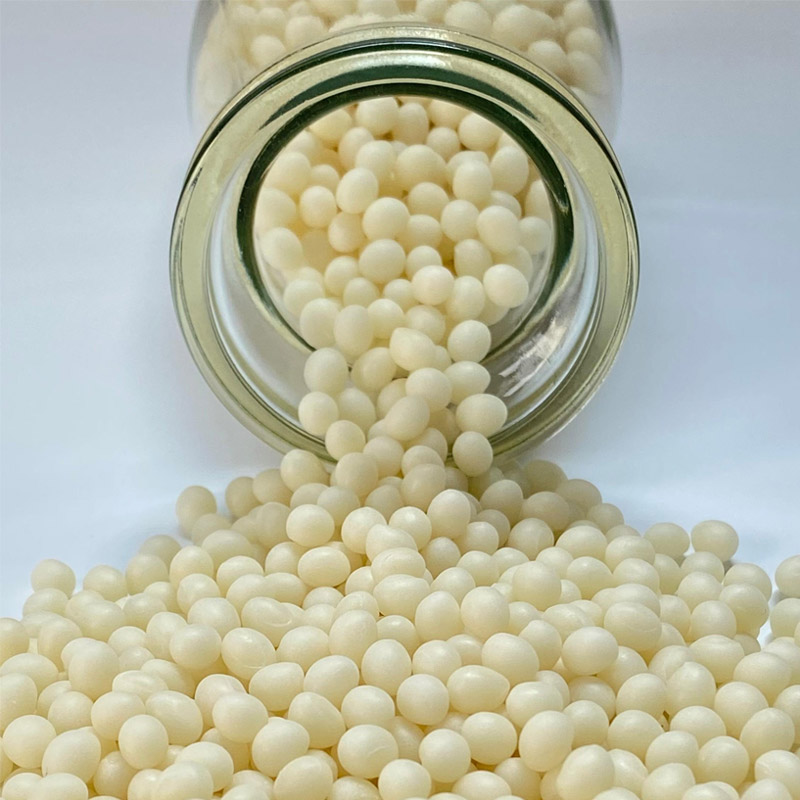
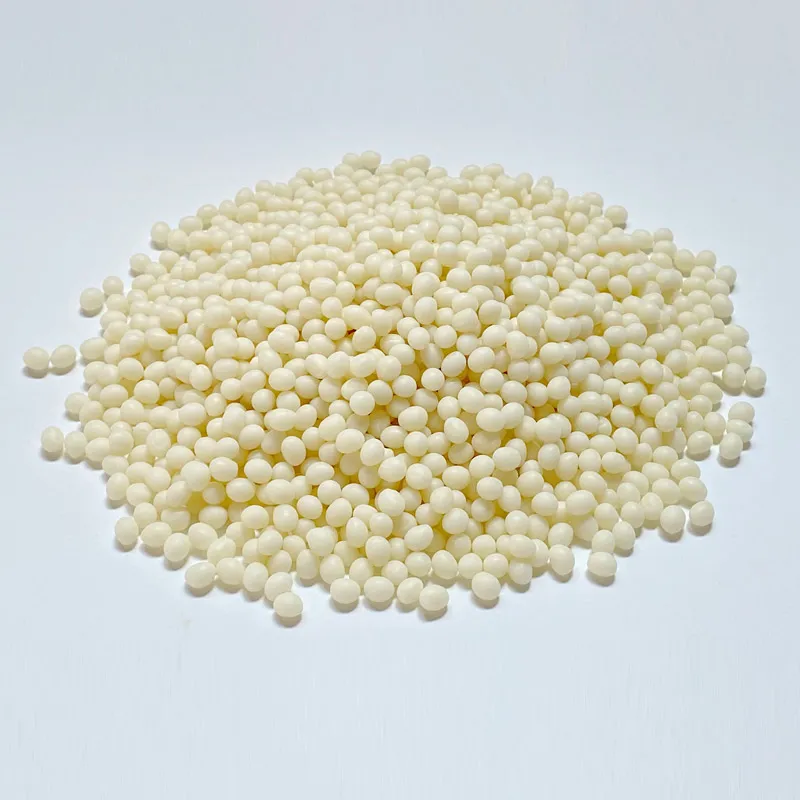
Natural color edge banding glue refers to an edge-banding adhesive formulated with a relatively neutral or natural visual appearance so that the adhesive line can better blend with different decorative surfaces.
It does not mean that the adhesive is literally invisible under every condition.
Instead, the objective is to reduce the visual contrast between the adhesive layer and the finished panel.
This distinction is important.
The term invisible glue line should be understood as a visual-performance objective rather than a guarantee that the adhesive cannot be seen under any lighting or inspection condition.
A well-designed natural-color adhesive can help manufacturers achieve a more visually integrated edge when combined with:
Correct application amount
Suitable edge-band pressure
Proper machine temperature
Accurate trimming
Compatible substrate and edge material
In other words, adhesive color is only one part of the equation.
3. Why Natural Color Matters for Multi-Tone Wood-Grain Panels
Imagine a furniture factory producing five cabinet colors on the same production line.
| Panel Finish | Typical Appearance Challenge | Importance of Adhesive Color |
|---|---|---|
| Light Oak | Yellow glue may become visible | High |
| Natural Ash | White or dark glue may contrast | High |
| Walnut | Uneven glue line can affect appearance | Medium-High |
| Beige Wood Grain | Strong adhesive contrast is noticeable | High |
| Dark Wood Grain | Glue line may be less obvious but still visible | Medium |
This is why wood grain panel edge banding adhesive should be selected according to the finished appearance, not only bonding strength.
For factories handling multiple decorative finishes, a neutral adhesive appearance can provide greater flexibility.
Instead of maintaining a completely different adhesive system for every color family, manufacturers may be able to use a more visually adaptable formulation, subject to actual production testing.
4. Technical Parameters Buyers Should Compare
When purchasing natural color edge banding glue, appearance should not be the only purchasing criterion.
A professional evaluation should cover at least six areas.
| Parameter | Why It Matters | Procurement Focus |
|---|---|---|
| Adhesive color | Determines visual contrast | Neutral/natural appearance |
| Viscosity | Influences coating and machine stability | Match equipment requirements |
| Application temperature | Affects melting and spreading | Follow supplier specification |
| Open time | Must match machine speed | Compare with production cycle |
| Bonding strength | Determines edge durability | Test actual substrates |
| Heat resistance | Important for kitchens and demanding furniture | Conduct thermal testing |
| Cold resistance | Important for export and transport | Test under low temperature |
| Aging resistance | Influences long-term appearance | Accelerated aging evaluation |
| Compatibility | Prevents material-specific defects | Test PVC/ABS/PP/veneer |
| Consumption | Directly affects production cost | Calculate cost per meter |
A good wood grain panel edge banding adhesive should therefore be evaluated as a complete production solution.
5. How Does an Invisible Glue Line Actually Happen?
Achieving an invisible glue line is not simply a matter of selecting a lighter-colored adhesive.
There are four critical factors.
Factor 1: Adhesive Color
The closer the adhesive visually blends with the edge material and panel, the lower the apparent contrast.
Factor 2: Adhesive Application Amount
The glue layer needs to be sufficient for reliable bonding without creating excessive squeeze-out.
Factor 3: Pressure
Adequate pressure helps establish close contact between:
Panel → adhesive → edge band.
Poor pressure distribution can create uneven glue lines even when the adhesive itself is suitable.
Factor 4: Machine Settings
Temperature, speed, pressure, and adhesive viscosity must work together.
This is why the best natural color edge banding glue cannot compensate indefinitely for incorrect machine settings.
6. Application Scenarios: Where Does Natural Color Adhesive Create the Most Value?
6.1 Custom Furniture
Custom furniture manufacturers often deal with many colors in relatively small batches.
One order may require:
White oak
Natural walnut
Grey wood
Beige wood
Dark wood grain
Visual consistency is critical because customers often inspect custom furniture at close range.
A natural-color adhesive can therefore be valuable for reducing the visual impact of the bonding line.
6.2 Kitchen Cabinet Doors
Cabinet doors are particularly sensitive to appearance defects.
Customers can easily see the edge when opening a cabinet.
For premium kitchen furniture, the edge should visually transition from the decorative panel to the edge band without an obvious adhesive line.
Using a suitable wood grain panel edge banding adhesive can be part of this quality-control strategy.
6.3 Wardrobes and Built-In Furniture
Large wardrobe panels often have long visible edges.
A small glue-line defect repeated across several meters can become visually obvious.
This is where adhesive appearance and application consistency become increasingly important.
6.4 High-End Decorative Panels
Premium decorative panels often use realistic wood textures and carefully controlled surface finishes.
When the surface quality is high, even a small adhesive defect may become noticeable.
Therefore, invisible glue line performance can become an important part of overall panel aesthetics.
7. Procurement Guide: How Should a Factory Choose the Right Adhesive?
When purchasing natural color edge banding glue, buyers should avoid choosing solely by price per kilogram.
Instead, ask the supplier the following questions.
Question 1: Is the adhesive color stable between batches?
Color consistency matters when production runs continue for months.
A difference between batches can create visible changes in the glue line.
Question 2: Does the adhesive work with my edgebander?
Provide the supplier with:
Machine brand/model
Production speed
Application temperature
Edge thickness
Edge material
This allows the manufacturer to recommend a more suitable formulation.
Question 3: Can the adhesive work across multiple edge colors?
This is particularly important for custom furniture manufacturers.
Ask the supplier to evaluate the adhesive against actual production samples rather than relying on a generic specification sheet.
Question 4: What is the recommended glue application amount?
The supplier should provide a practical application range based on the adhesive formulation and production conditions.
The correct amount should be confirmed through actual production trials.
Question 5: How does the adhesive perform after heat and aging tests?
A visually attractive glue line is not enough.
The finished edge should also maintain reliable bonding after appropriate environmental testing.
8. Why Tonren Controls More Than Just Adhesive Performance
For Foshan Tonren Adhesive Co., Ltd, adhesive manufacturing is not simply about making a product that bonds two materials together.
The company has more than 26 years of experience in adhesive R&D, manufacturing, and sales, with products serving furniture, woodworking, decorative materials, and other industrial applications.
Tonren places particular attention on formulation consistency and production control.
For natural-color edge-banding applications, several areas deserve attention:
Color Consistency
A natural-color adhesive needs controlled raw materials and formulation parameters to reduce unnecessary batch-to-batch variation.
Viscosity Control
Stable viscosity supports more consistent application during automated production.
Production Compatibility
Modern furniture factories may operate at high speeds. Adhesive performance therefore needs to be evaluated according to actual machine conditions.
Application Adaptability
Different panel and edge materials can require different bonding behavior.
The objective is not to sell one generic adhesive to every customer.
The objective is to identify a formulation that fits the customer's production system.
9. Tonren's Factory Solution for Multi-Tone Furniture Production
For manufacturers searching for natural color edge banding glue, Tonren can approach the project from the production side.
The evaluation can include:
Panel substrate → decorative surface → edge band → machine → adhesive → production speed → finished appearance
This is particularly useful for:
Custom furniture factories
Kitchen cabinet manufacturers
Wardrobe manufacturers
Decorative panel producers
Woodworking factories
Furniture OEM/ODM suppliers
Instead of asking only:
“Which glue is cheapest?”
A more useful question is:
“Which adhesive gives us stable bonding, acceptable consumption, consistent color, and a cleaner finished edge?”
That is the basis of professional adhesive procurement.
10. Data-Driven Quality Control: Measure the Glue Line, Don't Guess It
Factories can establish a simple internal evaluation system.
For example, inspect a defined number of finished panels from each production batch and record:
| Quality Indicator | What to Monitor |
|---|---|
| Visible glue line | None / slight / obvious |
| Color consistency | Batch-to-batch variation |
| Edge lifting | Number of affected pieces |
| Glue squeeze-out | Frequency and severity |
| Bonding failure | Peel/delamination occurrence |
| Adhesive consumption | kg per 1,000 m or production unit |
| Rework | Number of panels requiring correction |
This turns subjective complaints such as “the edge does not look clean” into measurable production information.
For high-volume furniture factories, this can also help identify whether the real problem comes from:
Adhesive formulation
Application amount
Machine settings
Edge-band material
Substrate preparation
That distinction can save considerable troubleshooting time.
11. FAQ About Natural Color Edge Banding Glue
Q1: What is the main advantage of natural color edge banding glue?
Its main advantage is visual compatibility. A neutral or natural adhesive appearance can reduce the contrast of the bonding line, especially on multi-tone decorative panels.
Q2: Can natural color adhesive completely eliminate the glue line?
Not necessarily. An invisible glue line depends on adhesive color, application amount, edge material, pressure, temperature, machining accuracy, and lighting conditions. Proper testing is necessary.
Q3: Is natural color adhesive suitable for PVC and ABS edge bands?
It can be suitable for many PVC and ABS applications, but compatibility should always be confirmed with the actual edge material and substrate before mass production.
Q4: Does using more adhesive make the edge stronger?
Not automatically. Excess adhesive can increase squeeze-out, consumption, and visual defects. The correct application amount should be established through production testing.
Q5: Can Tonren provide a solution for multiple wood-grain colors?
Tonren can evaluate the customer's actual panel and edge-band materials and recommend a suitable adhesive approach based on production requirements.
Q6: What information should I provide when requesting an adhesive recommendation?
Provide the panel material, decorative surface, edge-band material, edge thickness, machine model, production speed, operating temperature, and current adhesive problem.
The more complete the production information, the more meaningful the recommendation.
12. From Visible Glue-Line Problems to a Cleaner Production Process
A furniture factory does not sell adhesive.
It sells furniture.
That means the customer ultimately judges:
Appearance
Edge quality
Durability
Consistency
Craftsmanship
The adhesive is invisible when everything goes right—but becomes highly visible when something goes wrong.
For multi-tone wood-grain panels, choosing the right natural color edge banding glue can therefore be an important part of quality management.
The ideal solution is not simply the adhesive with the lightest color.
It is the adhesive that combines:
Visual compatibility + stable viscosity + reliable bonding + suitable processing behavior + consistent batch quality.
For factories producing premium custom furniture, kitchen cabinets, wardrobes, and decorative wood-grain panels, this comprehensive approach can reduce visible glue-line defects and unnecessary color-related rework.
13. Why Choose Foshan Tonren Adhesive Co., Ltd?
With more than 26 years of adhesive manufacturing and R&D experience, Foshan Tonren Adhesive Co., Ltd focuses on functional adhesive solutions for demanding industrial applications.
The product portfolio covers areas such as:
Edge banding adhesives
PUR adhesives
Wrap adhesives
Lamination adhesives
3D lamination adhesives
Solid wood adhesives
Other functional bonding solutions
For furniture manufacturers, Tonren's value lies not only in supplying adhesive, but also in understanding the relationship between adhesive formulation and production conditions.
If your factory is facing:
Yellowish glue lines
Highly visible bonding lines
Batch color differences
Excessive adhesive squeeze-out
Edge-band rework
Poor appearance on light wood-grain panels
it may be time to review the adhesive rather than simply adjusting the trimming process.
14. Request a Production-Based Adhesive Evaluation
Choosing the right natural color edge banding glue should begin with your actual production conditions.
Send Foshan Tonren Adhesive Co., Ltd the following information:
Panel substrate
Decorative surface
Edge-band material
Edge-band thickness
Edgebander model
Production speed
Current adhesive type
Current glue-line problem
Target furniture application
With these details, Tonren can help identify a more suitable adhesive direction and arrange sample evaluation where appropriate.
For manufacturers searching for a reliable wood grain panel edge banding adhesive, the goal is simple:
A stronger bond, a cleaner edge, more consistent production, and fewer appearance-related complaints.
Conclusion
The glue line may only be a narrow strip between the panel and edge band, but its visual impact can be much larger than its physical size.
Traditional adhesives can sometimes produce visible yellowing, excessive contrast, or inconsistent glue lines, particularly when manufacturers process multiple wood-grain colors.
A properly formulated natural color edge banding glue offers a practical way to improve visual integration between the adhesive layer, edge band, and decorative panel.
However, adhesive color alone is never the complete answer.
The best results come from matching the adhesive with the substrate, edge material, machine, application amount, temperature, pressure, and production speed.
For custom furniture, kitchen cabinets, wardrobes, and premium wood-grain panels, this production-based approach can help manufacturers move beyond simply “making the edge stick” toward achieving a cleaner, more consistent finished product.
Foshan Tonren Adhesive Co., Ltd is ready to work with furniture manufacturers looking for reliable adhesive solutions for modern, multi-color production.
Have a visible glue-line problem? Send us your panel and edge-band specifications and let Tonren help you evaluate the right bonding solution.