
Why Switching To Low-VOC Water-Based Lamination Adhesive Benefits Your Packaging Line?
As packaging manufacturers face increasing pressure to reduce emissions, improve workplace safety, and meet customer sustainability requirements, adhesive selection is becoming an important part of production planning. For companies supplying packaging materials to European and North American markets, traditional solvent-based adhesives may create additional challenges related to VOC emissions, ventilation, fire prevention, and environmental documentation.
Switching to a low VOC water-based lamination adhesive can be a practical way to reduce solvent-related emissions while maintaining the bonding performance required for packaging production. However, changing adhesive systems is not simply a matter of replacing one glue with another. Substrate compatibility, coating weight, drying capacity, production speed, and final bond performance must all be evaluated.
For packaging converters and lamination manufacturers, this guide explains how to compare water-based and solvent-based adhesives, what technical specifications to check, and how to select a suitable packaging lamination adhesive for long-term production.
With experience in functional adhesive manufacturing since 1999, Foshan Tonren Adhesive Co., Ltd provides water-based lamination adhesive solutions for different coating and bonding requirements.
1. Why Are Packaging Manufacturers Reconsidering Solvent-Based Adhesives?
Solvent-based adhesives have been widely used in industrial lamination because of their established processing characteristics and bonding performance. However, their solvent content can create operational and environmental considerations.
During application and drying, organic solvents may evaporate into the workplace atmosphere. Depending on the formulation, production conditions, and local regulations, manufacturers may need to manage:
VOC emissions during adhesive application and drying
Ventilation and exhaust treatment requirements
Fire and explosion prevention measures
Worker exposure to solvent vapors
Solvent storage, handling, and waste management
Environmental documentation requested by international customers
These issues can increase the complexity of factory environmental management, especially for packaging manufacturers operating multiple lamination lines.
What changes when a factory adopts water-based adhesive?
A water-based adhesive uses water as its primary carrier rather than relying on conventional organic solvents as the main carrier. During drying, water evaporates and the adhesive forms a bonding layer.
This can help manufacturers reduce solvent-related emissions and improve workplace conditions. It may also simplify certain aspects of solvent storage and handling.
However, water-based does not automatically mean zero VOC, non-toxic, or fully compliant with every environmental standard. Some formulations may contain additives or coalescing agents that contribute to VOC content. The actual performance must be verified through the product's technical documentation and appropriate testing.
For buyers searching for a low VOC water-based lamination adhesive, the first step should therefore be to request measurable VOC data rather than relying only on general environmental descriptions.
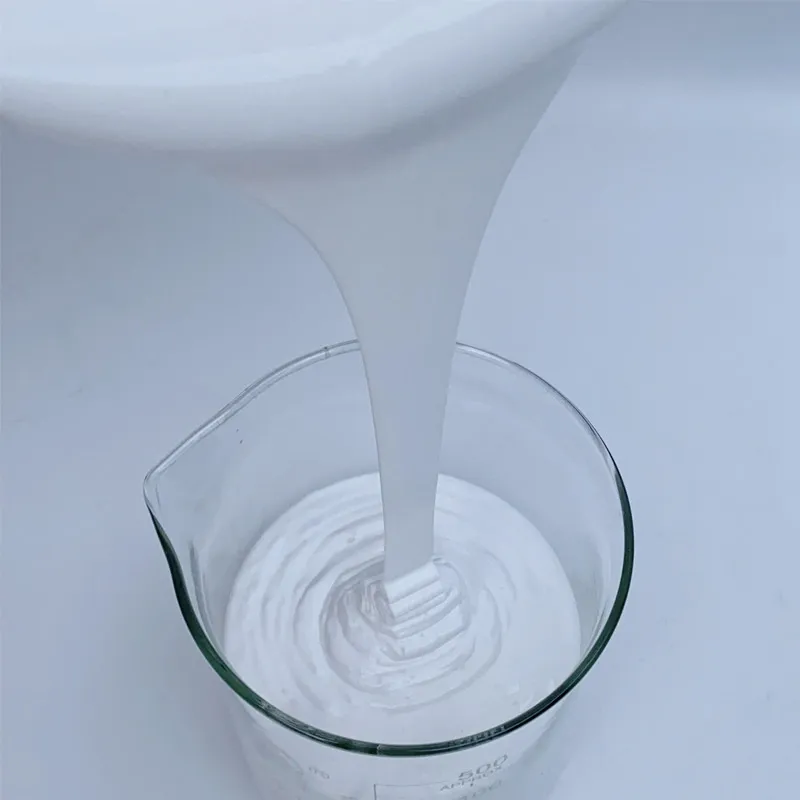
2. Water-Based vs. Solvent-Based Packaging Lamination Adhesive
Both adhesive systems can be suitable for industrial lamination, but they have different operating characteristics.
| Evaluation Factor | Solvent-Based Adhesive | Water-Based Adhesive |
|---|---|---|
| Main carrier | Organic solvents | Primarily water |
| VOC management | Requires control based on solvent formulation and local rules | Generally offers an opportunity to reduce solvent-related VOC emissions |
| Workplace odor | May have noticeable solvent odor | Often has lower solvent-related odor |
| Fire safety | Flammable solvent risks may require additional controls | Typically reduces solvent-related fire risks, subject to the full formulation |
| Drying mechanism | Mainly solvent evaporation | Mainly water evaporation and film formation |
| Drying equipment | Designed around solvent evaporation and exhaust management | Requires suitable airflow, temperature, and moisture removal |
| Equipment adaptation | Existing solvent systems may be optimized for this chemistry | Coating, drying, and line settings may need adjustment |
| Environmental documentation | Solvent and VOC information is important | VOC content, SDS, and applicable compliance documents remain necessary |
The key difference is not that one technology is universally better than the other. It is whether the adhesive matches the factory's production process, environmental objectives, and customer requirements.
2.1 Lower solvent-related emissions
One of the main reasons to consider water-based adhesive is the opportunity to reduce emissions associated with organic solvents.
For packaging factories supplying customers with environmental purchasing requirements, this can support a broader VOC reduction strategy.
However, buyers should distinguish between:
VOC content in the adhesive as supplied
VOC emissions during application and drying
Residual substances in the finished laminated structure
Overall emissions from the complete packaging material
These are different measurement questions. A low VOC result for the adhesive alone does not automatically establish the emissions performance of the finished package.
2.2 A more manageable workplace environment
Solvent-based adhesive systems may require dedicated ventilation, solvent storage controls, and additional fire prevention measures.
A suitable water-based system can reduce dependence on organic solvents and help simplify some of these controls.
For factory managers, the potential benefits include:
Reduced solvent-related odor in the production area
Less dependence on solvent handling procedures
Reduced solvent-related fire risks
Improved alignment with internal environmental and occupational safety objectives
Nevertheless, water-based adhesives still require proper handling. Workers should follow the product SDS, use suitable personal protective equipment, maintain appropriate ventilation, and prevent unnecessary skin or eye contact.
2.3 Better alignment with sustainability purchasing requirements
International packaging buyers increasingly evaluate suppliers according to material safety, environmental management, and supply-chain transparency.
A low-emission adhesive may support these objectives, especially when the supplier can provide consistent technical documentation.
For packaging converters, the adhesive supplier should be able to explain product composition categories, VOC testing information, storage conditions, and recommended processing parameters.

3. How to Choose the Right Low VOC Water-Based Lamination Adhesive
Not every water-based adhesive is suitable for every packaging structure.
Before selecting a product, buyers should identify the materials being bonded, the coating method, the required production speed, and the final application.
3.1 Identify the substrates
Different packaging structures have different surface properties.
Common lamination combinations may include:
Paper to paperboard
Decorative film to board
PVC film to MDF or wooden panels
Plastic film to paper-based substrates
Coated paper to rigid packaging materials
Surface energy, porosity, coating treatment, moisture absorption, and surface cleanliness can all influence adhesion.
A water-based adhesive that performs well on porous paperboard may not automatically provide the same bonding performance on a low-surface-energy plastic film.
Buyers should provide the adhesive supplier with the exact substrate combination before requesting a recommendation.
3.2 Match viscosity with the coating method
Viscosity affects adhesive transfer, coating uniformity, penetration, and the amount of adhesive applied.
For example:
Roller coating requires suitable flow and transfer characteristics.
Spray coating requires viscosity compatible with the spraying equipment and nozzle configuration.
High-viscosity formulations may be more appropriate for certain coating conditions, but must be evaluated against the actual line setup.
Choosing a product based only on its viscosity number is insufficient. The coating method, target coating weight, machine speed, and substrate surface must be considered together.
3.3 Evaluate drying capacity
Water-based adhesive relies on water evaporation and film formation. Compared with some solvent-based systems, it may require different drying conditions.
Before switching, evaluate:
Available drying-zone length
Hot-air temperature and airflow
Exhaust and moisture removal capacity
Line speed
Ambient temperature and humidity
Substrate moisture sensitivity
If the drying capacity is insufficient, residual moisture may affect bonding quality or lead to defects such as bubbling, weak adhesion, and film deformation.
A production trial is therefore essential before full-scale conversion.
4. Tonren Water-Based Lamination Adhesive: Product Types and Technical Parameters
Foshan Tonren Adhesive Co., Ltd offers several water-based VAE lamination adhesive grades for different application and coating requirements.
The following specifications are published on Tonren's product information and can be used as an initial reference for product selection.
| Product Grade | Basic Ingredient | Published Viscosity | Coating Method | Product Characteristics |
|---|---|---|---|---|
| 1838 | Water-based VAE | 55,000 ± 5,000 mPa·s | Roller coating | Strong bonding, lower odor, good liquidity |
| 1809 | Water-based VAE | 160,000 ± 20,000 mPa·s | Roller coating | Strong bonding, transparent glue layer |
| 1808 | Water-based VAE | 160,000 ± 20,000 mPa·s | Roller coating | General-purpose type, good initial bonding |
| 1801 | Water-based VAE | 160,000 ± 20,000 mPa·s | Roller coating | General-purpose type, broad application |
| 1603 | Water-based VAE | 500 ± 100 mPa·s | Spray coating | Environmental-friendly type, good bonding |
| 1608 | Water-based VAE | 1,200 ± 200 mPa·s | Spray coating | General-purpose type, good initial bonding |
Note: Viscosity values are reproduced from Tonren's published product specifications. The published table does not specify a viscosity test temperature or measurement method for these grades. Buyers should request the latest TDS for the applicable test conditions and acceptance range.
Which Tonren grade should you evaluate first?
For roller coating applications
Grades 1838, 1809, 1808, and 1801 are listed for roller coating.
1838 may be considered when the production process requires good liquidity and an application environment of at least 15°C.
1809 may be evaluated when a transparent adhesive layer is important.
1808 may be suitable for general-purpose lamination requiring good initial bonding.
1801 provides another general-purpose option for broader lamination applications.
For spray coating applications
Grades 1603 and 1608 are listed for spray coating.
Their relatively low published viscosity values distinguish them from the roller-coating grades. The final choice should be confirmed through spray-pattern evaluation, coating uniformity testing, and bonding trials on the actual substrates.
The best product is not necessarily the one with the highest viscosity or strongest initial tack. It is the formulation that delivers stable coating, sufficient drying, reliable bonding, and consistent production results on your equipment.
5. Which Packaging and Lamination Applications Can Benefit?
Water-based lamination adhesive can be considered for different paper-based and decorative lamination processes, depending on the formulation and substrate compatibility.
5.1 Paperboard and rigid packaging
Packaging manufacturers producing rigid boxes, gift boxes, and paperboard products may evaluate water-based adhesives for bonding paper-based materials.
Important considerations include:
Paper and board absorbency
Surface coating or printing finish
Adhesive penetration
Drying speed
Bond strength after conditioning
Surface appearance and glue-line consistency
Excessive adhesive penetration may weaken the visible surface or cause deformation. A suitable formulation and controlled coating weight are important.
5.2 Decorative film lamination
For decorative film bonding, substrate compatibility is particularly important.
PVC film, coated decorative materials, and other plastic surfaces may require different adhesive properties and surface preparation.
Tonren's published PVC lamination adhesive information identifies VAE-based grades for bonding PVC film with MDF, plywood, and wooden boards. These applications can provide a useful starting point for buyers evaluating water-based lamination systems.
However, a product intended for PVC-to-board lamination should not automatically be assumed suitable for every flexible packaging film structure. Actual film type, surface treatment, and end-use conditions must be confirmed.
5.3 Furniture panels and decorative boards
Water-based lamination adhesive is also relevant to furniture panel and decorative board production.
Manufacturers should evaluate:
Film-to-panel adhesion
Initial bonding strength
Final bonding strength
Surface flatness
Resistance to bubbling and delamination
Performance after temperature and humidity conditioning
For applications requiring higher initial bonding strength or different resistance characteristics, another adhesive technology may be more appropriate.
Tonren also offers PUR lamination adhesive grades for specific applications. Buyers should compare the water-based and PUR options according to their actual process requirements rather than assuming one system can replace the other in every production line.
6. What Environmental Regulations and Documents Should Buyers Check?
For manufacturers exporting packaging materials to Europe and North America, environmental compliance should be treated as a documentation and verification process.
Selecting a water-based adhesive can help reduce solvent-related emissions, but it does not automatically certify the final packaging product.
6.1 European Union: REACH and the Packaging and Packaging Waste Regulation
The EU REACH framework regulates the registration, evaluation, authorization, and restriction of chemicals. Packaging manufacturers should understand whether substances in the adhesive are subject to relevant restrictions or communication requirements.
The EU Packaging and Packaging Waste Regulation (PPWR), Regulation (EU) 2025/40, entered into force on February 11, 2025, and has applied generally since August 12, 2026.
The regulation establishes requirements covering packaging and packaging waste, including sustainability-related obligations. Its requirements should be evaluated according to the packaging type, role of the economic operator, and applicable implementation provisions.
For adhesive purchasing, this means manufacturers should pay attention to:
Chemical substance information
Relevant REACH compliance statements
VOC content and test reports where required
Packaging material compatibility
Recyclability and material separation considerations
Supporting technical documentation from suppliers
A water-based adhesive may support certain environmental objectives, but it is not itself a PPWR certification.
6.2 United States: FDA food-contact requirements
For food packaging, adhesive selection requires additional attention.
Under 21 CFR 175.105, certain adhesives may be used as components of articles intended for packaging, transporting, or holding food, subject to the specified conditions and limitations.
The suitability of an adhesive depends on its formulation, intended use, food type, contact conditions, and whether a functional barrier separates the adhesive from food.
Therefore, food-packaging buyers should not accept a general statement such as "water-based" or "low VOC" as proof of FDA compliance.
Request documentation confirming that the specific adhesive formulation and intended application meet the relevant requirements.
6.3 Which documents should an adhesive supplier provide?
Before placing a production order, buyers should request the following documents where applicable:
| Document | What Buyers Should Verify |
|---|---|
| Technical Data Sheet (TDS) | Viscosity, application method, operating conditions, storage, and recommended substrates |
| Safety Data Sheet (SDS) | Hazard classification, handling, storage, exposure controls, and emergency measures |
| VOC Test Report | Measured VOC content, test method, units, and sample identification |
| REACH Statement | Relevant substance restrictions and SVHC communication status |
| RoHS Statement | Only where the product or application is subject to relevant RoHS requirements |
| Food-Contact Compliance Documents | Applicable regulatory basis, conditions of use, and supporting evidence |
| Quality Management Documents | Manufacturer's quality system and relevant certification scope |
Buyers should check the validity, issuing organization, test method, product identification, and scope of every document.
A supplier's ISO 9001 quality management certification, for example, is not an environmental certification and does not independently establish low VOC or food-contact compliance.
7. How to Switch From Solvent-Based to Water-Based Lamination Adhesive
Changing adhesive chemistry without adjusting the production process can create unexpected quality problems.
A controlled transition is more reliable than replacing the adhesive across the entire production line immediately.
Step 1: Record the existing production conditions
Document the current adhesive consumption, coating method, machine speed, drying temperature, substrate types, and finished-product quality.
These records provide a baseline for comparing the new system.
Step 2: Confirm equipment compatibility
Check whether the existing coating rollers, pumps, pipes, tanks, and application components are compatible with the selected water-based adhesive.
Clean the adhesive delivery system according to the supplier's instructions before switching. Avoid mixing incompatible adhesive residues.
Step 3: Conduct laboratory and line trials
Test the adhesive on the actual substrates and production equipment.
Evaluate:
Wetting and coating uniformity
Initial adhesion
Final bonding strength
Drying behavior
Surface appearance
Bubbling and delamination
Bond consistency after conditioning
For export packaging, additional testing may be necessary according to customer specifications and the final product's intended use.
Step 4: Optimize drying conditions
Water-based adhesive requires effective moisture removal.
Adjust the drying temperature, airflow, line speed, and coating weight based on the adhesive supplier's technical recommendations.
Avoid increasing temperature without considering substrate heat sensitivity and the risk of deformation.
Step 5: Compare total production costs
Do not compare adhesive prices alone.
A more complete evaluation should include:
Adhesive consumption per unit area
Drying energy consumption
Equipment modification costs
Ventilation and exhaust management
Waste and cleaning costs
Labor and maintenance
Production yield and rework rate
The objective is to determine whether the new adhesive system improves the total operating economics while meeting quality and environmental requirements.
8. Common Problems When Using Water-Based Lamination Adhesive
A successful transition depends on controlling both adhesive properties and production conditions.
| Production Problem | Possible Cause | Recommended Check |
|---|---|---|
| Weak initial adhesion | Incompatible substrate, insufficient coating, or unsuitable formulation | Verify substrate compatibility and coating weight |
| Bubbling after lamination | Incomplete drying or trapped moisture | Check airflow, drying conditions, and line speed |
| Uneven glue layer | Incorrect viscosity or poor roller transfer | Check adhesive viscosity and coating equipment |
| Film peeling | Poor wetting, surface contamination, or inadequate bonding conditions | Inspect surface treatment and conduct peel testing |
| Slow production speed | Insufficient drying capacity | Evaluate drying-zone efficiency and moisture removal |
| Surface deformation | Excessive moisture or unsuitable processing conditions | Review substrate moisture sensitivity and adhesive application |
If a problem occurs after switching adhesive systems, manufacturers should identify whether the root cause is formulation compatibility, equipment settings, substrate conditions, or drying performance before changing the adhesive grade.
9. Why Work With Foshan Tonren Adhesive Co., Ltd?
Choosing a packaging lamination adhesive supplier involves more than comparing product prices. Buyers need a manufacturer that understands adhesive performance, production conditions, and the practical requirements of industrial lamination.
Established in January 1999, Foshan Tonren Adhesive Co., Ltd focuses on the research, development, production, and supply of functional adhesives.
The company's product range includes:
Water-based lamination adhesive
PVC lamination glue
PUR lamination adhesive
Waterproof lamination glue
Profile wrapping adhesive
EVA edge banding adhesive
PUR adhesive solutions
Other functional woodworking adhesives
For customers evaluating a low VOC water-based lamination adhesive, Tonren can help identify an appropriate product grade based on the coating method, substrate combination, viscosity requirements, and production conditions.
The published water-based VAE product range includes roller-coating and spray-coating options, allowing buyers to compare different application requirements.
Rather than recommending a product based only on a general description, the selection process should begin with the customer's actual materials and production line.
10. Procurement Checklist: What Information Should You Send Before Requesting a Quote?
To obtain a more accurate adhesive recommendation, packaging manufacturers should prepare the following information before contacting a supplier.
| Information Required | Why It Matters |
|---|---|
| Substrate material | Determines adhesive compatibility |
| Film or paper type | Influences wetting and bonding |
| Coating method | Helps identify suitable viscosity |
| Machine model | Helps evaluate equipment compatibility |
| Production speed | Determines drying requirements |
| Current adhesive type | Provides a comparison baseline |
| Target VOC requirement | Defines the environmental performance target |
| Final packaging application | Determines the required bond and compliance conditions |
| Required certifications or reports | Clarifies the documentation scope |
| Monthly adhesive consumption | Supports supply planning and quotation |
Providing this information allows the supplier to recommend a suitable grade and arrange a more meaningful sample or production trial.
Frequently Asked Questions
Q1: Is water-based lamination adhesive completely VOC-free?
Not necessarily. Water-based adhesives use water as their primary carrier, but some formulations may contain ingredients that contribute to VOC content. Buyers should request a product-specific VOC test report and confirm the test method.
Q2: Does switching to water-based adhesive automatically make packaging EU compliant?
No. Water-based adhesive may help reduce solvent-related emissions, but EU packaging compliance depends on the complete packaging structure, chemical composition, intended use, and applicable regulatory requirements. The adhesive alone does not provide automatic PPWR or REACH compliance.
Q3: Can water-based lamination adhesive replace solvent-based adhesive on existing production lines?
In some applications, yes. However, equipment compatibility, coating conditions, drying capacity, and substrate compatibility must be evaluated. A production trial is recommended before full conversion.
Q4: Is water-based adhesive suitable for food packaging?
Potentially, depending on the specific formulation and intended conditions of use. Buyers must verify the applicable food-contact requirements and obtain supporting documentation for the exact adhesive product.
Q5: What is the difference between water-based VAE adhesive and PUR lamination adhesive?
Water-based VAE adhesive uses a water-based polymer emulsion and generally relies on water evaporation and film formation. PUR adhesive uses reactive polyurethane chemistry and develops its final properties through a different curing mechanism. Their processing conditions and performance characteristics are different, so selection should depend on the substrate, equipment, production speed, and final product requirements.
Q6: How can I choose the right Tonren water-based lamination adhesive?
Start by identifying your substrate combination, coating method, machine speed, and target viscosity. Tonren's 1838, 1809, 1808, 1801, 1603, and 1608 grades provide different roller-coating and spray-coating options. Request the latest TDS and conduct a sample trial before confirming the grade.
Conclusion: Make Adhesive Selection Part of Your Packaging Sustainability Strategy
Switching to a low VOC water-based lamination adhesive can help packaging manufacturers reduce dependence on conventional organic solvents, improve workplace management, and respond to growing environmental purchasing requirements.
However, the benefits depend on choosing the correct formulation and adapting the production process. VOC content, substrate compatibility, drying performance, bonding strength, and regulatory documentation should all be evaluated before making a purchasing decision.
For packaging converters seeking a reliable packaging lamination adhesive, Foshan Tonren Adhesive Co., Ltd offers water-based VAE lamination adhesive options for different roller-coating and spray-coating applications.
Contact Tonren with your substrate details, machine specifications, target VOC requirements, and production conditions to discuss a suitable adhesive grade and arrange a sample evaluation.